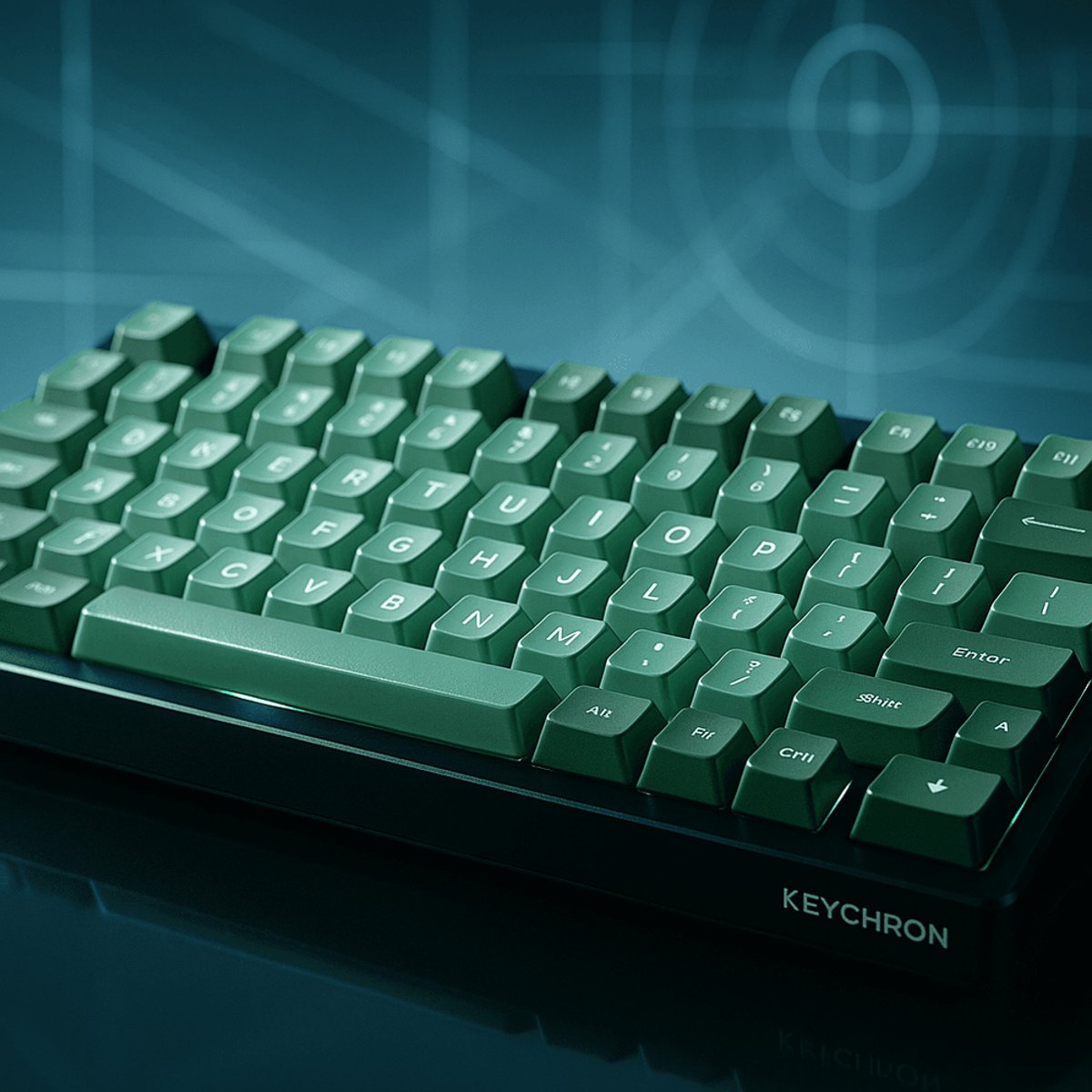
Keychron just shipped a keyboard with quantum physics inside it - and wrapped the whole thing in ceramic. The Q16 HE 8K ditches standard Hall effect switches for tunneling magnetoresistance (TMR) sensors that literally pass electrons between ferromagnets to detect keystrokes. It's a technical marvel that feels strange to type on, wrapped in a polarizing ceramic shell that sacrifices ergonomics for aesthetics. According to Wired's hands-on review, the switches are exceptional for gaming, but the execution raises questions about form versus function in enthusiast hardware.
Keychron is putting quantum physics in your mechanical keyboard, and it feels as weird as it sounds. The Q16 HE 8K marks one of the company's first deployments of tunneling magnetoresistance sensors - a technology so advanced it relies on subatomic particles behaving as both waves and particles simultaneously. But the real story isn't just the tech inside. It's how Keychron wrapped that innovation in a ceramic shell that prioritizes aesthetics over typing comfort.
The switches themselves represent a genuine leap forward. Unlike the Hall effect keyboards that have dominated the gaming peripheral market, TMR sensors use two ferromagnets passing electrons through an ultrathin barrier. As the magnets move closer during a keystroke, the magnetism levels shift, and a sensor tracks that change to determine actuation distance. "It's kind of like two magnets are playing tennis, the electrons are a tennis ball, and the TMR sensor is a chair umpire watching it happen," reviewer Henri Robbins explained in Wired.
For competitive gamers, the performance benefits are immediate. The Q16 delivers 8,000-Hz polling rates with near-instantaneous input registration. Rapid Triggers let switches actuate again the moment they're released, eliminating the reset delay that plagues traditional mechanical switches. SOCD (simultaneous opposing cardinal direction) settings mean when you press A then D for strafing, the D input overrides A automatically - crucial for precise movement in first-person shooters. Keychron's Launcher software lets users dial in actuation distances down to the millimeter.
The technical advantages over standard Hall effect are measurable. TMR sensors deliver improved accuracy in detecting magnetic field changes while drawing less power - important for wireless operation. The tradeoff? Higher manufacturing costs and less mature supply chains compared to the established Hall effect ecosystem. But Keychron is betting that early adoption will pay off as TMR technology scales.
Then there's the ceramic construction, which is where things get complicated. The Q16 ships with ceramic keycaps in a light green colorway that Robbins described as looking "radioactive." While visually striking, the ceramic material fundamentally changes the typing experience. Ceramics are harder and less forgiving than traditional PBT or ABS plastics, creating a more rigid feel that doesn't suit everyone's preferences. It's a bold design choice that positions the Q16 as a statement piece rather than a pure performance tool.
Keychron has experimented with trend-driven designs before, though with mixed results. The K2 HE Special Edition nailed its mid-century modern aesthetic, designed specifically to complement the Fractal North PC tower. That keyboard had clear design intent - a cohesive vision that elevated it beyond just another peripheral. The Q16's ceramic approach feels more like chasing the materials trend that's swept through enthusiast hardware without the same purposeful execution.
The quantum physics angle is genuinely fascinating, even if it sounds like science fiction. Tunneling magnetoresistance relies on quantum tunneling, where subatomic particles pass through barriers they theoretically shouldn't be able to penetrate. In practical terms, this means electrons behave probabilistically rather than deterministically during each keystroke. Robbins admitted the concept makes him "vaguely uncomfortable for reasons I can't properly explain or justify," but confirmed there's zero danger - no atom-splitting or radiation exposure, despite how the keycaps look.
From a purely technical standpoint, the switches are exceptional. They match or exceed Hall effect performance across every metric that matters for gaming: response time, customization depth, and longevity. The 8K polling puts the Q16 in the same performance tier as flagship esports peripherals. But competitive keyboards live or die on feel, and that's where the ceramic construction becomes polarizing. Materials matter in mechanical keyboards - they affect sound, tactility, and long-term comfort during extended typing or gaming sessions.
Keychron positioned the Q16 HE 8K in the premium tier, which makes sense given the TMR sensor development costs and ceramic materials. But premium pricing demands premium execution across every dimension - performance, build quality, and user experience. The internals deliver. The exterior is where opinions will split sharply between those who love the bold aesthetic and those who prioritize traditional typing ergonomics.
The broader question is whether TMR sensors will catch on beyond Keychron's early experiments. Hall effect switches took years to gain mainstream acceptance in gaming keyboards, and TMR faces similar adoption hurdles despite its technical advantages. If the technology proves reliable and costs drop as production scales, we could see TMR become the new standard for high-performance keyboards. For now, it's a fascinating glimpse at where peripheral technology is heading - even if the ceramic shell makes it a tough sell for purists.
The Q16 HE 8K represents Keychron's most ambitious technical experiment yet - quantum physics packed into a gaming peripheral with genuinely impressive performance metrics. TMR sensors deliver on their promise of faster, more accurate input detection with better power efficiency than Hall effect alternatives. But wrapping that innovation in a ceramic shell that compromises typing feel shows how even cutting-edge technology can stumble on execution. For competitive gamers who prioritize raw performance over ergonomics, the Q16's 8K polling and Rapid Triggers make it worth considering. For everyone else, the ceramic construction will either be a bold aesthetic statement or a dealbreaker. The tech inside is undeniably forward-thinking. Whether the market is ready for quantum-powered typing wrapped in ceramic is the real question Keychron is betting on.