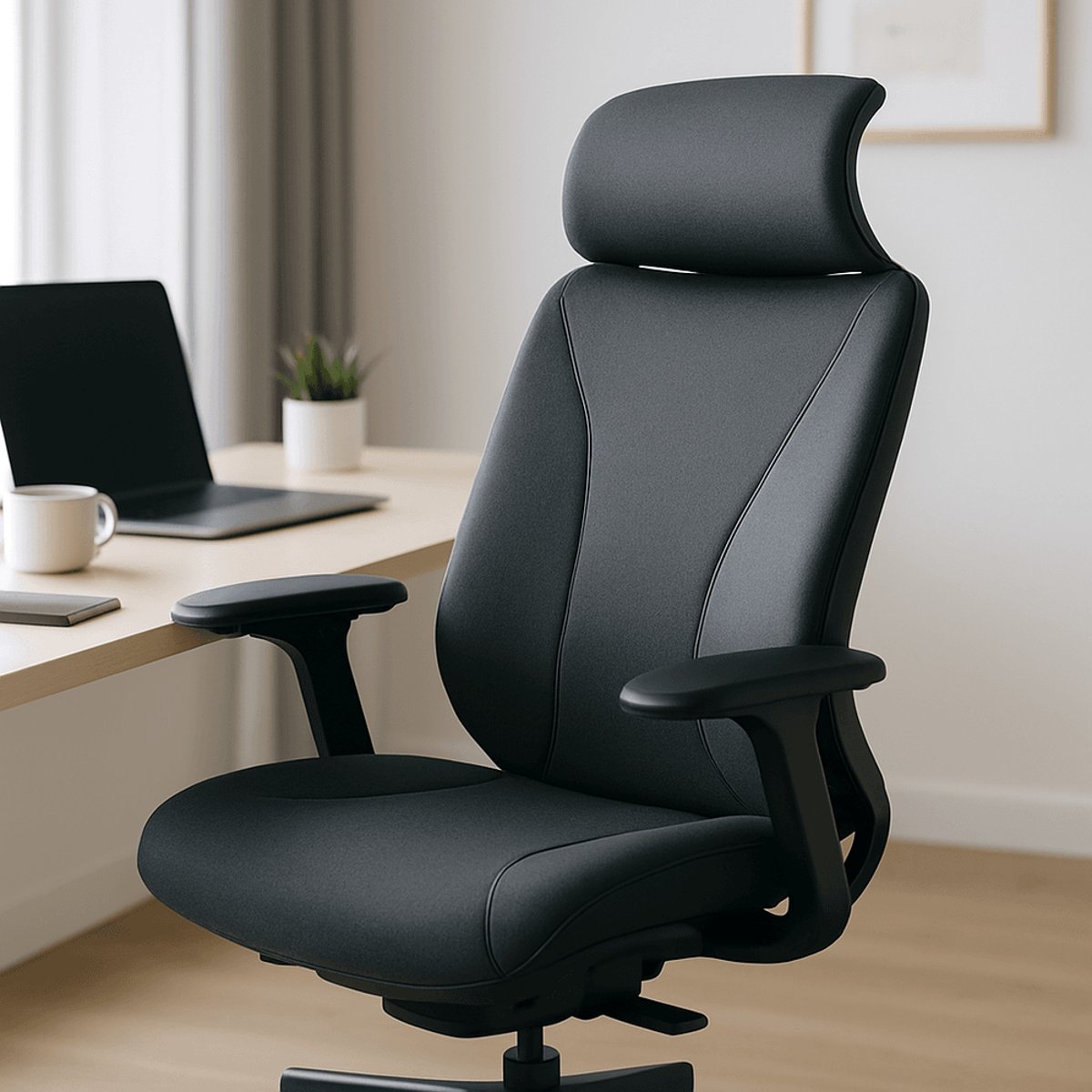
The home office furniture game just got a high-tech upgrade. LiberNovo's new Omni chair packs a built-in battery system that powers motorized lumbar adjustments and spinal massage features - potentially changing how we think about ergonomic seating. At $848 (down from $1,099 MSRP), it's targeting the premium office chair market with tech-forward features that most traditional manufacturers haven't touched.
The office furniture industry just got its first serious taste of battery-powered ergonomics. LiberNovo has launched the Omni, a motorized office chair that ditches traditional manual adjustments for an integrated battery system that powers both lumbar positioning and massage functions.
According to Wired's hands-on review by Julian Chokkattu, the chair's standout feature is what the company calls the "Bionic FlexFit Backrest" - essentially a motorized system that automatically aligns the backrest against your spine without the usual fumbling with knobs and levers. Three buttons on the left armrest control the entire system: two for moving the backrest support up and down, and a third that activates the spinal massage function.
The timing couldn't be better for this kind of innovation. As remote work continues reshaping how we think about home offices, the traditional office chair market has remained surprisingly static. While companies like Herman Miller have dominated the premium segment with designs like the Embody (which the Omni's backrest design clearly references), most chairs still rely on purely mechanical adjustments that users often struggle to optimize.
LiberNovo is pricing the Omni aggressively at $848 - a significant discount from its $1,099 MSRP that appears to be permanent rather than a limited-time promotion. That puts it in direct competition with established ergonomic chairs but with a tech angle that traditional furniture manufacturers haven't explored.
The review reveals some interesting trade-offs in this first-generation approach. While Chokkattu praises the "softer padding than any office chair" he's tested, noting the multi-density sponge cushion feels "plush without sinking," he raises questions about breathability. The fabric construction means your back might feel warm after extended use - a potential deal-breaker in warmer climates or for users who run hot.
More concerning for long-term adoption is the durability question. After just a month of testing, the chair already shows a tendency to collect hair, and Chokkattu notes it's "hard to gauge" how the fabric will hold up over a year of heavy use. For a chair positioning itself as a premium alternative, longevity concerns could be problematic.
The motorized features represent a genuine innovation, but they also introduce potential failure points that traditional chairs don't have. Battery life, motor reliability, and serviceability all become factors when considering a chair as a long-term investment. LiberNovo hasn't released detailed specifications on battery life or replacement costs yet.
What's particularly interesting is how this positions the broader office furniture market for potential disruption. If LiberNovo's approach gains traction, it could force established players to reconsider their purely mechanical designs. The company's decision to launch with both Midnight Black and Space Gray colorways (admittedly uninspired naming) suggests they're targeting the same aesthetic preferences as more established brands.
The 300-pound weight capacity puts it in line with most premium office chairs, and the armrest functionality - adjustable up/down, forward/back, and inward/outward - covers the basics without matching the full range of adjustment found on chairs like the Herman Miller Embody. But for users who've never properly adjusted their chair anyway, the automated backrest positioning could be more valuable than additional manual controls.
The LiberNovo Omni represents an intriguing first step toward truly smart office furniture, bringing battery-powered automation to a market that's been surprisingly resistant to technological innovation. While questions about durability and breathability need longer-term testing to resolve, the core concept of motorized ergonomic adjustment could reshape user expectations for premium seating. At $848, it's priced competitively enough to test the market's appetite for tech-enhanced furniture, and if successful, could force the entire industry to rethink the balance between mechanical simplicity and automated convenience.