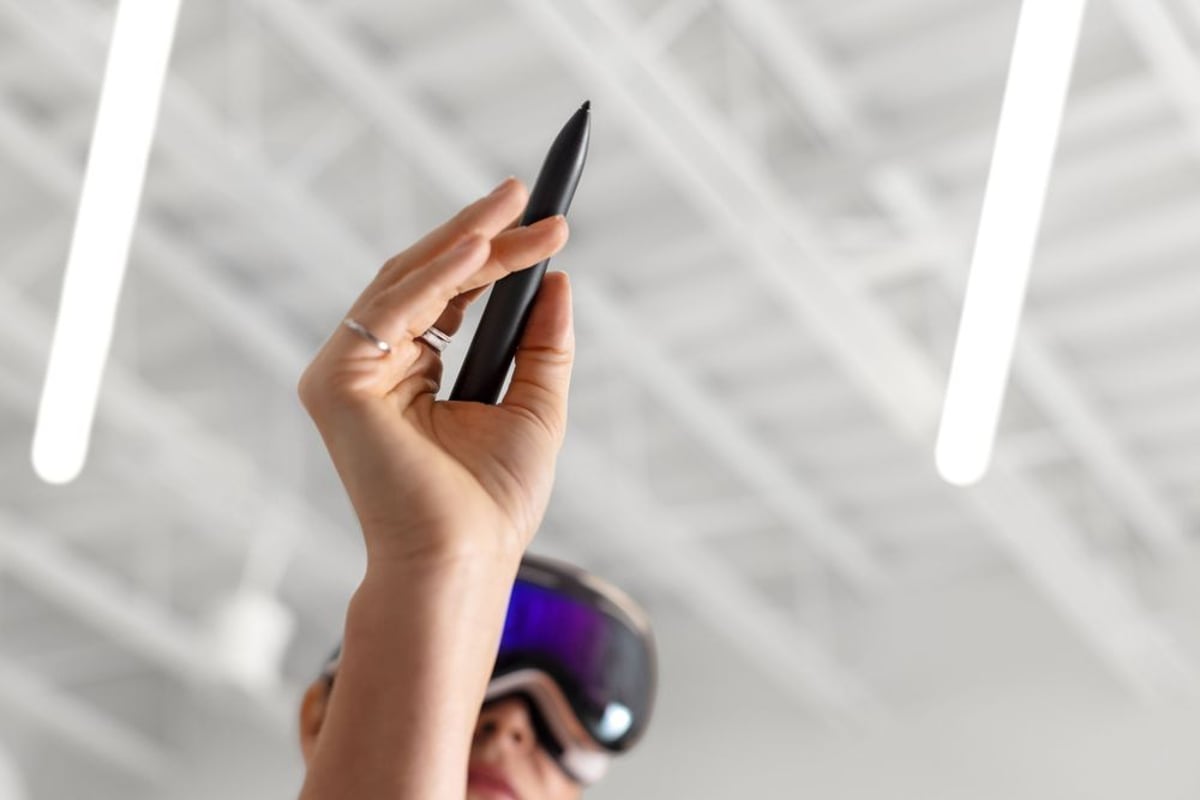
Logitech just launched the Muse, a $130 digital stylus that transforms Apple's Vision Pro into a natural drawing and design workspace. Available for preorder today with October 22nd shipping, the pen-shaped controller brings pressure sensitivity and haptic feedback to mixed reality creation, directly challenging the headset's hand-tracking limitations.
Logitech is betting that Vision Pro users want to ditch hand gestures for something that feels more like a real pencil. The company's new Muse stylus, launching October 22nd for $129.95, transforms Apple's mixed reality headset into a natural drawing and design workspace - complete with pressure sensitivity and real-time haptic feedback that mimics the feel of pen on paper.
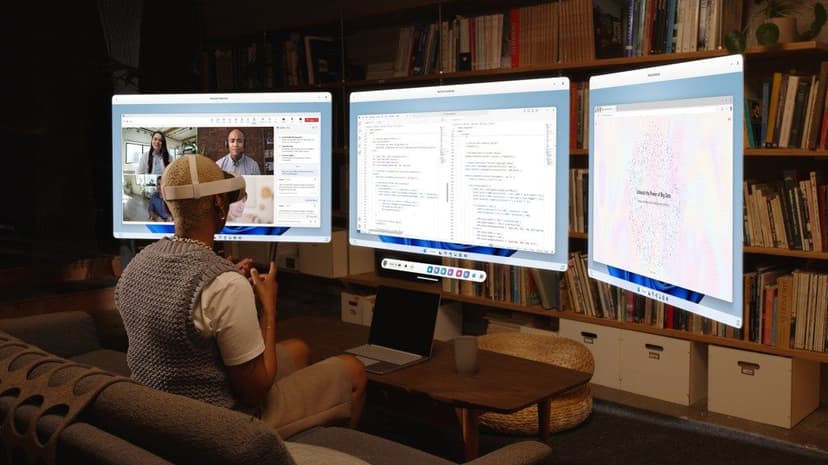
The timing couldn't be more strategic. As Vision Pro struggles to find its footing beyond early adopters, accessories like the Muse could unlock new use cases that justify the headset's $3,500 price tag. Creative professionals who've been waiting for precision tools in mixed reality finally have an option that doesn't rely entirely on finger tracking.
"The Logitech Muse is essentially a pen-shaped Vision Pro controller that can be used like a paintbrush or pencil when navigating apps," according to Logitech's announcement. The stylus includes a force-sensing button that lets users adjust line thickness while drawing in mid-air - a feature that could revolutionize 3D modeling and spatial design workflows.
But there's an interesting competitive angle here. The Muse is priced identically to Logitech's MX Ink stylus for Meta Quest headsets, launched last year. While both devices look nearly identical, the Vision Pro version makes a curious trade-off - it ditches the charging dock that comes with the MX Ink, relying solely on USB-C charging. That decision could prove problematic for users who've experienced the frustration of losing Apple Pencils.
The move signals Logitech's broader strategy of becoming the go-to accessory maker for emerging VR/AR platforms. By creating device-specific versions of similar products, the company is hedging its bets across the mixed reality ecosystem while Meta and Apple battle for market dominance.
For Vision Pro, the Muse addresses one of the headset's most commonly cited limitations - the lack of precise input methods for detailed work. While hand tracking works well for basic navigation, anyone who's tried to sketch or annotate documents knows the limitations. The stylus's pressure-sensitive tip works on physical surfaces too, bridging the gap between digital and analog workflows.
Early reports suggest the device will integrate with popular creative apps already available on Vision Pro, though Logitech hasn't disclosed specific partnerships. The real test will be whether third-party developers embrace the stylus and build features that take advantage of its unique capabilities.
The announcement comes as Apple faces mounting pressure to expand Vision Pro's appeal beyond tech enthusiasts. Professional creative tools like the Muse could help position the headset as a legitimate alternative to traditional design workstations, especially for industries exploring spatial computing applications.
What's particularly interesting is how this accessory might influence Apple's own roadmap. The company has historically been protective of its input device ecosystem, but allowing third-party styluses suggests a more open approach for Vision Pro - at least for now.
The Muse represents more than just another Vision Pro accessory - it's a test case for whether professional creative tools can help mixed reality headsets break into mainstream workflows. At $130, it's not cheap, but for designers and artists who've been waiting for precision input in spatial computing, it might be the missing piece that makes Vision Pro a viable creative platform. The real question is whether Apple will embrace this kind of third-party innovation or eventually release its own competing stylus.