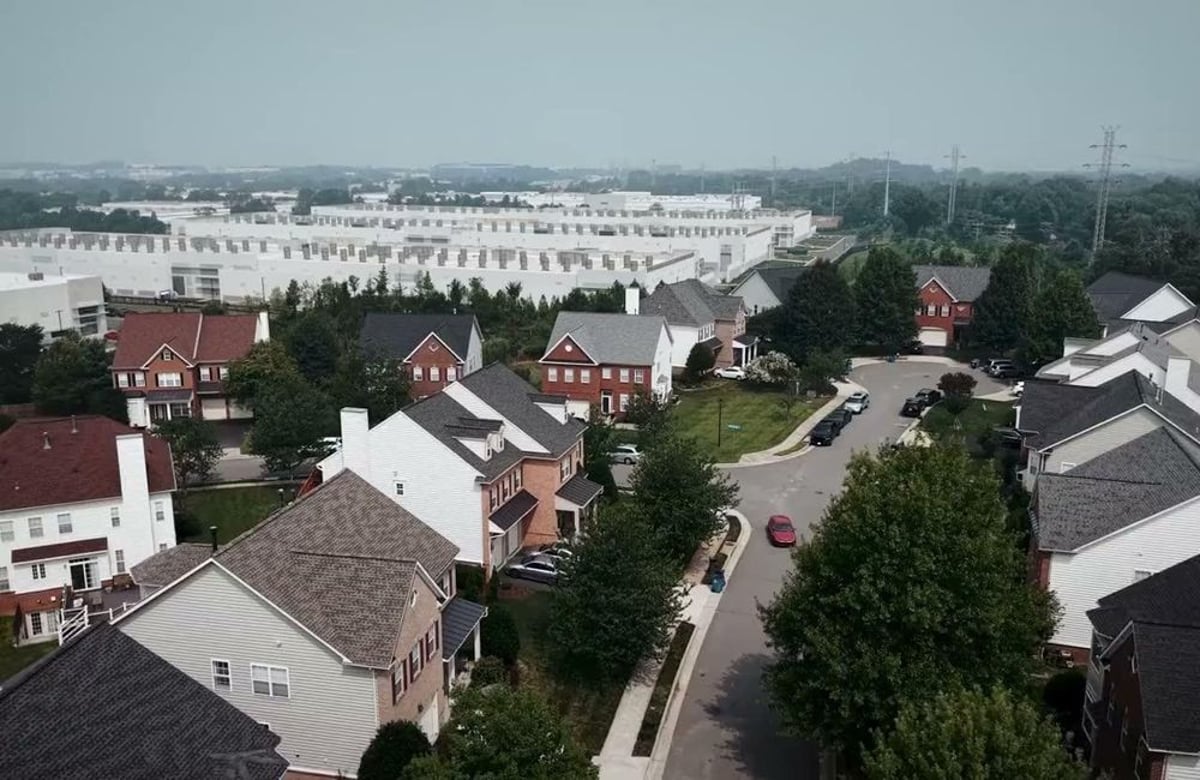
Loudoun County, Virginia, now hosts roughly 250 data centers, the densest concentration on Earth, and the community that once welcomed the industry with open arms is fighting back against noise, transmission towers and eminent domain claims as AI-driven demand accelerates construction. What began as a savvy economic bet after the dot-com bust has become a cautionary tale for towns nationwide weighing whether to invite the server farms that increasingly power the cloud services running the modern internet.
For nearly two decades, Loudoun County, Virginia quietly became the physical backbone of the internet, and almost nobody outside the industry noticed. Now everybody has. The county, nicknamed Data Center Alley, packs about 250 data centers into a sliver of its 515 square miles, the densest concentration anywhere on the planet, and residents who once barely registered the blocky buildings along their commute are now organizing against them.
It started as a recession fix. Back in 2007, Buddy Rizer, a former radio DJ turned economic development officer, needed to diversify a county that pulled 80 percent of its revenue from residential real estate. He looked at the husk left behind after AOL collapsed following its disastrous Time Warner merger and saw opportunity in the abandoned buildings and buried fiber. "And so we came up with this plan to attract data centers," Rizer told The Verge. It worked almost too well. Permits ticked up slowly through the 2010s, then tripled to 21 in 2018 and peaked at 25 in 2022, right as the generative AI boom sent compute demand into overdrive.
The payoff has been real. Data center tax revenue alone exceeded Loudoun's entire operational budget by $35 million in 2024, according to county figures cited by The Verge, and residential property tax rates have dropped from roughly $1.29 to 80 cents per $100 of assessed value since 2008. Twenty-two new schools have gone up in fifteen years. "A majority of the people that live here now only know prosperity," Rizer said, arguing that most residents never connect their good schools and low taxes to the humming buildings nearby.
But the hum is exactly the problem now. Julie Bolthouse of the Piedmont Environmental Council drove reporters past the old AOL campus, now being demolished for yet another data center, and described the shift bluntly: "Now it's just these big, giant computer energy-guzzling, water-guzzling warehouses." Nearby, resident Vicky Hu got a voicemail from Dominion Energy informing her that a 185-foot transmission tower, taller than the Statue of Liberty without its base, could be built through her backyard to connect two substations feeding the grid's expanding load. She's currently appealing the routing decision to the Supreme Court of Virginia.
At the Vantage VA2 site, the tension takes a different form. When Vantage couldn't get enough capacity from Dominion to bring its 800,000-square-foot facility online, it installed its own gas turbines rather than let leased space sit dark, a workaround becoming increasingly common as AI-era facilities demand far more power than the cloud servers of a decade ago. Neighbors like Lindsay Shaw and Jason Mello describe a noise that never stops, unlike the planes overhead from nearby Dulles. Mello has already spent $2,600 on window inserts and been quoted $15,000 more for siding.
This is playing out against a national backdrop. Pew Research Center counts 3,000 data centers already operating in the US with 1,500 more in the pipeline, while Gallup polling shows most Americans don't want to live near one. New York and Texas have both moved to slow new buildouts over grid concerns, and even Loudoun, the industry's own proving ground, is walking back the by-right zoning loophole that let data centers rise anywhere offices could.
Even Rizer, still called the "godfather of data centers," no longer courts new projects. "We don't want more data centers here," he said, "but we want those that are here to be successful." Bolthouse, for her part, doesn't want the existing facilities torn down either. She just wants the next town considering this trade to understand what it's actually signing up for before the towers, turbines, and eminent domain fights arrive on their own streets.
Loudoun County's two-decade experiment shows both sides of the AI infrastructure boom in sharp relief: the tax windfalls, new schools and rock-bottom property taxes on one hand, and the noise, land seizures and community fractures on the other. As the same generative AI demand reshaping Loudoun pushes data center construction into hundreds of new communities across the country, Loudoun's residents, regulators and even the man who built the boom all seem to agree on one thing, that the decision of whether, where and how much to build needs to happen deliberately, before the towers go up rather than after.