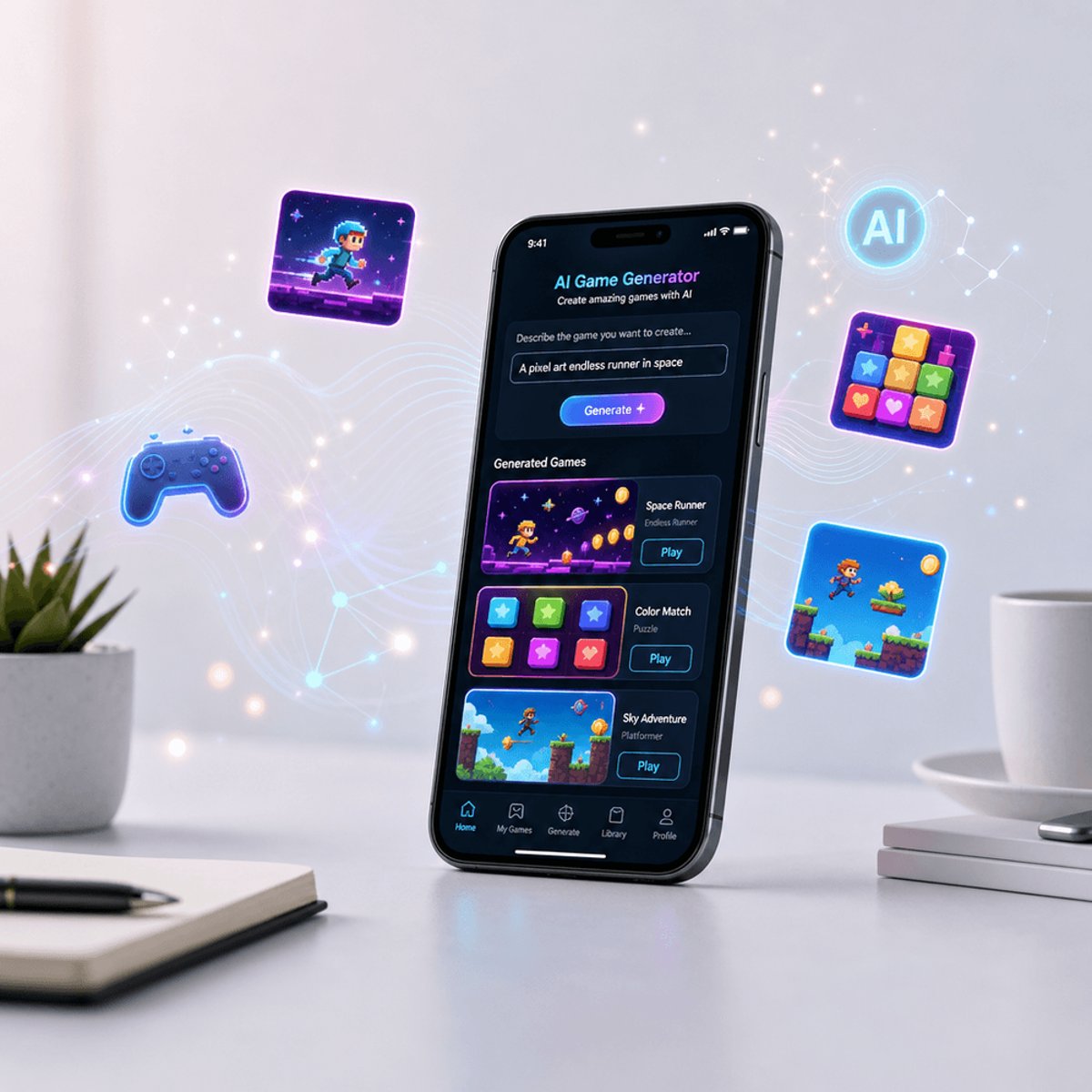
Meta just soft-launched Pocket, an experimental AI app that lets anyone generate playable mini-games through simple text prompts. The move signals Meta's continued push into generative AI beyond chatbots and image creation, now targeting the casual gaming space where platforms like Roblox and Dreams have built entire ecosystems. It's a quiet test run that could reshape how we think about game creation - if it catches on.
Meta isn't making noise about its latest AI experiment, but Pocket could be one of its most intriguing moves yet. The company released the app with minimal fanfare, letting users type prompts like "endless runner with pixel art clouds" or "puzzle game about matching colors" and watch as AI spins up playable experiences in seconds.
It's a sharp departure from Meta's core social platforms, but it fits perfectly into the company's broader AI ambitions. While OpenAI focuses on text and Midjourney dominates image generation, Meta's betting that interactive content - games you can actually play, not just watch - represents the next frontier. The timing makes sense given how Meta's been doubling down on AI infrastructure throughout 2026, pouring billions into compute power and model training.
Pocket's approach draws obvious comparisons to platforms like Roblox, where users create and share games within a social ecosystem. But there's a crucial difference: no coding required. Roblox demands scripting knowledge and design skills. Pocket promises to democratize game creation by removing technical barriers entirely. Whether the AI can generate games compelling enough to keep players engaged remains the big question.
The app represents Meta's continued strategy of launching experimental products through separate apps rather than integrating everything into Facebook or Instagram immediately. It's the same playbook the company used with its AI studio tools and various AR experiments. Keep things contained, test with early adopters, and see what sticks before committing serious resources.
What's particularly interesting is the social angle Meta's weaving in. Pocket isn't just about solo game generation - users can share their creations, presumably building communities around popular AI-generated games. That viral loop could be powerful if Meta nails the distribution mechanics. Imagine stumbling across a friend's weird AI game in your feed, playing it in 30 seconds, then spinning up your own variation. It's social media meets casual gaming meets creative tools.
The competitive landscape here is surprisingly crowded. Google has been experimenting with AI game generation through its research labs. Startups like Scenario and Leonardo.AI are building tools for game asset creation. Even Unity is integrating AI-powered development features into its engine. But Meta has something most competitors lack: distribution at massive scale and an existing social graph.
There's also a practical business angle. Meta's been hunting for new revenue streams beyond advertising as regulatory pressure mounts and user growth plateaus in mature markets. A thriving ecosystem of AI-generated games could open doors to in-app purchases, premium features, or even creator monetization programs. The company's seen how TikTok built an empire on user-generated content - now it wants to see if user-generated games can work the same magic.
The technical challenges are substantial, though. Generating coherent, fun games from text prompts requires understanding game mechanics, balancing difficulty, creating engaging loops, and rendering graphics that don't look broken. That's a far more complex task than generating a static image or writing text. Early AI game experiments from other companies have produced novelties that wear thin after a few minutes. Meta's success depends entirely on whether its models can consistently create games people want to replay and share.
For now, Pocket exists in that liminal space where most Meta experiments live - launched but not promoted, available but not pushed, experimental by design. The company's clearly testing appetite before making bigger bets. If engagement metrics look promising in the coming months, expect Meta to throw more weight behind the project. If users bounce after generating one or two games, Pocket joins the long list of Meta experiments that quietly fade away.
Meta's Pocket launch is a calculated experiment in AI-powered content creation, testing whether generative models can handle the complexity of interactive experiences. The quiet rollout gives Meta room to iterate without the pressure of a major product launch, while the social sharing component taps into the company's core strength. Whether Pocket becomes a legitimate platform or just another experimental footnote depends on solving a hard problem: making AI-generated games fun enough that people actually want to play them more than once. For an industry still figuring out what generative AI is truly good at, Pocket represents an ambitious swing at uncharted territory.