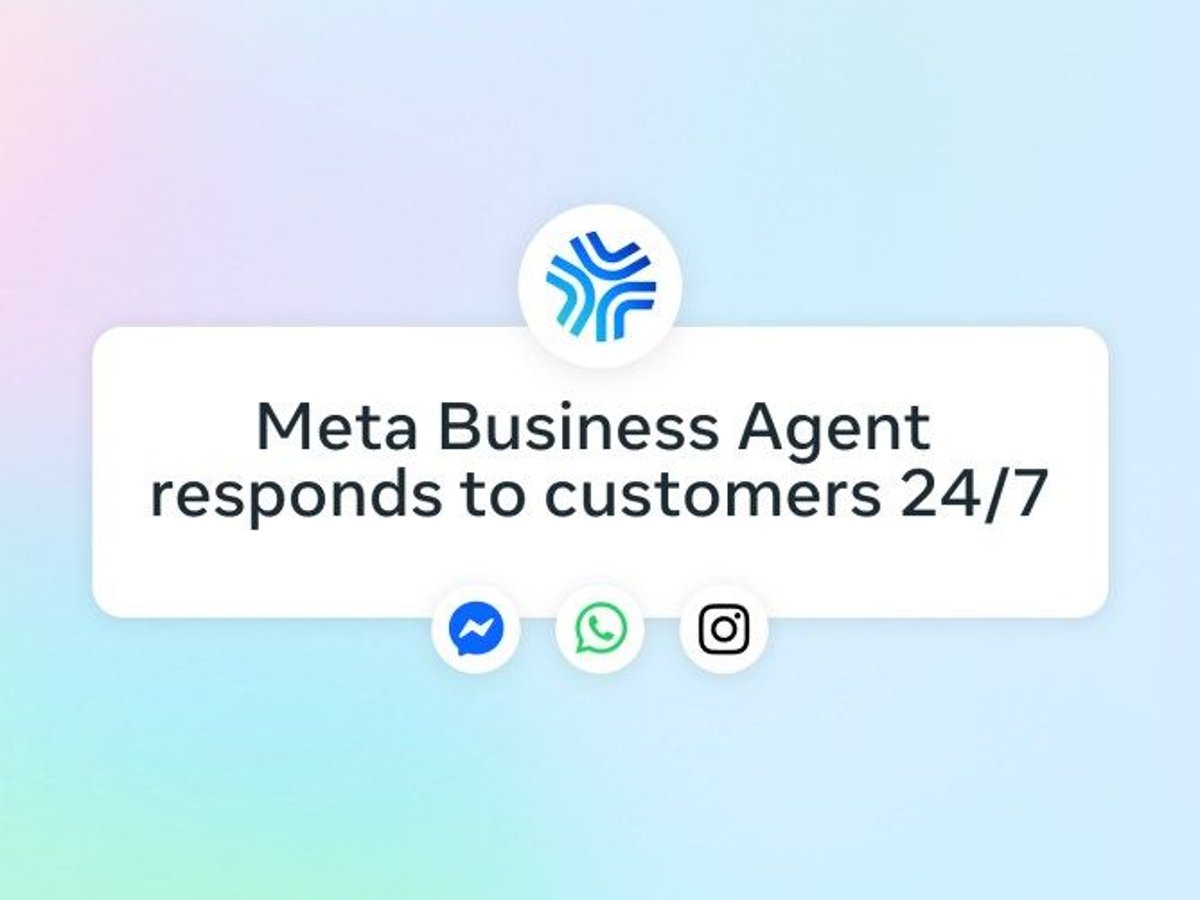
Meta just took its biggest swing yet at monetizing AI for enterprise, rolling out its WhatsApp Business AI agent globally with a token-based pricing model. The move transforms WhatsApp's 200 million business users into potential AI customers, marking Meta's most aggressive push into enterprise AI services since launching its Llama models. For businesses already drowning in customer service queries, the timing couldn't be more strategic.
Meta is officially in the enterprise AI business. The company announced today that its AI agent for WhatsApp Business is now available globally, complete with a token-based pricing model that mirrors how OpenAI and other AI providers charge customers. It's a watershed moment for Meta's AI strategy, transforming what was once a free messaging platform into a revenue-generating enterprise service.
The timing tells you everything about Meta's ambitions. With WhatsApp Business already serving over 200 million companies worldwide - from corner shops in Mumbai to multinational retailers - the platform has quietly become one of the world's largest B2C communication channels. Now Meta's betting those businesses will pay to automate the conversations happening there.
Here's what the token-based pricing means in practice. Businesses will be charged based on how much their AI agent "thinks" - measured in tokens, the fundamental units of text that large language models process. Send a customer query through the AI agent? That's tokens. Generate a response? More tokens. It's the same model OpenAI uses for ChatGPT API access, and it's how Microsoft charges for Azure AI services. For Meta, it creates a direct revenue stream tied to AI usage rather than advertising.
The AI agent itself handles what you'd expect from enterprise customer service automation. According to Meta's developer documentation, businesses can deploy the agent to answer frequently asked questions, provide product information, process orders, and handle basic customer support queries - all without human intervention. The agent integrates with WhatsApp's existing Business API, which companies like Uber and Netflix already use for customer communications.
But the global launch puts Meta in direct competition with established enterprise players. Salesforce has been pushing its Einstein AI for customer service. Zendesk offers AI-powered support bots. Even Google has been testing conversational AI for business messaging through its Business Messages platform. Meta's advantage? It owns the platform where billions of customer conversations already happen.
The token pricing also reveals Meta's broader AI monetization playbook. Unlike its free consumer-facing Meta AI assistant built into Facebook and Instagram, the company sees B2B AI services as a premium offering. It's a recognition that while consumers expect AI features for free, businesses will pay for automation that cuts costs and scales customer service. For a small retailer handling hundreds of daily customer queries, paying per token might be cheaper than hiring additional support staff.
Industry observers note the launch comes as Meta doubles down on enterprise services beyond advertising. The company has been quietly building out WhatsApp Business features for years - verified business profiles, catalog integration, payment processing. The AI agent is the natural evolution, turning WhatsApp from a communication channel into a full customer service platform. It's the same strategy Microsoft used to transform Teams from chat app to enterprise hub.
There are questions Meta will need to answer. How does token pricing compare to competing services? What safeguards prevent AI agents from generating inaccurate or problematic responses to customers? And crucially, how will small businesses in emerging markets - WhatsApp's bread and butter - afford token-based pricing when margins are razor-thin?
The technical infrastructure behind this is significant. Meta has been investing heavily in AI compute, recently announcing plans to deploy 350,000 Nvidia H100 GPUs by year-end. That infrastructure now has a clear B2B revenue stream attached. Every token processed by a WhatsApp Business AI agent runs through Meta's data centers, generating both costs and revenue in a way consumer AI features don't.
For businesses, the calculus is straightforward. Customer service automation has been the killer app for enterprise AI since chatbots first appeared. If Meta's AI agent can handle even 30-40% of routine queries, the ROI justifies token costs. The platform advantage matters too - customers are already on WhatsApp, so there's no new app to install or channel to monitor.
The global rollout also signals confidence in Meta's underlying AI models. The company has released its Llama series as open-source, but the WhatsApp Business agent likely runs on more advanced, proprietary versions optimized for customer service scenarios. Meta hasn't disclosed which models power the agent, but the token pricing suggests compute-intensive processing rather than simple rule-based automation.
Meta's global launch of its WhatsApp Business AI agent with token-based pricing isn't just a product release - it's a declaration that the company sees enterprise AI services as a core revenue stream beyond advertising. With 200 million businesses already on WhatsApp and customer service automation proving its value across industries, Meta has both the platform and the timing right. The big question is execution. Can Meta deliver AI reliable enough that businesses trust it with customer relationships? And can it price tokens competitively while still generating meaningful revenue? For now, the company is betting that owning the communication platform gives it an edge competitors can't match. If businesses bite, we're watching Meta's transformation from ad-supported social network to enterprise AI infrastructure provider happen in real time.