Microsoft just committed to two decades of natural gas power in a deal that's raising eyebrows across the tech industry. The software giant signed a 20-year power purchase agreement with Chevron to fuel what's shaping up to be one of the largest gas-powered data center projects in US history. The move marks a stunning reversal for a company that's spent years touting its carbon-negative ambitions, but it's a bet Microsoft seems willing to make as AI workloads push energy demands to unprecedented levels.
Microsoft just made a choice that reveals where Big Tech's priorities really lie. The company's freshly-inked 20-year power purchase agreement with Chevron commits the tech giant to decades of fossil fuel dependency, a stunning acknowledgment that the AI race trumps climate commitments.
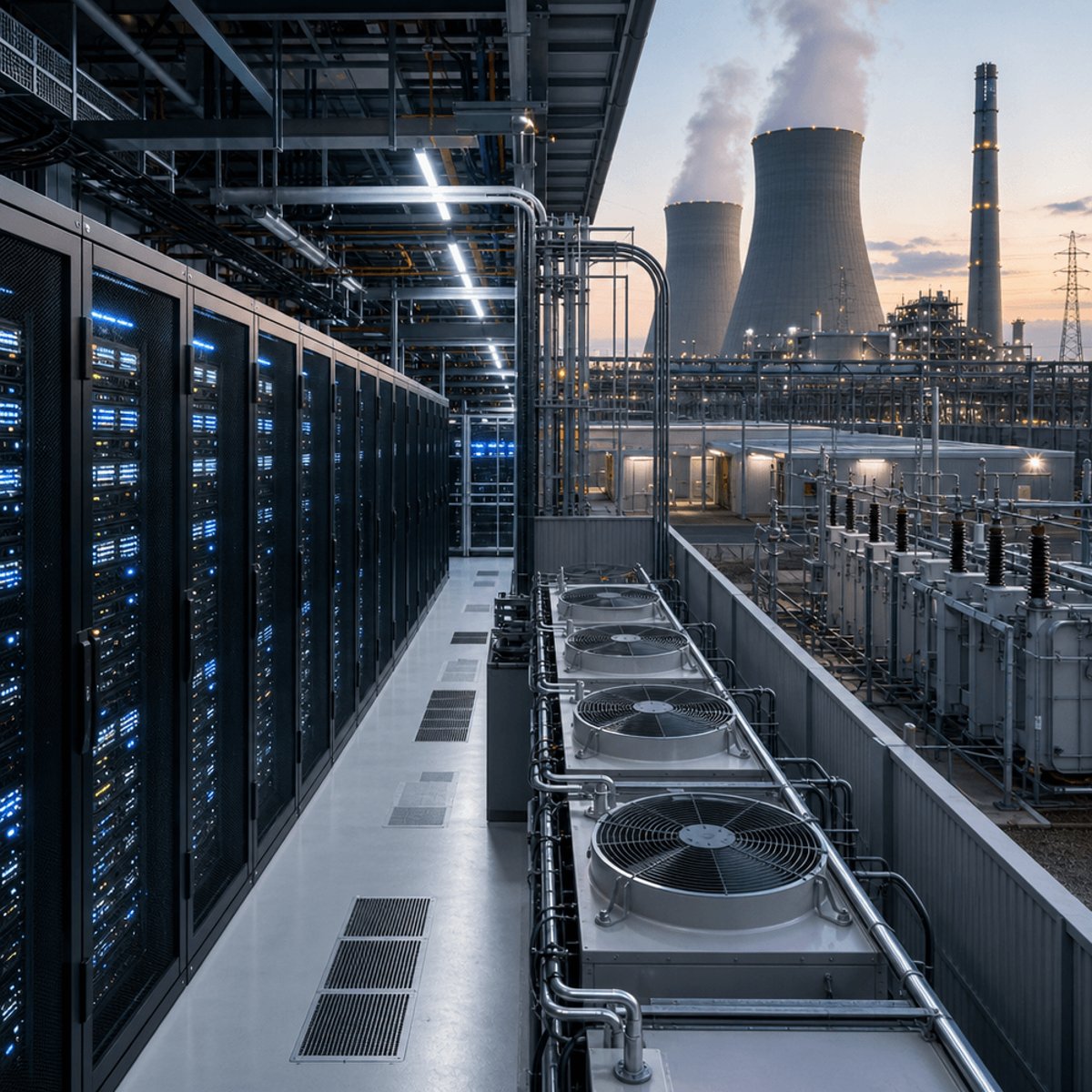
The deal centers on a new natural gas power plant that will feed Microsoft's expanding data center empire. It's one of the largest gas-powered data center projects the US has seen, and the timeline is what's raising alarms. Twenty years of locked-in carbon emissions is an eternity in an industry that typically moves in quarterly increments.
Microsoft has spent the better part of the last five years positioning itself as a climate leader. The company pledged to be carbon negative by 2030, promising to remove more carbon from the atmosphere than it emits. But that was before ChatGPT changed everything. The explosion of AI workloads, particularly large language models and generative AI applications, has sent power requirements through the roof. Training a single large AI model can consume as much electricity as several hundred homes use in a year.
The Chevron partnership suggests Microsoft's infrastructure team ran the numbers and decided clean energy couldn't scale fast enough to meet demand. While competitors like Google and Amazon have poured billions into renewable energy agreements, they're also quietly extending the lives of existing fossil fuel contracts and exploring nuclear options. Microsoft's deal with Chevron just says the quiet part out loud.
Data centers already account for roughly 2% of US electricity consumption, and that figure's expected to double by 2030 as AI adoption accelerates. Microsoft operates more than 300 data centers globally, with aggressive expansion plans to support Azure cloud services and OpenAI's infrastructure needs. The company's partnership with OpenAI, which has already cost Microsoft over $13 billion in investments, requires massive computational resources that show no signs of slowing down.
Natural gas has become the bridge fuel of choice for tech companies caught between ambitious climate goals and immediate capacity needs. It's cleaner than coal but still produces significant carbon emissions. The 20-year commitment is particularly notable because it extends well beyond Microsoft's 2030 carbon-negative deadline, suggesting the company is either revising its timeline or banking on future carbon offset purchases to make up the difference.
Chevron, for its part, gets a guaranteed customer for two decades and validation that fossil fuels still have a role in the digital economy. The oil giant has been diversifying into power generation as traditional petroleum demand faces long-term headwinds. Tech companies with deep pockets and predictable consumption patterns make ideal anchor customers.
The timing also coincides with grid capacity constraints across major US markets. Texas, Virginia, and other key data center hubs are struggling to add renewable capacity fast enough to meet surging demand. Building dedicated gas plants with long-term power purchase agreements gives companies like Microsoft guaranteed capacity without competing for limited grid resources.
Environmental groups are already crying foul. The deal undermines years of corporate sustainability commitments and sets a troubling precedent for an industry that's supposed to be leading the clean energy transition. But Microsoft's move is less about abandoning climate goals than accepting the reality that AI infrastructure can't wait for the grid to catch up.
What's particularly revealing is the contract length. Most corporate power purchase agreements run 10-15 years. Microsoft's 20-year commitment signals the company expects AI-driven data center demands to remain elevated for the foreseeable future, and it's willing to accept the climate trade-offs to secure capacity now.
Competitors are watching closely. If Microsoft can build out massive AI infrastructure on reliable gas power while others scramble for intermittent renewable capacity, it could create a significant competitive advantage in the AI arms race. That calculus might force other tech giants to make similar compromises, potentially unraveling years of collective climate progress in the sector.
Microsoft's Chevron deal is a watershed moment that exposes the tension between tech's climate rhetoric and its AI ambitions. The 20-year commitment to natural gas power isn't just about keeping the lights on - it's a declaration that AI infrastructure needs have fundamentally reshaped how Big Tech thinks about energy. Other companies will be forced to make similar calculations as the AI race intensifies, and we're likely seeing the beginning of a broader industry recalibration where computational capacity trumps carbon goals. The real test will be whether Microsoft can actually achieve its carbon-negative targets while burning gas for the next two decades, or whether this deal marks the quiet death of tech's climate commitments.