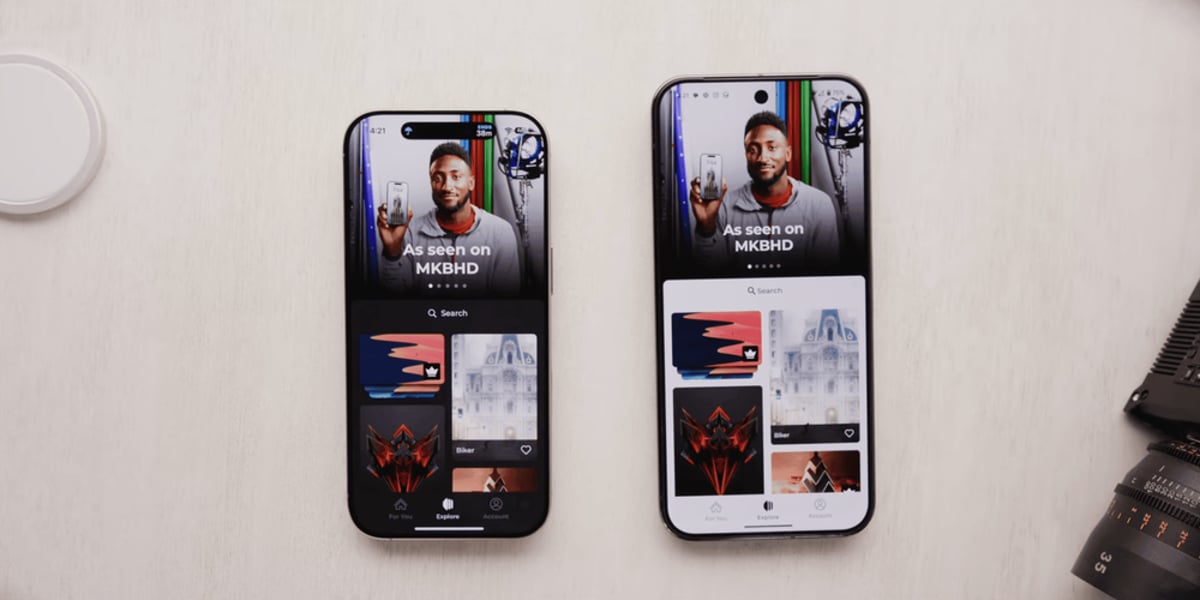
Marques Brownlee is pulling the plug on Panels, his controversial wallpaper app that sparked fierce criticism over premium pricing. The shutdown, announced just 15 months after launch, marks a rare public failure for the influential tech reviewer and offers a stark lesson about consumer expectations in the subscription economy.
The most trusted voice in consumer tech just admitted defeat. Marques Brownlee's Panels wallpaper app is shutting down on December 31st, barely a year after its launch triggered one of the biggest influencer backlashes in recent memory. "We made mistakes making our first app, and ultimately, we weren't able to turn it into the vision I had," Brownlee said in a YouTube video that felt more like a startup post-mortem than his usual polished tech reviews.
The admission marks a stunning reversal for the 31-year-old reviewer whose MKBHD channel has become the gold standard for gadget evaluation. When Panels launched in September 2024, it wasn't just another app release - it was Brownlee's first major venture beyond YouTube, backed by the credibility of his 18 million subscribers.
But the market responded with swift rejection. The app's $12 monthly subscription for premium wallpapers and its ad-supported free tier drew immediate criticism from the tech community. Users balked at paying Netflix-level prices for smartphone backgrounds, while privacy advocates raised concerns about the app's data collection practices. The backlash was particularly brutal because it came from Brownlee's own audience - the same tech-savvy consumers who trusted his product recommendations.
"Earlier this year, the makeup of the development team changed, and despite our best efforts to bring in collaborators who shared our passion and vision, we weren't able to find the right fit," reads a message on the Panels website. The carefully worded statement hints at deeper problems beyond consumer reception - internal struggles that couldn't be resolved even with Brownlee's platform and resources.
The failure exposes a fundamental disconnect between influencer authority and product execution. While Brownlee can persuade millions to buy thousand-dollar smartphones with a single review, translating that influence into a sustainable subscription business proved impossible. The wallpaper market, dominated by free alternatives and one-time purchases, wasn't ready for a premium play.
Industry observers see the Panels shutdown as a broader warning about the subscription economy's limits. "Even the most trusted voices can't force consumers to accept pricing they perceive as unreasonable," said app monetization expert Sarah Chen. The failure also highlights the challenge facing YouTube creators seeking to diversify beyond ad revenue - audience loyalty doesn't automatically transfer to new business models.
Brownlee deserves credit for the graceful exit. All user data will be deleted following the shutdown, with subscriptions automatically canceled and refunds issued after December 31st. More notably, he's planning to make the Panels code open source on GitHub, potentially allowing the community to build something better from the wreckage.
The move to open source the code is particularly telling - it suggests Brownlee recognizes that his vision for premium wallpapers might work in different hands, with different monetization approaches. It's also a smart PR move that reinforces his reputation for putting community interests above profit.
For the broader creator economy, Panels serves as an expensive lesson in market validation. Having millions of followers doesn't guarantee product-market fit, especially when venturing into saturated markets with established user expectations. The subscription model that works for productivity apps and entertainment services doesn't necessarily translate to aesthetic products like wallpapers.
The Panels shutdown represents more than just one failed app - it's a reality check for the creator economy's expansion ambitions. Brownlee's decision to shut down gracefully and open source the code shows how influential figures can turn failures into learning opportunities for the broader community. For aspiring creator-entrepreneurs, the lesson is clear: audience trust is invaluable, but it can't substitute for rigorous market research and sustainable business models.