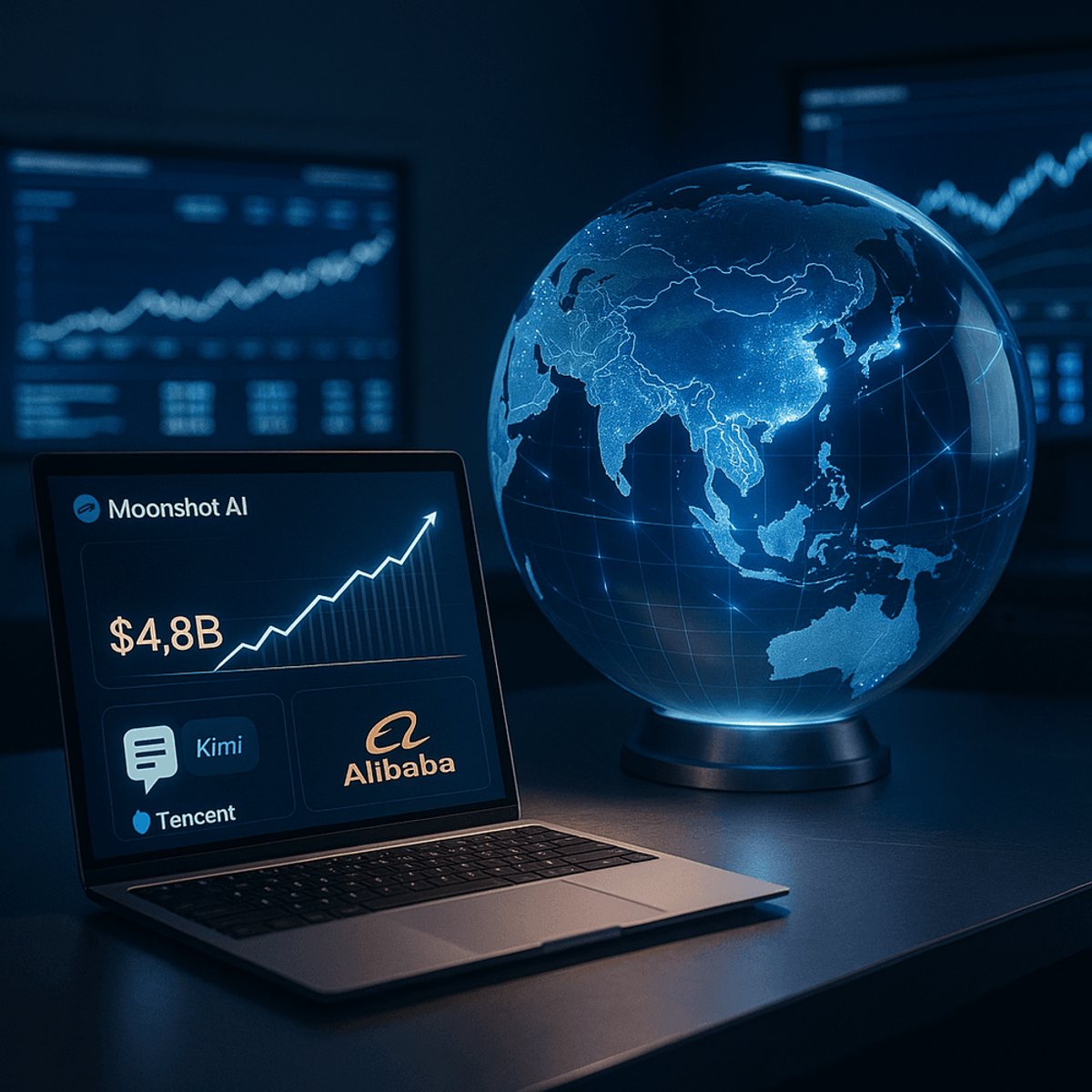
Moonshot AI, the Alibaba-backed Chinese AI startup, is closing a fresh funding round that values the company at $4.8 billion, up $500 million from just weeks earlier, according to two people familiar with the deal. The spike comes as rival Chinese AI companies like Zhipu and MiniMax go public in Hong Kong, signaling a broader investor appetite for homegrown AI alternatives to OpenAI's ChatGPT—which remains officially unavailable in mainland China. The accelerating valuation reflects a geopolitical shift reshaping the global AI landscape.
The funding round is expected to close any day now given the level of investor demand, the sources said. This is Moonshot AI's second major fundraise in less than two months. Back on December 31st, the startup closed a round with backing from IDG Capital, Alibaba, and Tencent, according to Chinese financial outlet LatePost. That round valued the company at $4.3 billion—making the new jump particularly striking in such a compressed timeframe.
Moonshot AI is best known for Kimi, its conversational AI chatbot that gained significant traction in China well before the shock launch of DeepSeek, which rattled global markets by releasing a powerful open-source model with minimal training compute last year. Kimi captured user attention by offering conversational capabilities in an environment where OpenAI's ChatGPT and other U.S.-based AI services face official restrictions under Beijing's internet controls.
What's remarkable about Moonshot's valuation surge is the timing. It coincides directly with momentum from rival Chinese AI startups hitting public markets. Zhipu, operating under the ticker "Knowledge Atlas," went public in Hong Kong and quickly achieved a $13 billion market cap by Monday's close, according to Wind Information data. MiniMax followed suit and reached a $15.2 billion valuation, creating visible benchmarks for investors evaluating Moonshot's potential. The public listings essentially created a roadmap showing how the market values Chinese AI innovation.
The geopolitical backdrop intensifies this dynamic considerably. Beijing has historically restricted foreign internet services, and the White House has tightened restrictions on U.S. companies doing business with China. This creates a protected market where domestic AI champions can flourish without direct competition from OpenAI, Google, or other Silicon Valley players. For investors, that translates to significant moat advantages—Chinese users can't simply switch to ChatGPT, meaning companies like Moonshot capture disproportionate attention and engagement.
Moonshot's investors appear confident the company can capitalize on this. The participation of heavyweight backers like Alibaba—itself a major player in cloud computing and AI infrastructure—signals conviction from within China's tech ecosystem. Tencent, another gaming and social media conglomerate with deep AI research capabilities, wouldn't back a losing bet either. These aren't venture investors taking shots in the dark; they're strategic players who understand China's AI competitive landscape intimately.
The sources told CNBC that Moonshot could see valuations climb even higher in subsequent funding rounds, riding the wave of investor excitement around Chinese AI IPO candidates. That's significant because it suggests the company isn't locked into a near-term public offering. Unlike some startups that need to go public quickly to validate inflated valuations, Moonshot can potentially stay private longer while accumulating capital and market share. This flexibility often leads to better-positioned companies at IPO time.
Still, the IPO question looms. Moonshot has made no official announcement about public market plans, and the company declined to comment when CNBC reached out. But watching Zhipu and MiniMax ring the bell in Hong Kong inevitably raises speculation. If those two can command billions in market cap, Moonshot—with its earlier traction and Kimi's popularity—could potentially command premium valuations. The question becomes when, not if.
What's particularly interesting is how this moment illustrates the fragmentation of global AI development. While Western narratives focus on OpenAI, Anthropic, and other U.S. startups, entire ecosystems of capable AI companies are emerging in China, sheltered from direct competition but still hungry for capital and scale. Moonshot's rising valuation isn't just a funding story—it's a signal that the world's AI future won't be decided by Silicon Valley alone.
Moonshot AI's leap from $4.3 billion to $4.8 billion in just weeks reflects a fundamental shift in how investors value AI startups outside the U.S. market. With rivals like Zhipu and MiniMax proving the IPO thesis through their Hong Kong listings, Moonshot sits in a powerful position to raise capital on favorable terms while building its product and user base. The real story here isn't just about one startup's valuation—it's that the race for AI dominance is becoming unmistakably global, and Chinese companies have both the capital and the market advantage to compete seriously. Expect this space to get only more competitive, and Moonshot's path to the public markets increasingly inevitable.