VoiceRun, a voice AI startup founded by Nicholas Leonard and Derek Caneja, just closed a $5.5 million seed round led by Flybridge Capital. The platform takes a developer-first, code-based approach to building voice agents, positioning itself squarely between the quick-and-dirty no-code builders and the enterprise-heavy options. With the funding locked in, the company is betting that the future of voice automation lives in code, not visual interfaces.
Nicholas Leonard and Derek Caneja spotted a problem nobody was talking about. When they set out to build AI voice agents, they found the market was basically split in two: fast, cheap, and broken. Or slow, expensive, and thorough.
On one side sat the no-code platforms. Developers could click through visual diagrams, drop in some prompts, and ship something to production in days. But the voice agents that came out were brittle, unpredictable, and frankly embarrassing when customers interacted with them. On the other side were the sophisticated enterprises throwing months and entire engineering teams at specialized tools, delivering quality but at a scale only Fortune 500 companies could justify. "Developers and enterprises needed an alternative," Leonard told TechCrunch. There was nothing in the middle.
That insight, paired with another realization that the future of software development itself would be "coded, validated, and optimized by coding agents," led Leonard and Caneja to launch VoiceRun last year. The platform flips the script on how voice agents get built. Instead of dragging boxes around a visual interface and typing prompts into pre-made fields, developers write actual code to define agent behavior. It sounds simple, but it's a fundamental shift in how builders think about voice automation.
"Code is the native language of coding agents," Leonard explained. "They're going to do a far better job operating in code than in a visual interface." And he's right. Visual builders look flexible until you hit the edges. Want your voice agent to speak in a regional dialect? That's a hard no if the interface designer didn't anticipate it. Same goes for thousands of edge cases - custom integrations, special error handling, nuanced conversation flows. "There's a long tail of millions of little things you might want to do that aren't supported by the visual interface," Leonard said. "But in code, it's incredibly simple."
Beyond just the coding layer, VoiceRun bakes in features enterprise builders expect: instant A/B testing, one-click deployment, and global voice infrastructure. The target customer is enterprise developers building everything from AI phone concierges for restaurants to customer service automation. They're not chasing the quick-demo crowd. They're after the builders who need control, reliability, and the ability to iterate fast without begging their tools for new features.
The $5.5 million seed round, announced Wednesday and led by Flybridge Capital, signals real confidence in this middle-ground thesis. The market certainly has appetite. Voice AI startups attracted billions in funding last year alone, riding the wave of AI investment that continues to reshape every software category. But the space is getting crowded, and Leonard's team knows exactly who they're competing with.
On the low end, there's Bland AI and ReTell AI, both targeting speed and ease. Go deeper and you hit Pipecat and LiveKit, which hand developers absolute control. Leonard sees VoiceRun sitting deliberately in the middle ground - more approachable than the hardcore frameworks but far more capable than the no-code tools. "We provide global voice infrastructure and an evaluation-driven lifecycle, while keeping ownership of business logic code and data in the customer's hands," he said. "The key difference is that we're closing the loop for end-to-end coding agent development. We expect developers to be supervising coding agents that write code, run tests, deploy, and propose improvements."
There's something bigger happening here too. Voice automation has a terrible reputation. According to a Five9 survey, three-fourths of customers still prefer talking to a human when it comes to customer service. Why? Because most voice bots are infuriating - they don't understand what you're saying, they can't handle anything off-script, and they waste your time. Leonard thinks better tooling creates better agents, which over time changes consumer perception. "Customers feel relief when a human answers the phone because voice automation has been brittle and ineffective," he said. "But human agents have limitations too - language barriers, making customers feel judged."
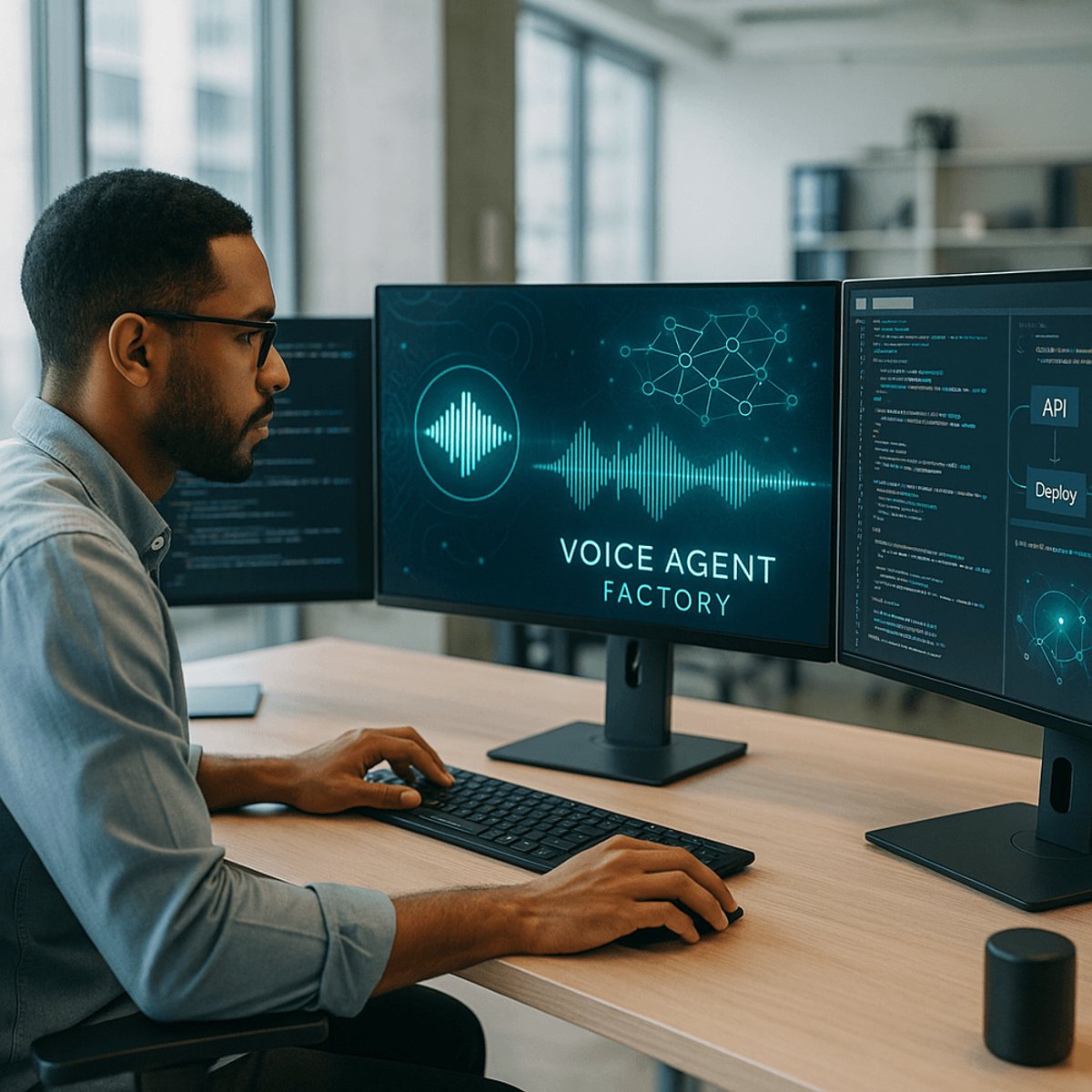
His framing is revealing. He's not trying to replace humans. He's trying to make automation actually work well enough that people stop dreading it. And he's comparing VoiceRun's role to the Model T - "There were great cars before the assembly line, but vehicles didn't become ubiquitous until the assembly line existed. There are great voice agents today, but they won't be ubiquitous until the voice agent factory is built. VoiceRun is that factory."
VoiceRun's seed round and code-first positioning arrive at exactly the right moment. Voice AI is moving from experimental curiosity to mission-critical infrastructure, but the tooling hasn't caught up. The market's either picking between speed and quality, between developer control and ease of use. Leonard's bet is that developers won't accept that trade-off anymore - they'll demand both. If VoiceRun executes on that promise, the $5.5 million becomes a down payment on reshaping how enterprise voice automation actually gets built. And if the company succeeds at that, it's not just good news for VoiceRun. It's good news for every customer tired of pressing buttons and saying "representative" to automated systems that barely listen.