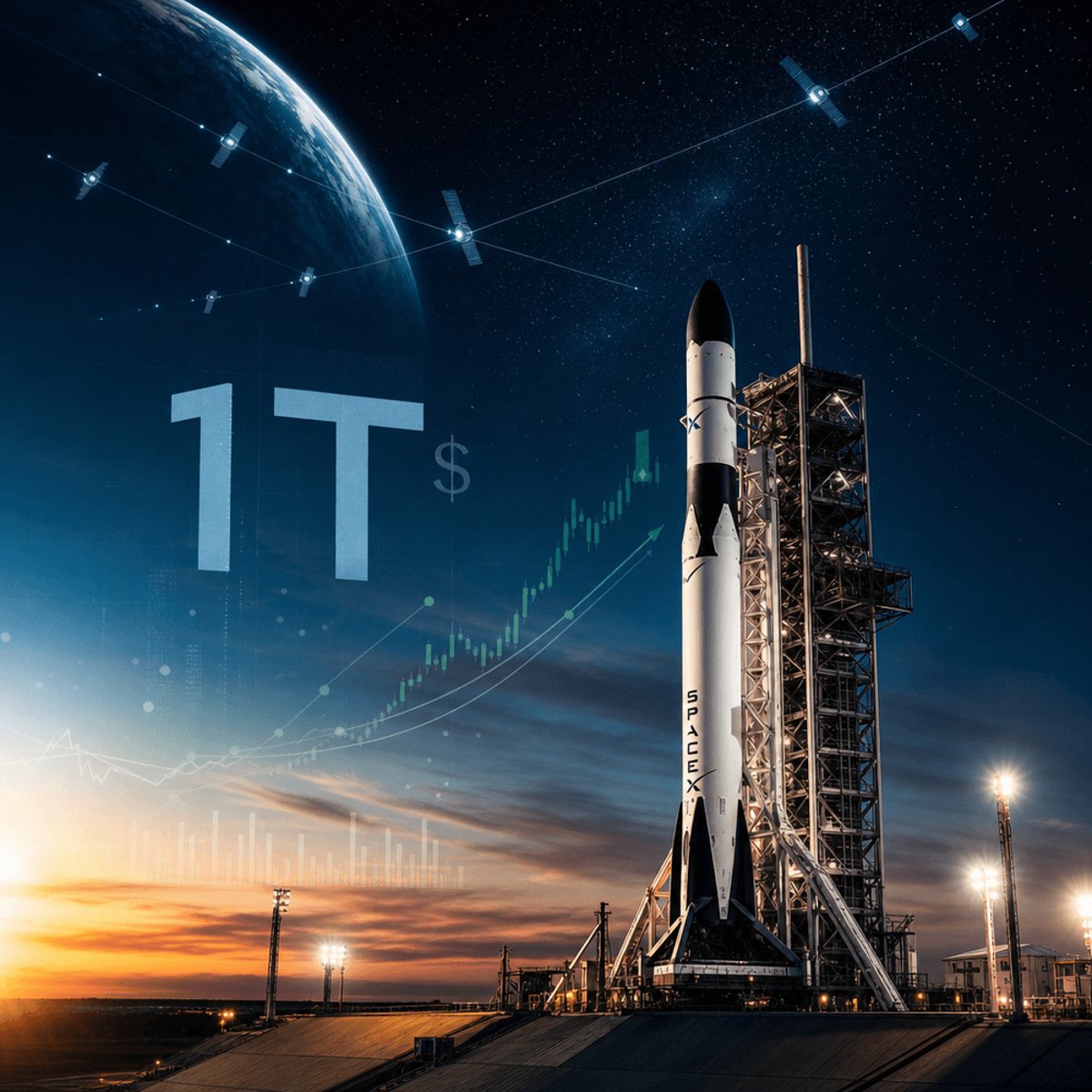
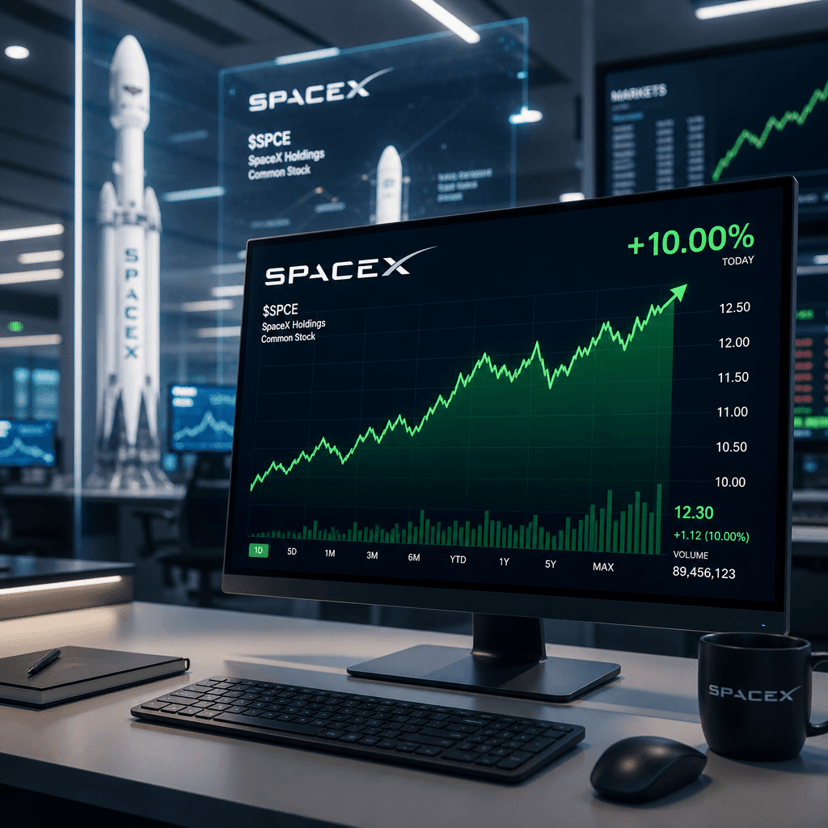
Elon Musk just crossed a threshold no human has reached before. The SpaceX IPO has pushed his paper wealth past $1 trillion, making him the world's first trillionaire at a moment when his influence and controversies have never been more polarizing. The historic public offering marks a turning point not just for Musk's personal fortune, but for the commercial space industry he's spent two decades building.
SpaceX just rewrote the record books twice over. The company's long-awaited IPO didn't just mint the space industry's biggest public offering - it catapulted founder Elon Musk into rarefied air as the first person to accumulate a trillion-dollar net worth. The milestone, reported by TechCrunch, arrives at a peculiar moment when Musk commands unprecedented power while facing equally unprecedented criticism.
The numbers tell a staggering story. Musk's combined holdings in SpaceX, Tesla, and other ventures now exceed $1 trillion in paper value, though the exact breakdown remains fluid as markets digest SpaceX's public debut. For context, Jeff Bezos peaked around $211 billion during Amazon's pandemic surge, while Bernard Arnault of LVMH touched $231 billion at luxury goods' zenith. Musk hasn't just broken the record - he's shattered it by a factor of nearly five.
SpaceX's journey to the public markets caps a remarkable evolution. Founded in 2002 with Musk's PayPal windfall, the company spent years burning through cash and narrowly avoiding bankruptcy before its Falcon 9 rocket became the industry's workhorse. The Starlink satellite internet constellation, once dismissed as quixotic, now generates billions in annual revenue serving remote customers from rural Texas to Ukrainian battlefields. Meanwhile, Starship - the fully reusable heavy-lift rocket Musk calls humanity's ticket to Mars - has completed multiple orbital flights and secured NASA contracts for lunar missions.
What makes this trillion-dollar moment especially striking is its timing. Musk's acquisition and transformation of Twitter (now X) into a more politically charged platform has made him one of the most divisive figures in tech. His companies face ongoing federal investigations, labor disputes, and regulatory battles across multiple jurisdictions. Yet his influence keeps expanding: Tesla reshaped the auto industry, SpaceX dominates commercial spaceflight, Starlink provides critical infrastructure in conflict zones, and Neuralink pushes into brain-computer interfaces.
The IPO mechanics reveal how SpaceX achieved this valuation. While full pricing details weren't immediately available, the company's last private funding round valued it at $180 billion. Public market enthusiasm for space infrastructure, combined with Starlink's proven revenue model and NASA's deepening reliance on SpaceX for crew and cargo missions, appears to have driven valuations significantly higher. The company now launches more mass to orbit than every other entity on Earth combined - governments included.
Market analysts have watched this moment approach for years. "We've known Musk would likely become the first trillionaire given his stakes in transformative companies across multiple industries," one Wall Street observer noted. "The question was timing, and SpaceX going public accelerated the timeline." The IPO gives retail investors their first chance to own a piece of humanity's most ambitious space venture, though early trading dynamics remain unclear.
The competitive landscape makes SpaceX's dominance even more remarkable. Blue Origin, funded by Bezos's Amazon fortune, remains years behind in orbital capabilities. Traditional aerospace giants like Boeing and Lockheed Martin have struggled to compete on cost. Chinese state-backed ventures represent the closest competition, but operate under different constraints. SpaceX's vertically integrated approach and rapid iteration culture have created moats that competitors find nearly impossible to cross.
For Musk personally, the trillion-dollar threshold represents vindication of a decades-long bet that reusable rockets and satellite internet would reshape space access. It's worth noting that this wealth remains largely illiquid - tied up in company equity rather than cash. Any attempt to liquidate significant positions would likely crater valuations. Still, the psychological impact of crossing this milestone will reverberate through Silicon Valley and beyond.
The broader implications extend past personal wealth metrics. SpaceX's successful IPO validates commercial space as a mainstream investment category, not a speculative side bet. It proves that private companies can not just compete with but surpass government space programs in capability and cost-efficiency. And it demonstrates that even in an era of tech skepticism and regulatory scrutiny, companies solving genuinely hard problems can achieve extraordinary valuations.
What happens next bears watching closely. Public market pressures will force new levels of financial transparency from famously secretive SpaceX. Quarterly earnings calls will subject Musk's Mars ambitions to Wall Street's scrutiny. And the company's ability to maintain its innovation pace while satisfying public shareholders will test whether the startup culture that got SpaceX here can survive in its new form. The first trillionaire milestone is historic, but for Musk and SpaceX, it may prove to be just the beginning of a more complicated chapter.
Elon Musk's trillion-dollar milestone represents more than a personal achievement - it's a signal that the commercial space industry has arrived as a economic force. SpaceX's journey from near-bankruptcy to market dominance validates Musk's high-risk approach to innovation, even as his growing influence across industries raises questions about concentrated power in private hands. For investors, the IPO offers access to space infrastructure that's become critical for communications, defense, and exploration. For Musk, it's validation that his Mars ambitions aren't just feasible but fundable. The real test begins now: whether SpaceX can maintain its edge while navigating public market pressures and whether this new trillionaire class represents innovation rewarded or inequality accelerated.