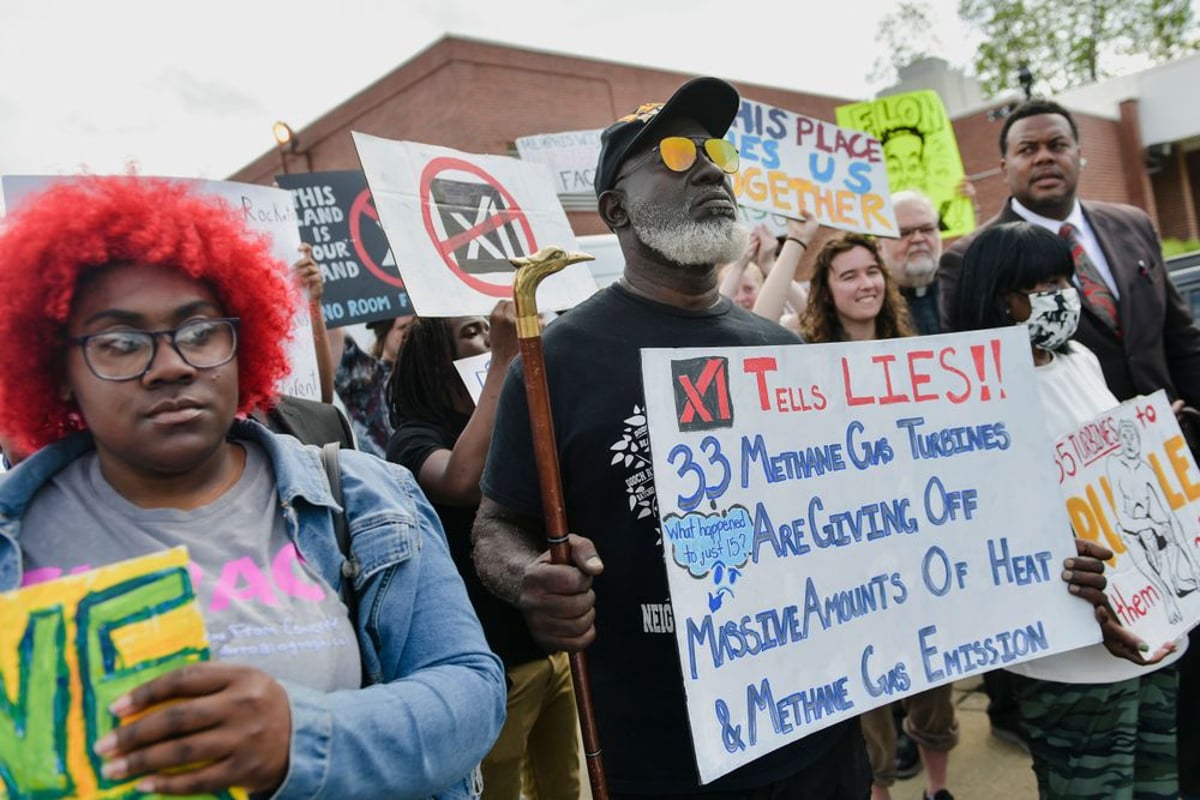
The NAACP is putting the tech industry "on alert" with new guiding principles demanding accountability from companies building AI data centers. The civil rights organization, already challenging Elon Musk's xAI facility in Memphis, released an exclusive framework to help communities fight back against data centers that rely on fossil fuels and worsen air quality in predominantly Black neighborhoods.
The nation's oldest civil rights organization just fired a warning shot across Silicon Valley's bow. The NAACP released an exclusive framework to The Verge demanding unprecedented accountability from tech companies building AI data centers, with a clear message: clean up your act or face legal action.
"It allows for tech companies to be on alert," Abre' Conner, director of the Center for Environmental and Climate Justice at the NAACP, told The Verge. "That if they do not meet our demands as it relates to the guiding principles, that if we move into other forms of advocacy including filing litigation, that there shouldn't be any shock or question as to why we're doing that."
The timing isn't coincidental. Electricity demand is rising in the US for the first time in nearly two decades, driven largely by massive data centers supporting AI advancements. But these facilities are increasingly powered by fossil fuels, creating a collision course between tech's AI ambitions and environmental justice.
The Memphis battleground illustrates what's at stake. xAI's data center has triggered a 79% spike in peak nitrogen dioxide levels in the surrounding area since beginning operations in 2024, according to research from the University of Tennessee, Knoxville. The facility neighbors predominantly Black communities like Boxtown, where cancer risks already run four times higher than the national average.
Aerial imagery obtained by the Southern Environmental Law Center revealed 35 gas turbines that xAI installed at the site, which the NAACP alleges were running without proper permits. The Southern Environmental Law Center fired off a letter in June threatening to sue for Clean Air Act violations.
The NAACP's framework demands radical transparency. Companies must disclose water and energy consumption, emissions, subsidies, and corporate ownership details as soon as they propose new projects. They must continue sharing this data with local communities after facilities go operational. Energy efficiency standards and environmental commitments must become legally binding through community benefit agreements.
"No community should be forced to sacrifice clean air, clean water, or safe homes so that corporations and billionaires can build energy-hungry facilities," the NAACP stated in the principles shared exclusively with The Verge.
Data centers are driving a boom in new gas pipelines and power plants across the southeastern US, according to a recent report from the Institute for Energy Economics and Financial Analysis. Local utility officials in Memphis reportedly signed NDAs surrounding the xAI project, highlighting the opacity that the NAACP seeks to eliminate.
The civil rights organization didn't craft these principles in isolation. Nearly a dozen groups contributed, including Memphis Community Against Pollution and the Climate Justice Alliance. They held a two-day meeting in Memphis in late August, deliberately echoing the 1991 First National People of Color Environmental Leadership Summit that established 17 principles of environmental justice.
"We had the convening in Memphis to show unity with the community there," Conner explained. "These places that have been sacrifice zones for so long, we're no longer going to stand by and allow for a new emergence of industry to come into these same communities and add more pollution."
The NAACP hasn't formally filed suit against xAI since issuing its 60-day notice in June, but the organization is developing template community benefit agreements for advocates nationwide. xAI is already developing a second and even larger data center near its Memphis facility.
With major tech companies racing to build AI infrastructure, the NAACP's framework positions environmental justice at the center of the data center debate. The organization's track record suggests this isn't just rhetoric - they're prepared to take legal action against companies that ignore community concerns about air quality, water consumption, and renewable energy commitments.
The NAACP's framework represents a watershed moment for tech accountability, transforming environmental justice from a peripheral concern into a central challenge for AI infrastructure development. As electricity demand surges and data centers proliferate, companies can no longer treat community impact as an afterthought. The Memphis case demonstrates both the environmental stakes and the organized resistance emerging nationwide. Tech leaders now face a choice: proactively embrace transparency and renewable energy commitments, or prepare for sustained legal battles in communities that refuse to remain silent sacrifice zones.