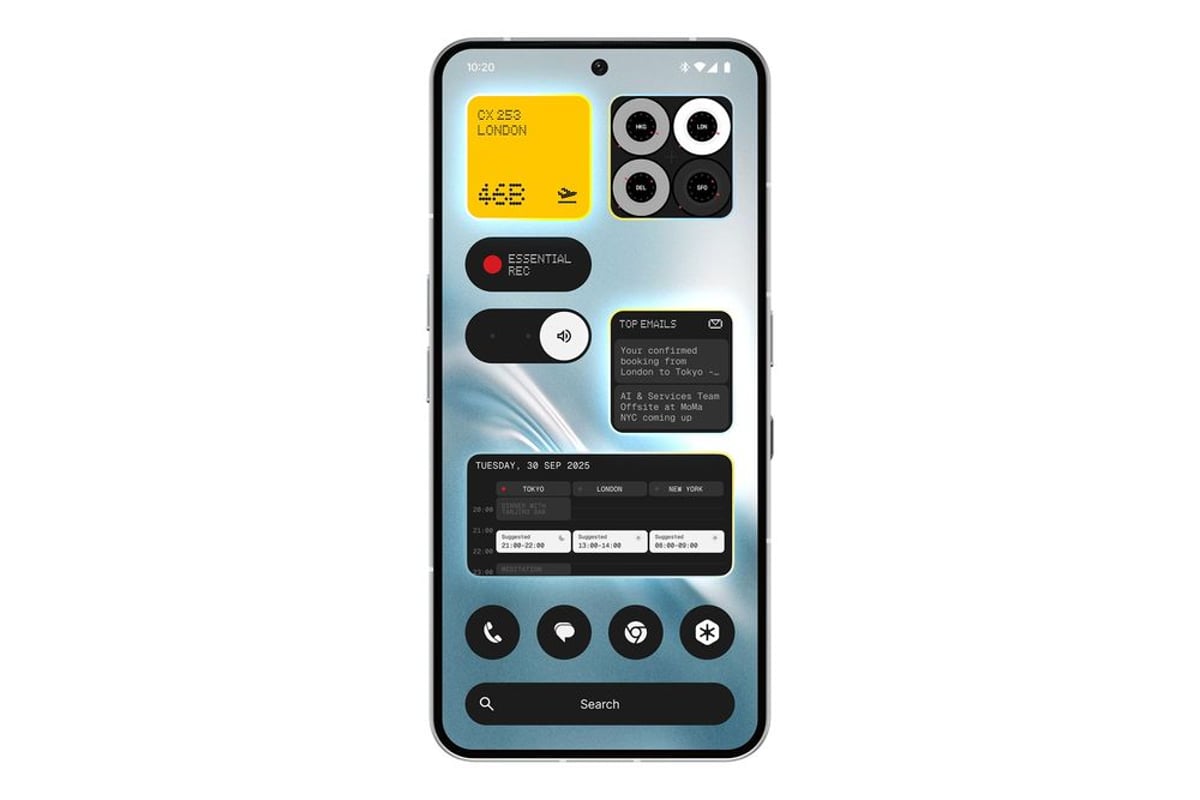
Nothing just dropped Playground, an AI-powered app creation platform that lets users build custom smartphone apps from simple text prompts. The London startup is positioning this as their "first step towards an AI-native operating system," though it's really more of an interface layer sitting on top of Android. Still, the concept is genuinely intriguing - imagine designing a mood tracker that syncs with your playlist or an outfit picker based on your calendar, all without touching a line of code.
Nothing just made app development as simple as sending a text message. The London startup's new Playground platform launched today with a bold promise: anyone can now build smartphone apps using nothing but written prompts, no coding required.
CEO Carl Pei is calling this Nothing's "first step towards an AI-native operating system," though that's stretching things a bit. Playground is actually an app store filled with user-created, AI-generated apps, and it's built entirely on Google's Android. But beneath the marketing hyperbole lies something genuinely exciting - a glimpse of smartphones that adapt to users rather than forcing users to adapt to them.
The centerpiece is Essential Apps, an AI-powered tool that can build simple applications from written descriptions alone. "We're basically democratizing app creation," Pei told The Verge during an exclusive interview. Users can request anything from a mood tracker that syncs with music playlists to a receipt-to-expenses pipeline or an outfit selector based on wardrobe and calendar appointments.
Right now, the platform only creates widgets rather than full applications, which obviously limits functionality. Apps must be designed on a web platform before being installed on Nothing phones or shared through Playground. The service works exclusively with Nothing devices, though the original Phone 1 is excluded since it no longer receives major updates.
Pei envisions this evolving into something much more seamless. "Over time, this process will take place directly on the phone itself, perhaps just by speaking," he explained. The company plans to expand beyond widgets to full-screen apps comparable to traditional smartphone applications.
What's particularly interesting is the potential creator economy emerging around this concept. Playground allows users to remix and build upon apps others have created, similar to how open-source communities collaborate today. Despite Nothing's criticism of the "moats" that Apple and Google have built around their app stores, Pei says he's not focused on monetization yet.
"I think it needs to reach a certain level of scale before we can turn on whatever business model we have," Pei said, suggesting YouTube as a potential model for creator compensation. "YouTube could be a good example of where it could potentially go."
The "AI-native OS" positioning becomes clearer when considering Nothing's longer-term vision. Pei describes phones that could proactively rearrange apps or suggest new ones based on usage patterns. But even then, he admits this isn't really an operating system - it's an interface layer. "I guess the word or the noun 'OS' could be interpreted in different ways," he said, acknowledging the semantic stretch.
Nothing has no intention of abandoning Android. "We're not touching the lower level code," Pei emphasized. "Android is a great platform to build upon, and Android already has a rich developer ecosystem." Users will still need to download standard apps like Instagram and TikTok when setting up their phones.
This approach stands in stark contrast to other AI-powered hardware experiments like Rabbit's R1 or OpenAI's partnership with former Apple designer Jony Ive. Rather than promising to replace smartphones entirely, Pei is betting phones are here to stay. "When am I ready to say goodbye to apps?" he asked himself during the interview. "You know, not anytime soon."
The timing feels right for this kind of democratized app creation. As AI tools become more sophisticated and user-friendly, the barrier between having an idea for an app and actually building it continues to shrink. Nothing's approach could potentially unlock a new wave of hyper-personalized applications that major app stores would never economically justify developing.
But there's still a long way to go before Nothing can truly challenge the established mobile ecosystem. The current widget-only limitation is significant, and the platform's exclusivity to Nothing phones severely restricts its potential reach. The company's track record with software updates and long-term support will also be critical for building developer and user confidence.
Nothing's Playground represents a fascinating experiment in democratizing app development, even if the "AI OS" branding oversells what's actually a clever Android interface. The real potential lies not in replacing traditional smartphones but in enabling a new generation of hyper-personalized applications that adapt to individual user needs. If Nothing can expand beyond widgets and build a sustainable creator economy, this could genuinely reshape how we think about mobile software development. The question isn't whether this will replace the App Store - it's whether it will inspire Apple and Google to create their own versions of user-generated app platforms.