TL;DR:
• NVIDIA launches FLUX.1 Kontext as plug-and-play NIM microservice for RTX PCs
• Model compressed from 24GB to 7GB while delivering 2x performance boost via TensorRT optimization
• Simple text-to-edit functionality eliminates need for fine-tuning or complex AI workflows
• Available through ComfyUI with one-click deployment targeting mainstream developer adoption
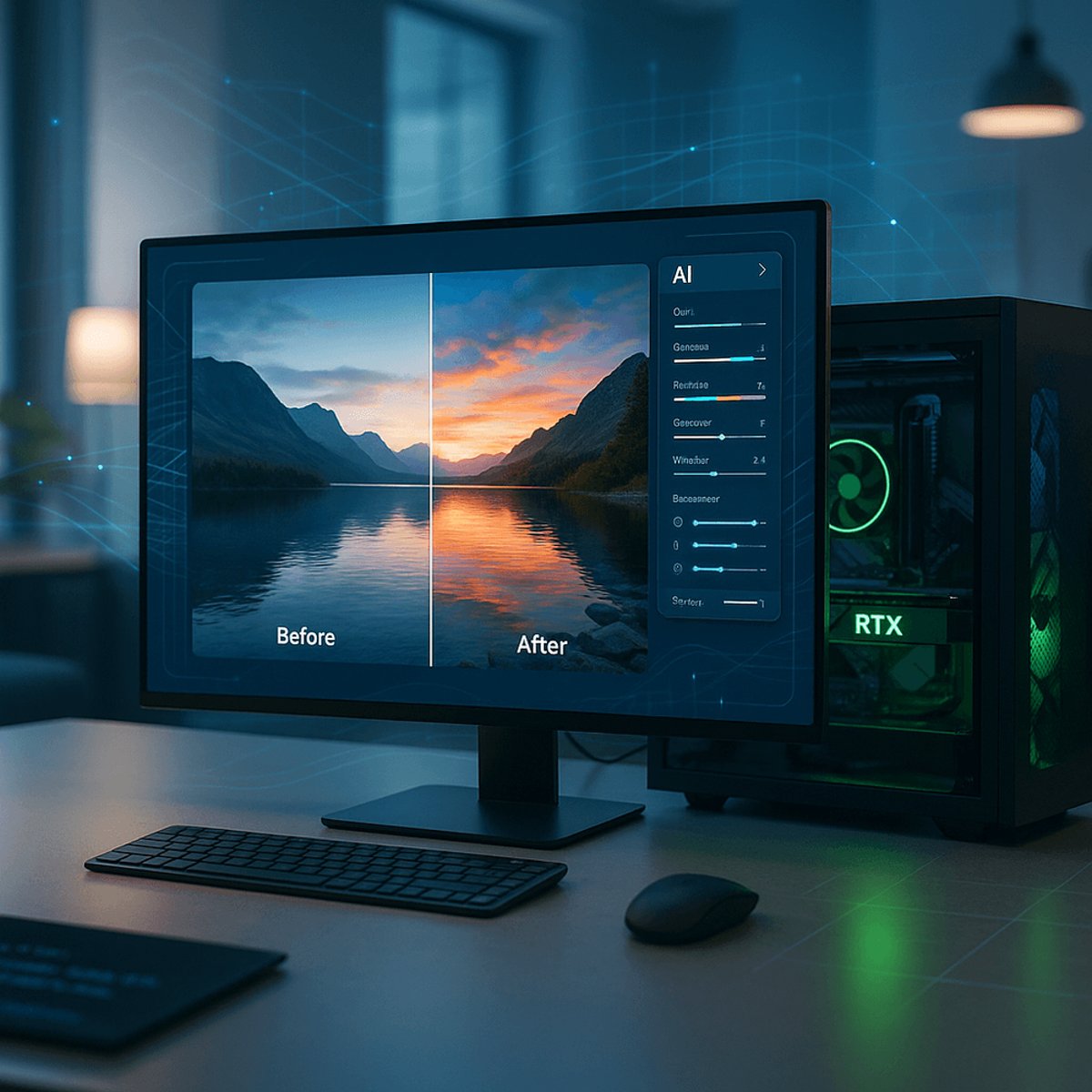
NVIDIA just made high-end image editing AI accessible to mainstream developers. The company released Black Forest Labs' FLUX.1 Kontext model as a NIM microservice, bringing professional-grade AI image editing to RTX-powered PCs without the complexity of traditional deployment. This marks a significant democratization of enterprise-level generative AI tools, potentially reshaping how creators and developers approach image manipulation workflows.
NVIDIA just turbocharged the AI image editing landscape by packaging Black Forest Labs' cutting-edge FLUX.1 Kontext model into a ready-to-deploy microservice. The move signals NVIDIA's aggressive push to democratize enterprise AI tools, making sophisticated image manipulation accessible to developers without PhD-level AI expertise.
[embedded image: FLUX.1 generated bird transformation showing before/after editing capabilities]
The timing couldn't be more strategic. While competitors scramble to match OpenAI's DALL-E and Midjourney's creative prowess, NVIDIA is betting on a different approach: giving developers and creators direct control over the AI stack. "These dramatic performance gains were previously limited to AI specialists," according to NVIDIA's blog post, highlighting how the company is targeting the accessibility gap that's plagued enterprise AI adoption.
FLUX.1 Kontext stands apart from traditional image generators by accepting both text and visual inputs simultaneously. Users can reference an existing image and guide its evolution through natural language prompts - a workflow that mirrors how human designers actually think about iterative editing. The model's "guided, step-by-step generation process" enables coherent edits that preserve the original concept while allowing dramatic transformations.
The technical achievements here run deeper than simple packaging. NVIDIA and Black Forest Labs collaborated to compress the model from a hefty 24GB down to just 7GB for RTX 50 Series GPUs using a new quantization method called SVDQuant. RTX 40 Series users get a 12GB FP8 version optimized for their cards' Tensor Core accelerators. This isn't just storage efficiency - it's making the difference between needing a $10,000 workstation versus running on a $1,500 gaming rig.
[video iframe: NVIDIA NIM microservices explainer showing deployment process]
Performance benchmarks reveal NVIDIA's TensorRT framework delivering over 2x acceleration compared to running the original model through PyTorch. That translates to cutting image generation times from minutes to seconds - the kind of speed improvement that transforms creative workflows from occasional experimentation to real-time iteration.
The distribution strategy through ComfyUI NIM nodes represents NVIDIA's acknowledgment that GitHub, not corporate sales teams, drives AI adoption among developers. The five-step installation process reads more like setting up a popular open-source project than deploying enterprise software: install AI Workbench, grab ComfyUI, add NIM nodes, accept licenses, click run.
This approach puts NVIDIA in direct competition with cloud-based image editing services while leveraging their core GPU advantage. Where Adobe's Firefly requires Creative Cloud subscriptions and Stability AI's models demand cloud credits, FLUX.1 Kontext runs entirely on local hardware after initial download.
The broader implications extend beyond image editing. NVIDIA's NIM microservice platform is positioning the company as the infrastructure layer for AI deployment, similar to how Amazon Web Services became the default choice for web applications. Each new model packaged as a NIM microservice strengthens NVIDIA's ecosystem lock-in while making developers more dependent on RTX hardware.
Competitive pressure is already mounting. Intel's Arc Graphics division has been aggressively courting AI developers, while AMD's ROCm platform continues improving its AI model support. NVIDIA's response appears focused on ease of use rather than pure performance, betting that developers will choose convenience over marginal speed gains.
The timing aligns with NVIDIA's RTX 50 Series launch, creating a hardware-software synergy that could drive GPU upgrade cycles among creative professionals. Early benchmarks suggest the new cards' FP4 support provides the optimal experience for FLUX.1 Kontext, potentially making RTX 40 Series feel outdated for AI workflows.
NVIDIA's FLUX.1 Kontext release represents more than just another AI model launch - it's a strategic move to own the AI deployment infrastructure layer. By making enterprise-grade image editing accessible through simple downloads, NVIDIA is positioning RTX hardware as essential for the next wave of AI development. The success of this approach could determine whether AI remains concentrated in cloud services or shifts toward edge computing, with profound implications for how creators and developers build AI-powered applications. Developers should expect similar NIM packaging for other popular models, while competitors will need to match both NVIDIA's performance optimizations and deployment simplicity.