Nvidia is putting its AI chips inside Chinese robotics maker Unitree's latest humanoid robot, the H2 Plus, marking a significant east-meets-west collaboration in the race to build capable autonomous machines. Spencer Huang, Nvidia's robotics lead, told WIRED the partnership combines Unitree's hardware prowess with Nvidia's AI compute power to create what he calls "the best of both worlds." The move signals Nvidia's growing ambitions beyond data centers into physical AI systems that can navigate and work in the real world.
Nvidia just made its boldest move yet into humanoid robotics, and it's doing it with a Chinese partner. The chip giant revealed it's working with Unitree Robotics to power the H2 Plus, a 6-foot humanoid robot that pairs Unitree's mechanical design with Nvidia's AI processing muscle.
Spencer Huang, who leads robotics efforts at Nvidia, described the partnership to WIRED as combining complementary strengths. Unitree has built a reputation for affordable, capable robotic platforms - their quadruped robots have become fixtures in research labs and industry demos. Nvidia brings the computational firepower that makes autonomous decision-making possible. The result is a humanoid that can theoretically process its environment and make decisions in real-time, not just follow pre-programmed routines.
The timing isn't accidental. Humanoid robotics has exploded from science fiction curiosity to serious industrial pursuit over the past two years. Tesla has its Optimus program, Boston Dynamics continues refining Atlas, and startups like Figure AI have raised hundreds of millions to build commercial humanoids. What's been missing is the AI brain that can make these machines truly autonomous rather than remotely piloted or heavily scripted.
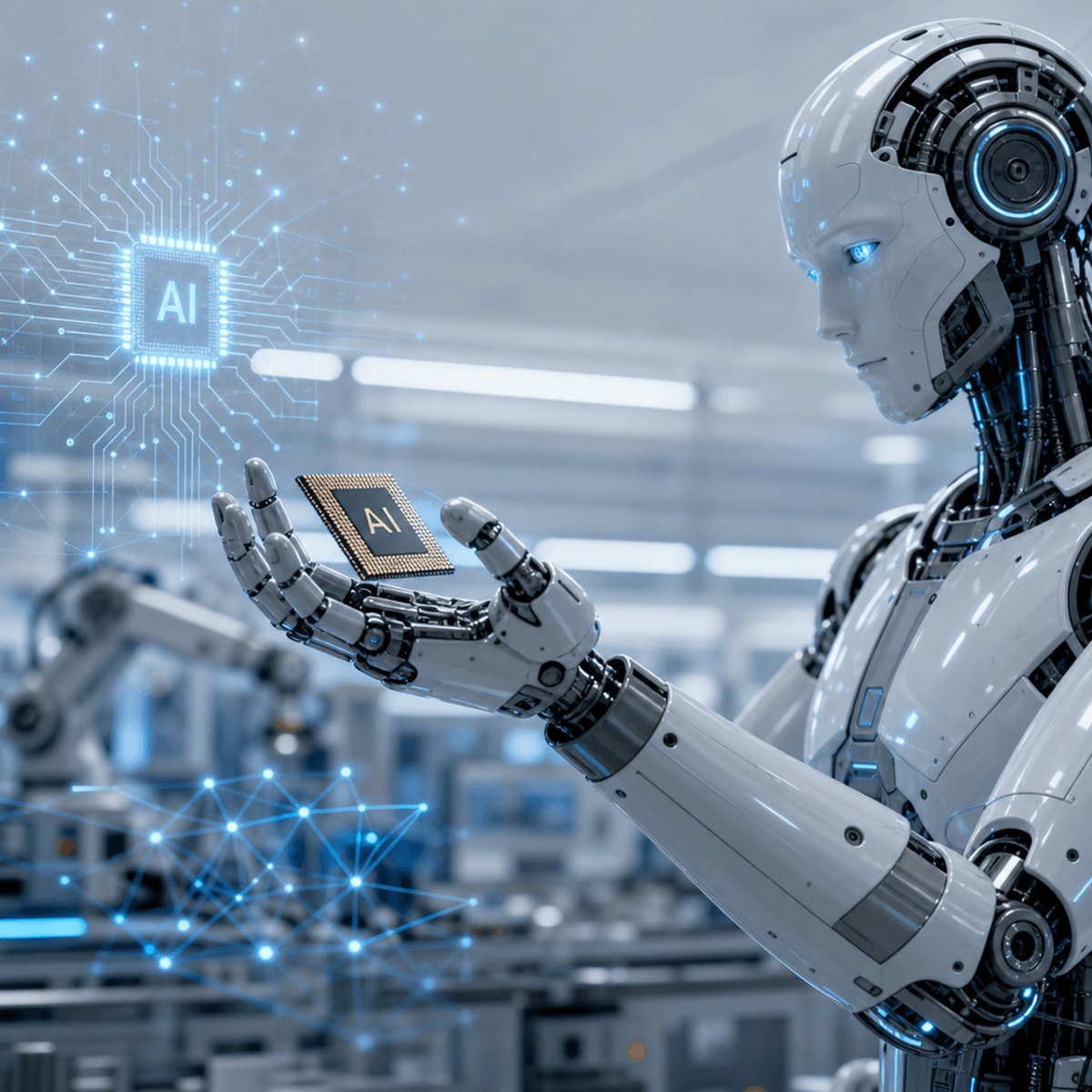
That's where Nvidia's technology enters the picture. The company has been quietly building out its robotics stack through its Isaac platform, which provides simulation environments and AI models specifically designed for physical systems. By embedding Nvidia's processing capabilities directly into Unitree's hardware, the H2 Plus gets access to real-time computer vision, path planning, and decision-making algorithms that can adapt to unpredictable environments.
The China-US collaboration angle adds another layer of complexity. While geopolitical tensions have strained tech partnerships between the two countries, robotics remains an area where hardware and software expertise are distributed globally. Unitree's strength lies in mechanical engineering and cost-efficient manufacturing - they've managed to bring down prices for robotic systems that traditionally cost hundreds of thousands of dollars. Nvidia's advantage is in the AI silicon and software frameworks that make those systems intelligent.
For Nvidia, this partnership represents a strategic expansion beyond the data center. The company has dominated AI training and inference in cloud environments, but physical AI - robots that operate in factories, warehouses, and eventually homes - represents a massive new market. CEO Jensen Huang has repeatedly emphasized that the next wave of AI won't just live in servers but will need to navigate the messy, unstructured physical world.
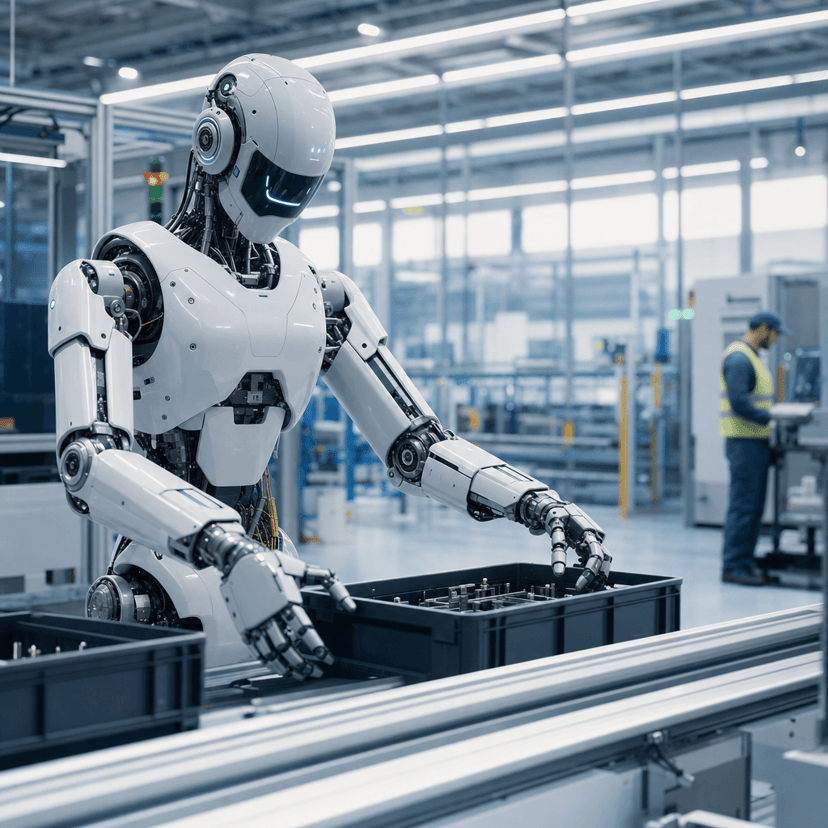
The H2 Plus itself stands roughly 6 feet tall and appears designed for industrial and commercial applications rather than consumer markets. While specific technical specifications weren't detailed in the announcement, the combination of Unitree's hardware pedigree and Nvidia's AI capabilities suggests a machine built for practical work rather than demonstration purposes.
What remains unclear is how this collaboration will scale and whether it represents an exclusive partnership or just the first of many similar deals. Nvidia has shown willingness to work with multiple partners in the autonomous vehicle space, supplying technology to competing automakers. The same strategy could play out in humanoid robotics, with Nvidia positioning itself as the essential AI infrastructure provider regardless of whose mechanical platform wins market share.
The announcement also raises questions about deployment timelines and real-world capabilities. Humanoid robots have a long history of impressive demos that don't translate to practical utility. The difference this time might be the AI processing power that enables genuine adaptation rather than carefully choreographed performances. If the H2 Plus can handle unpredictable scenarios and learn from experience, it would mark a genuine leap forward for the field.
For the broader robotics industry, this partnership validates the thesis that building capable humanoids requires both mechanical innovation and AI breakthroughs. Neither hardware nor software alone solves the problem. Companies that can bridge both domains - either through internal development or strategic partnerships - will likely lead the next phase of automation.
The Nvidia-Unitree partnership represents more than just another robotics announcement - it's a signal that humanoid robots are transitioning from research curiosities to engineered products with real commercial potential. By combining Chinese manufacturing efficiency with American AI silicon, the collaboration shows how the robotics revolution will likely unfold through strategic partnerships rather than single-company moonshots. Whether the H2 Plus delivers on its promise remains to be seen, but the convergence of advanced AI processing and capable mechanical platforms means we're closer than ever to robots that can actually handle the complexity of working alongside humans in unstructured environments.