At Munich's IAA Mobility conference, NVIDIA Vice President Ali Kani revealed how the chip giant is transforming vehicles from horsepower-dependent machines into AI-defined platforms. The company's cloud-to-car ecosystem now powers everything from Mercedes-Benz's new electric lineup to Volvo's advanced driver assistance systems, marking a decisive shift toward software-defined mobility with safety as the cornerstone.
NVIDIA's automotive ambitions just got a major showcase at Europe's biggest mobility conference. At IAA Mobility in Munich, VP of Automotive Ali Kani didn't just talk about the future of cars - he demonstrated how NVIDIA is already building it, one AI chip at a time.
The timing couldn't be better. While traditional automakers scramble to catch up with Tesla's software-first approach, NVIDIA has quietly assembled what Kani calls the industry's only "end-to-end compute stack" for autonomous driving. It's a bold claim, but the partner lineup backing it suggests they're not bluffing.
Mercedes-Benz used the conference to debut its all-new GLC with EQ-technology and announce expansions to its CLA family - all built on NVIDIA AI and DRIVE AV software. Volvo Cars highlighted its ES90 and EX90 models, both powered by NVIDIA DRIVE AGX for enhanced safety features. Even luxury brands like Lotus are going all-in, showcasing their electric Eletre SUV and hyper-GT Emeya running on NVIDIA's platform.
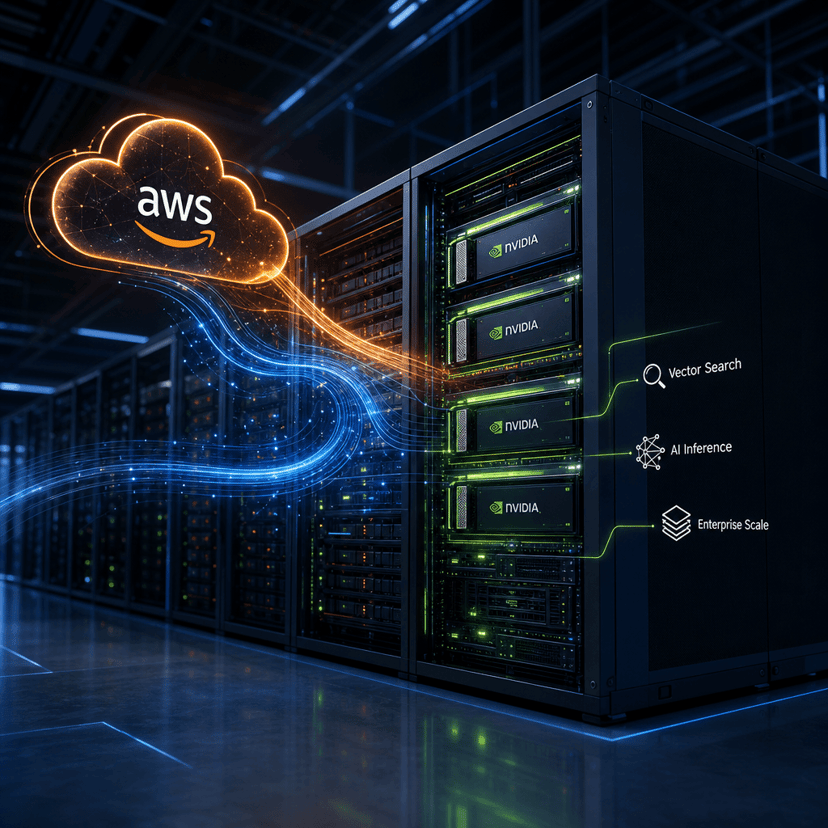
But it's NVIDIA's three-pillar strategy that's really turning heads. The company has created what amounts to a closed-loop system for autonomous vehicle development: NVIDIA DGX handles AI training in data centers, while Omniverse and the new Cosmos platform simulate real-world conditions for testing. The NVIDIA DRIVE AGX computers then process all that sensor data in real-time once the car hits the road.
"Vehicles are moving from being dependent on horsepower to compute power, from mechanical systems to software stacks," Kani explained during his keynote. It's a fundamental shift that's got the entire automotive supply chain rethinking their business models.
The safety angle is where NVIDIA thinks it can really differentiate. The company's new NVIDIA Halos system promises "full-stack, comprehensive safety" by unifying everything from chip design to software certification. It's backed by the NVIDIA Halos Certified Program and an AI Systems Inspection Lab that validates real-time AI performance.
This matters because simulation is becoming absolutely critical for autonomous vehicle development. You can't exactly test edge cases like rare traffic scenarios or hazardous conditions on public roads. That's where NVIDIA's partnership with the popular CARLA autonomous driving simulator becomes crucial - it now integrates the NVIDIA Cosmos Transfer world foundation model for high-fidelity testing.
The ecosystem play is working. Beyond the automakers, tech giants like MediaTek are building NVIDIA GPU-powered intelligence into their Dimensity Auto Cockpit solutions. ThunderSoft just introduced an AI Box built on DRIVE AGX for intelligent cockpits. Even Tier 1 suppliers like ZF Group and Magna are showcasing supercomputers and advanced driver assistance platforms accelerated by NVIDIA chips.
What's fascinating is how this positions NVIDIA not just as a chip supplier, but as the foundational platform for the entire autonomous vehicle industry. While competitors focus on individual components, NVIDIA is building the infrastructure that connects the data center to the car, creating what amounts to a moat around autonomous driving development.
The market is responding. Lucid headlined IAA's showcase with its all-electric Gravity SUV running on the NVIDIA DRIVE AGX platform and Blackwell architecture. That's a clear endorsement from one of the most technically sophisticated EV makers in the business.
For NVIDIA, automotive represents a massive opportunity beyond its current AI data center dominance. The company is essentially betting that cars will become rolling computers, and it wants to be the Intel inside every one of them. Given the partner momentum on display at IAA Munich, that bet is looking increasingly smart.
NVIDIA's IAA Mobility showcase reveals a company that's moved far beyond just selling chips to automakers. By creating an integrated cloud-to-car platform that handles everything from AI training to real-time processing, NVIDIA is positioning itself as the foundational infrastructure for autonomous driving. With major automakers like Mercedes-Benz and Volvo already committed to the platform, and a growing ecosystem of suppliers building on top of it, NVIDIA appears to be executing a masterful strategy to dominate the software-defined vehicle era. The question isn't whether cars will become AI-powered computers - it's whether NVIDIA will be the company powering most of them.