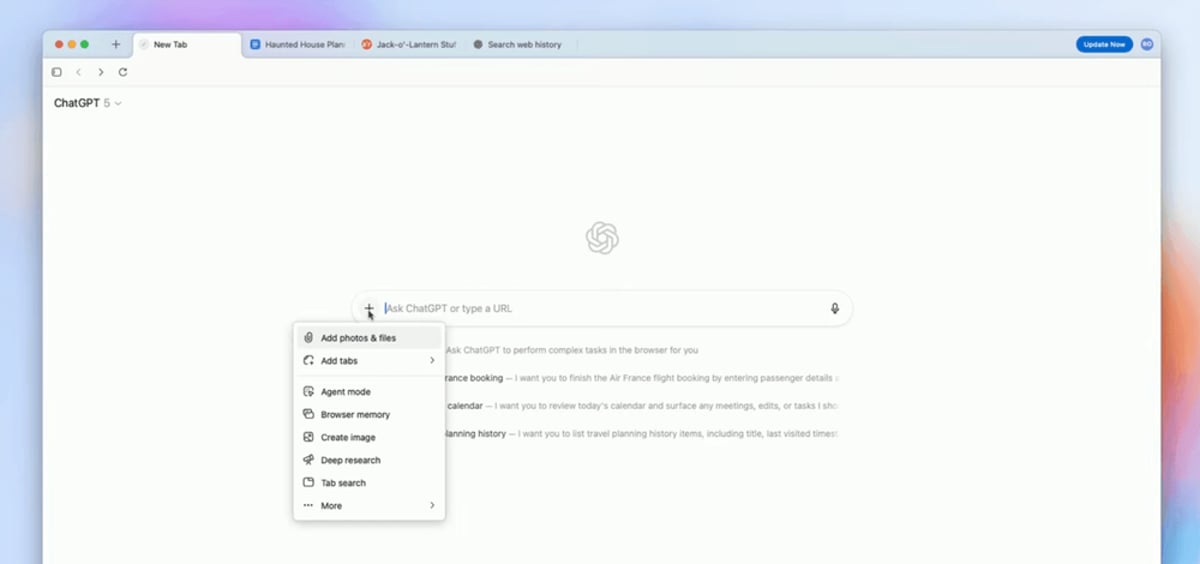
OpenAI just fired its biggest shot yet in the battle against Google - a full AI-powered browser called ChatGPT Atlas that launched today. The browser features an "agent mode" that can book flights, edit documents, and browse for you, marking a major escalation in the AI browser wars that could reshape how we interact with the web.
OpenAI didn't just announce another AI feature today - they launched a full-scale assault on Google's browser dominance. ChatGPT Atlas, the company's first dedicated web browser, went live globally on macOS after months of speculation about the company's web browsing ambitions.
The timing couldn't be more strategic. While Google has been gradually embedding Gemini AI into Chrome, OpenAI just leapfrogged them with a browser built from the ground up around AI capabilities. "The way that we hope people will use the internet in the future... the chat experience in a web browser can be a great analog," CEO Sam Altman said during the livestream announcement.
But Atlas isn't just ChatGPT in browser form. The real breakthrough is agent mode, available exclusively to ChatGPT Plus and Pro subscribers. Product lead Adam Fry demonstrated how the browser can "take actions for you... It can help you book reservations or flights or even just edit a document that you're working on." This builds directly on OpenAI's previous agent experiments, including the Operator tool and ChatGPT Agent.
The browser's "memory" system sets it apart from traditional browsing. Unlike Chrome's basic history, Atlas remembers your preferences and context across sessions, making each interaction more personalized. Users can manage these memories through settings, and the browser includes standard privacy features like incognito mode.
Atlas's interface breaks new ground with its default split-screen approach. Click any search result link, and you'll see both the webpage and your ChatGPT conversation side by side - creating what OpenAI calls a constant "companion" experience. The "cursor chat" feature lets you select text from emails and have ChatGPT clean up the language inline, turning the entire web into an editable workspace.
The competitive landscape shifted dramatically this summer when Perplexity launched its Comet browser, proving there's appetite for AI-first browsing experiences. Instead of traditional Google search results, Comet serves up curated answers with source links. But OpenAI's approach goes further, integrating the full ChatGPT experience rather than just search.
Google isn't standing still. The company announced in September that Gemini would gain similar agentic capabilities in Chrome, handling tasks like grocery shopping and appointment scheduling. But they haven't provided a launch timeline, giving OpenAI a crucial first-mover advantage.
The launch team reveals OpenAI's serious browser ambitions. Ben Goodger, who helped develop both Google Chrome and Mozilla Firefox, joined the Atlas project alongside former Apple employees and interface designers. This isn't a side project - it's a full product offensive.
"This is just a great browser all-around - it's smooth, it's quick, it's really nice to use," Altman emphasized, positioning Atlas as competition for Chrome on performance, not just AI features. The browser builds on SearchGPT, the search prototype OpenAI revealed in July 2024, but Atlas represents a complete browsing ecosystem.
Windows, iOS, and Android versions are "coming soon," but the macOS-first launch suggests OpenAI is targeting power users and developers initially. The agent mode paywall also indicates this is premium positioning - making AI browsing a subscription service rather than an advertising-supported experience like Chrome.
The browser wars just got their biggest shake-up since Chrome dethroned Internet Explorer. With Atlas live and Google's Gemini integration still pending, OpenAI has opened a new front in the AI platform battle that extends far beyond chatbots into the fundamental infrastructure of web browsing.
ChatGPT Atlas represents OpenAI's boldest move yet beyond pure AI models into the infrastructure layer of computing. By launching a full browser with agent capabilities before Google can fully integrate Gemini into Chrome, OpenAI has gained crucial territory in the platform wars. The real test will be whether users embrace a subscription-based browsing experience over the free, ad-supported model that's dominated for decades. If Atlas gains traction, we could be looking at the beginning of the end for traditional web browsing - and the start of an AI-mediated internet where every click comes with an intelligent assistant.