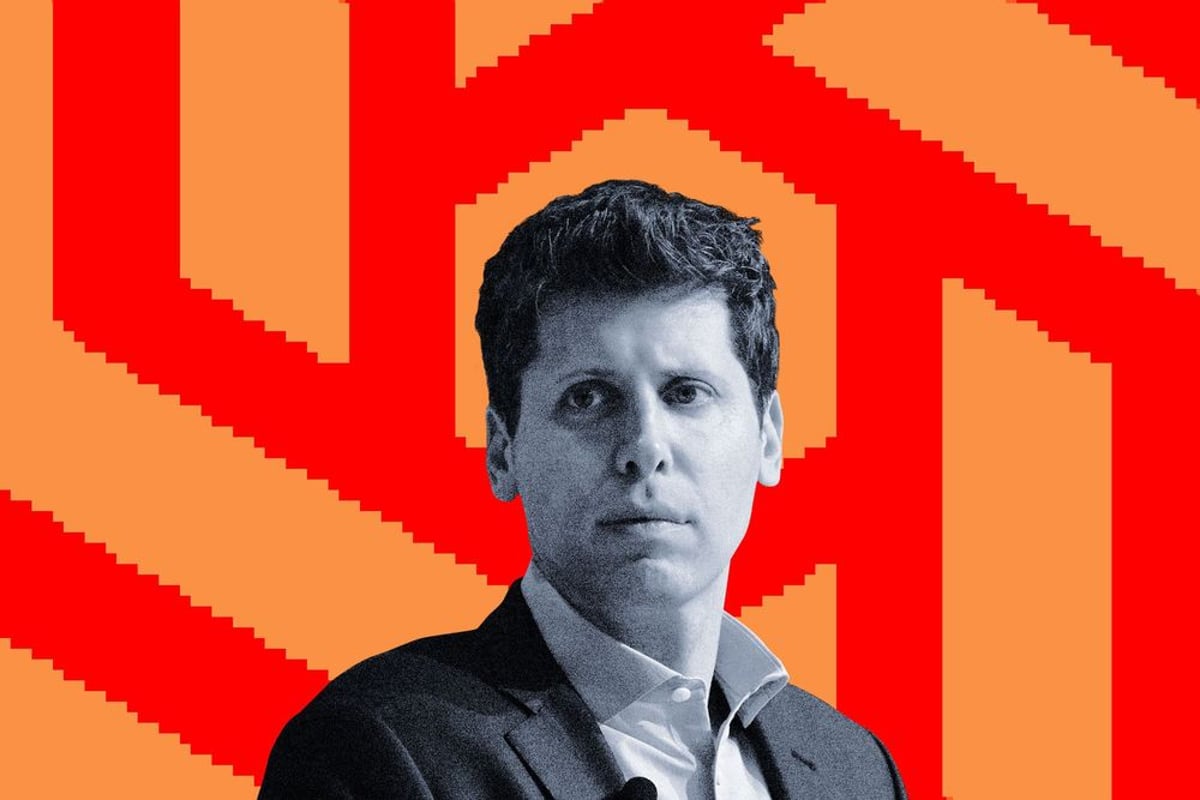
The AI safety debate just turned violent. OpenAI CEO Sam Altman's home was firebombed twice in 72 hours, while an Indianapolis councilman faced gunfire over data center support. The attacks, driven by fears of AI-driven human extinction and infrastructure expansion, mark a troubling shift from online discourse to real-world danger. What started as philosophical arguments about artificial general intelligence risks has escalated into Molotov cocktails and bullet-riddled doors, forcing the industry to confront a security crisis it never anticipated.
The AI industry's biggest threat might not be coming from rogue algorithms. OpenAI CEO Sam Altman became the target of two separate attacks on his San Francisco home within 72 hours this week, marking an alarming escalation in tensions surrounding artificial intelligence development. The first incident involved a 20-year-old suspect allegedly hurling a Molotov cocktail at the residence, while a second attack followed just two days later.
According to documents uncovered by The San Francisco Chronicle, the accused attacker had written extensively about fears that the AI race would lead to human extinction. The writings paint a picture of someone radicalized not by anti-tech sentiment alone, but by the very AI safety concerns that organizations like OpenAI claim to take seriously. The irony is stark - Altman has positioned himself as a careful steward of AI development, advocating for safety measures and regulatory frameworks, yet became a target for someone ostensibly worried about those same risks.
The second attack on Altman's home, reported by The San Francisco Standard, suggests this wasn't an isolated incident of individual extremism. Whether copycat violence or coordinated action, the repeat targeting indicates a pattern that security experts and tech executives can't ignore. OpenAI has not publicly commented on enhanced security measures, but sources familiar with the situation say the company is reassessing threat protocols for leadership.
The violence isn't limited to AI company executives. Just a week before the Altman attacks, Indianapolis city councilman Keith Graves reported 13 shots fired at his front door, accompanied by a handwritten note reading "No Data Centers." Graves had recently voted to support a rezoning petition that would allow data center construction in his district. The attack, detailed by PBS NewsHour, connects to growing grassroots opposition to the massive infrastructure buildout required for AI training and deployment.
Data centers have become flashpoints in communities nationwide. These facilities consume enormous amounts of electricity and water, strain local power grids, and often receive tax incentives that residents view as corporate giveaways. The AI boom has accelerated data center construction from a steady industrial trend into a breakneck race for compute capacity. Microsoft, Google, and Amazon are all pouring billions into new facilities, frequently encountering local resistance that's now taken a violent turn.
What makes these attacks particularly unsettling is how they merge two distinct strands of AI opposition. On one hand, there's the existential risk community - researchers, philosophers, and activists worried that advanced AI systems could pose catastrophic threats to humanity. This group has largely operated through policy papers, congressional testimony, and online discourse. On the other, there's the environmental and labor opposition to AI infrastructure - groups concerned about resource consumption, displacement, and economic impacts. The Altman and Graves attacks suggest these movements may be converging in dangerous ways.
The AI safety community itself is now grappling with uncomfortable questions about rhetoric and responsibility. For years, prominent researchers have warned about AI as an extinction-level threat, with some comparing the technology to nuclear weapons or biological warfare. Those warnings were meant to spur careful development and robust safeguards, but the Altman attacker's writings show how such language can be weaponized to justify violence. It's a dilemma familiar to other movements - how to sound urgent alarms without inspiring extremist action.
Security professionals who work with tech executives say the industry has been slow to recognize physical threats. "Everyone's focused on cybersecurity, on protecting their models and data," one security consultant told The Verge. "But we've been warning about the physical dimension for months. These companies are making decisions that affect billions of lives. That creates threat vectors beyond the digital realm."
The timing couldn't be worse for an industry already navigating regulatory scrutiny, competitive pressures, and internal debates about safety. OpenAI recently restructured to give Altman more control while facing questions about whether profit motives are overriding safety commitments. Google and Microsoft are locked in a fierce race for AI dominance, each announcing new capabilities at a dizzying pace. The attacks add a new variable to an already complex equation - how much do security concerns slow down an industry that believes first-mover advantage is everything?
Law enforcement agencies are reportedly increasing coordination with tech companies about threat assessment and executive protection. But the decentralized nature of both AI opposition and potential attackers makes prevention extremely difficult. Unlike organized terrorist groups with known structures, the threats appear to be emerging from individuals radicalized online, making them nearly impossible to predict or preempt.
The attacks also raise questions about whether AI development can continue at its current pace if key figures require presidential-level security. Altman is known for his accessibility and public engagement - qualities that have helped OpenAI shape the AI narrative but now look like liabilities. If tech leaders retreat behind security cordons, it could further alienate the public and fuel conspiracy theories about what's happening behind closed doors at AI labs.
The firebombing of Sam Altman's home and the shooting at a councilman's door represent more than isolated incidents of violence - they signal that AI development has entered a new phase where philosophical debates have real-world consequences measured in Molotov cocktails and bullet casings. The industry now faces a challenge it can't solve with better algorithms or more compute power: how to build transformative technology in an environment where both the speed of development and the infrastructure it requires have made executives and public officials into targets. As AI companies race toward artificial general intelligence, they're discovering that the most immediate threat might not be the technology itself, but the humans determined to stop it by any means necessary.