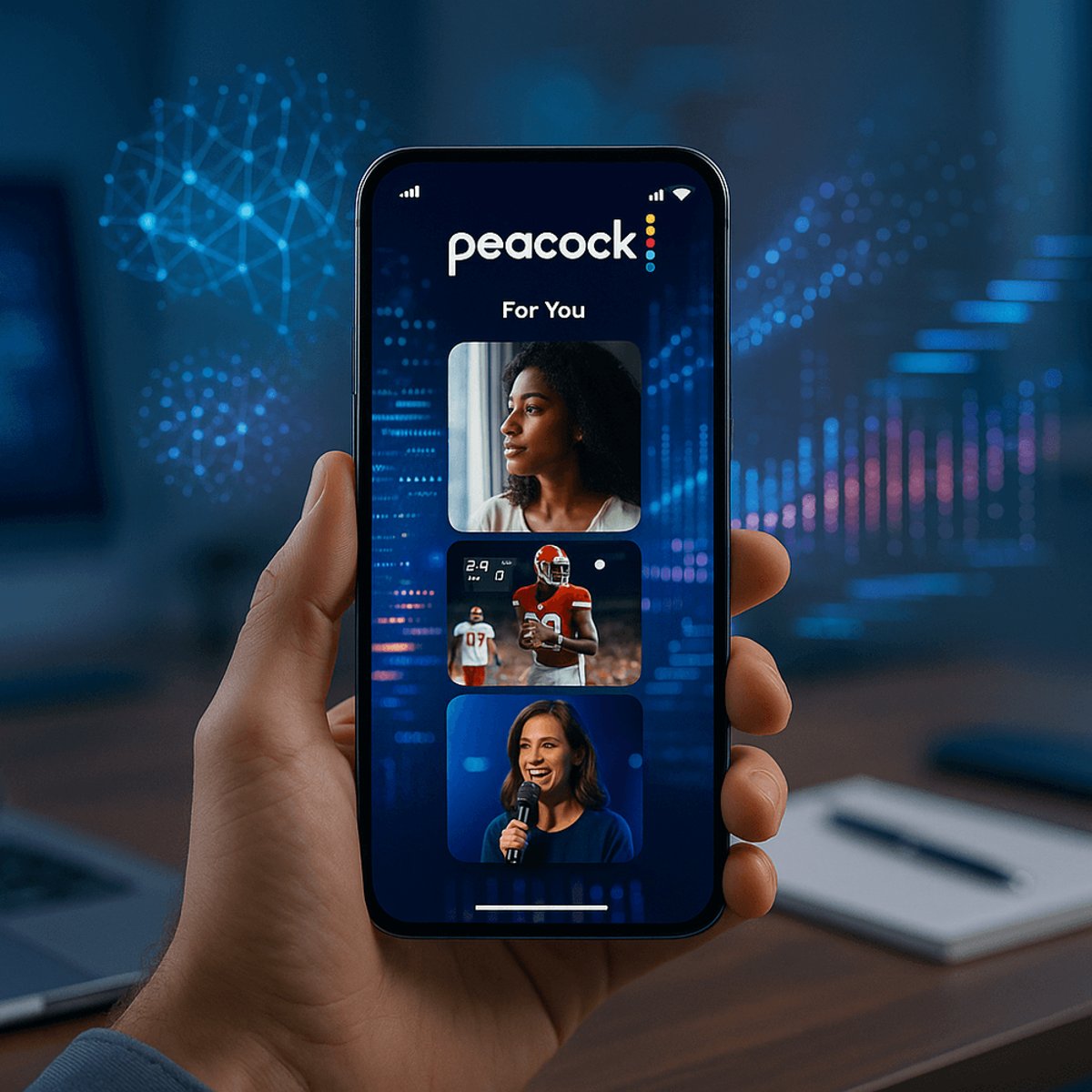
Peacock, NBCUniversal's streaming service, is rolling out a major platform overhaul centered on AI-driven video experiences, vertical short-form content, and mobile gaming. The move signals a strategic pivot as traditional streaming platforms scramble to differentiate themselves in an increasingly crowded market. With subscriber growth plateauing across the industry, Peacock's betting that generative AI and mobile-first features can keep viewers engaged and attract younger audiences who've grown up on TikTok and Instagram Reels.
Peacock is making its biggest product bet yet. The NBCUniversal-owned streaming platform just announced a suite of AI-powered features designed to transform how viewers discover and consume content, alongside a push into vertical video and mobile gaming that puts it in direct competition with social media giants.
The timing isn't coincidental. Streaming services are hitting a wall. After years of explosive growth during the pandemic, platforms from Netflix to Disney+ are watching subscriber numbers flatten. Peacock's answer? Use AI to make content feel more personalized and addictive, while embracing the vertical, bite-sized formats that dominate mobile screens.
At the heart of the update sits a generative AI engine that creates personalized highlight reels from live sports broadcasts. Instead of watching a three-hour baseball game, users can get an AI-curated five-minute recap tailored to their favorite teams and players. For a platform that's invested heavily in sports rights, including the Premier League and WWE, this could be transformative. It's content multiplication without the production costs.
But Peacock isn't stopping at sports highlights. The platform's rolling out AI-powered content recommendations that go deeper than traditional algorithmic suggestions. According to details shared with TechCrunch, the system analyzes viewing patterns, pauses, rewinds, and even abandoned watches to build detailed preference profiles. It's the kind of data-intensive personalization that Netflix pioneered, but turbocharged with large language models that can understand context and mood.
The vertical video push is equally aggressive. Peacock's launching a dedicated feed of short-form, mobile-optimized clips pulled from its library of shows and movies. Think YouTube Shorts or TikTok, but featuring snippets from The Office, Saturday Night Live, and Peacock originals. It's a direct play for the attention economy, acknowledging that younger viewers increasingly discover long-form content through short clips on social platforms.
This represents a fundamental shift in how traditional media companies think about their content. Instead of treating shows as sacred, complete works, Peacock's atomizing its library into shareable, algorithm-friendly fragments. It's both smart and risky. Smart because it meets audiences where they are. Risky because it could train viewers to expect bite-sized content rather than full episodes.
The mobile gaming addition rounds out what's essentially a super-app strategy. While details remain sparse, Peacock's following the playbook that Netflix has been testing since 2021 with mixed results. The theory: games keep users engaged between content releases and justify subscription prices. The reality has been tougher, with most streaming gaming initiatives struggling to gain traction.
What's notable is how this positions Peacock against not just other streaming services, but social media platforms themselves. By combining AI personalization, vertical video, and gaming, the platform's trying to capture the kind of endless-scroll engagement that keeps people on Instagram and TikTok for hours. It's a recognition that streaming services aren't just competing for viewing time with other shows, they're competing with every app on your phone.
The AI features also raise questions about content discovery and creator compensation. If viewers increasingly consume AI-generated highlights rather than full broadcasts, how do rights holders and advertisers value that engagement? It's uncharted territory that could reshape how sports leagues negotiate streaming deals.
For NBCUniversal parent company Comcast, Peacock represents both an opportunity and a necessity. Traditional cable subscriptions continue their steady decline, making the streaming platform's success critical to the company's future. These AI and mobile-first features aren't experimental nice-to-haves, they're fundamental to competing with tech giants who've built their empires on algorithmic engagement.
The announcement comes as the broader streaming industry grapples with profitability. After years of prioritizing growth over earnings, platforms are under pressure to prove their business models work. AI-driven features promise higher engagement without proportionally higher content costs, potentially offering a path to better unit economics. Whether viewers actually want their entertainment atomized and algorithmically optimized remains the billion-dollar question.
Peacock's aggressive push into AI and mobile-first features represents streaming's next evolution, or perhaps its desperation. By borrowing heavily from social media's playbook, the platform's acknowledging that the old model of long-form content catalogs isn't enough anymore. Whether viewers want their premium entertainment served up like TikTok videos remains uncertain, but with subscriber growth stalling industry-wide, traditional streaming services don't have much choice but to experiment. The real test will be whether these features actually drive meaningful engagement and retention, or if they just clutter an interface that users came to for straightforward TV and movies. For now, Peacock's making a calculated bet that the future of streaming looks a lot more like your Instagram feed than your cable box ever did.