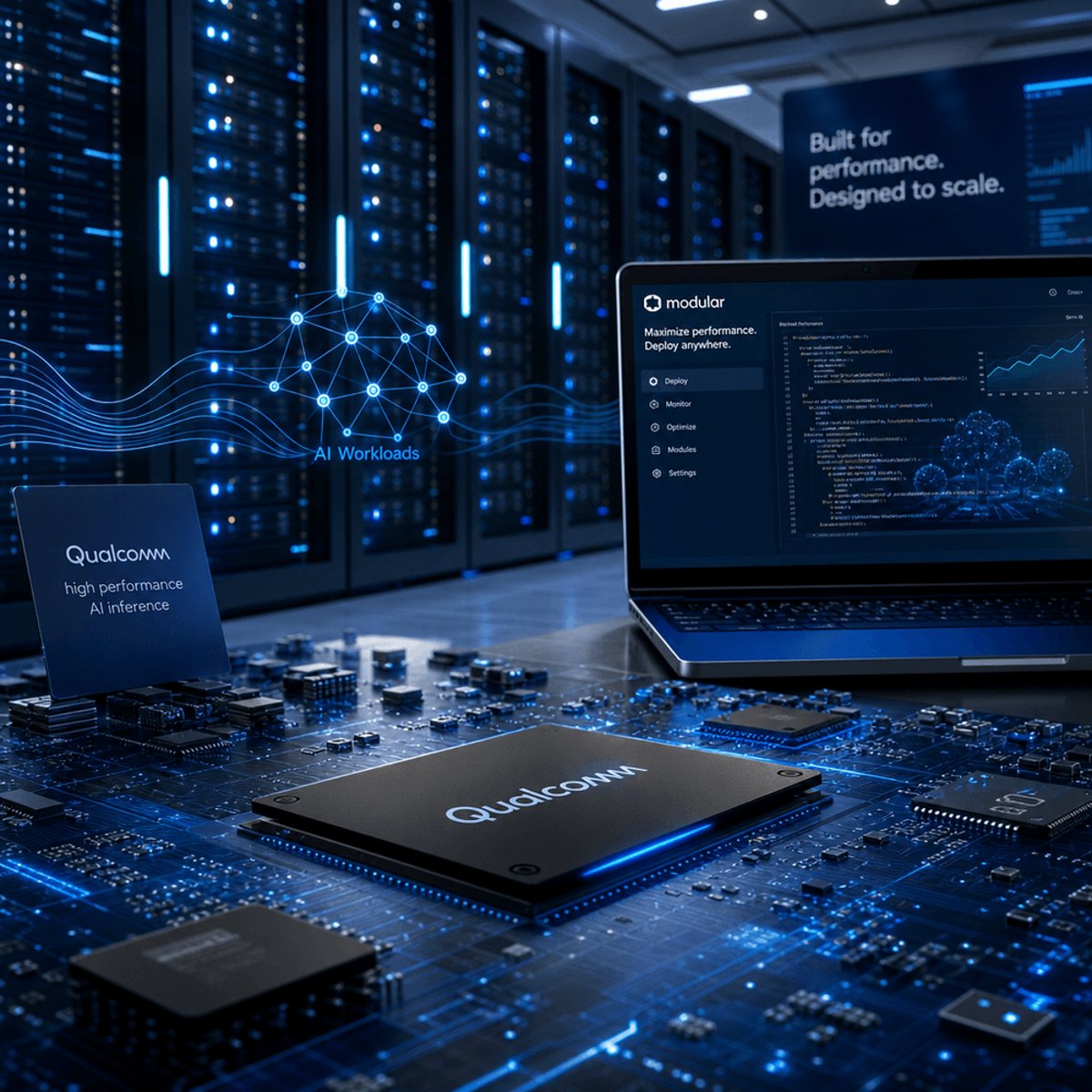
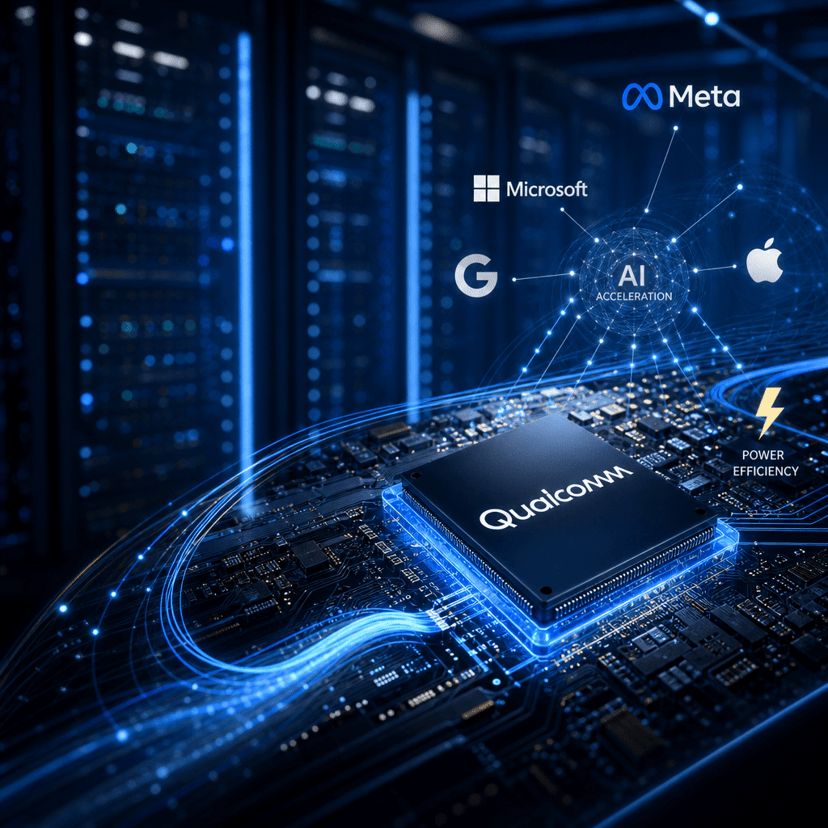
Qualcomm just made its boldest move yet in the AI data center wars. The chip giant is acquiring Modular, an AI software startup, in a deal designed to beef up its software stack as it challenges Nvidia's dominance in the exploding data center market. The acquisition signals Qualcomm's recognition that winning in AI infrastructure requires more than just silicon - it demands a complete software ecosystem that makes deploying AI workloads seamless.
Qualcomm is placing a major bet that software holds the key to cracking the data center market. The company's acquisition of Modular, first reported by CNBC, represents a strategic shift for a chipmaker that's spent decades focused primarily on mobile processors. Financial terms weren't disclosed, but the deal underscores how seriously Qualcomm is taking the AI infrastructure opportunity.
Modular has been building AI compiler and runtime technology designed to make machine learning models run efficiently across different hardware platforms. That's exactly what Qualcomm needs as it tries to convince cloud providers and enterprise customers to choose its chips over Nvidia's entrenched H100 and upcoming Blackwell GPUs. Nvidia's dominance doesn't come from hardware alone - it's the CUDA software ecosystem that's kept customers locked in for over a decade.
The timing is critical. Data center AI chip revenue is projected to exceed $150 billion annually by 2027, according to industry analysts, and Qualcomm has been scrambling to capture a meaningful slice. The company has already announced partnerships with major cloud providers, but adoption has been slow. Developers don't want to rewrite their code for new architectures, which is where Modular's technology becomes essential.
Modular's founders previously worked on AI infrastructure at major tech companies, bringing deep expertise in the compiler technology that translates high-level AI frameworks like PyTorch and TensorFlow into optimized machine code. Their platform promised to let developers write once and deploy anywhere - a direct challenge to Nvidia's proprietary approach. Now that intellectual property and talent pool belongs to Qualcomm.
The acquisition also reflects broader changes in the chip industry. Intel, AMD, and even Amazon with its custom Trainium chips are all pushing into AI accelerators. But silicon alone won't win this fight. Google learned this with its TPU chips, which gained traction largely because of TensorFlow integration. Microsoft is developing its own Maia chips with tight Azure integration.
Qualcomm's data center ambitions extend beyond AI training to inference workloads - running AI models in production. That's where the company sees an opening, particularly for edge computing scenarios where its power efficiency advantages matter more. Modular's software could help Qualcomm position its chips as the best option for deploying AI at scale across distributed infrastructure.
The deal comes months after Qualcomm unveiled its Cloud AI 100 accelerator lineup, which has struggled to gain momentum against Nvidia's market share. Enterprise customers have been hesitant to adopt new platforms without robust software tooling. Modular changes that equation, giving Qualcomm a developer-friendly software layer that could lower switching costs.
Industry watchers note that Qualcomm's mobile expertise could actually become an advantage in data center AI. The company has spent years optimizing neural network performance on power-constrained devices, skills that translate well to energy-efficient data center deployments. As electricity costs and sustainability concerns mount, hyperscalers are increasingly interested in performance-per-watt rather than raw speed.
What remains unclear is how quickly Qualcomm can integrate Modular's technology and bring a unified hardware-software platform to market. Nvidia isn't standing still - the company continues to enhance CUDA and recently launched its own AI foundry services. AMD acquired Nod.ai last year for similar software capabilities, while Intel has been investing heavily in its oneAPI toolkit.
For Modular's customers and developers who've built on the platform, the acquisition raises questions about independence and roadmap. Qualcomm will need to maintain Modular's multi-platform support to preserve credibility, even as it optimizes for its own silicon. That's a delicate balance that's tripped up previous chip acquisitions.
Qualcomm's Modular acquisition is a clear signal that the AI infrastructure battle won't be won on chip performance alone. As cloud providers and enterprises look to diversify away from Nvidia's ecosystem, software tooling becomes the deciding factor. Qualcomm now has a credible answer to CUDA, but execution will determine whether this deal translates into actual market share gains. The broader trend is unmistakable - every chip company is racing to build complete AI platforms, not just silicon. For developers and enterprises, that competition should eventually mean more choices and better tools, but only if Qualcomm can deliver on the integration and maintain Modular's momentum. The next 12 months will reveal whether this acquisition was a strategic masterstroke or an expensive bet that came too late.