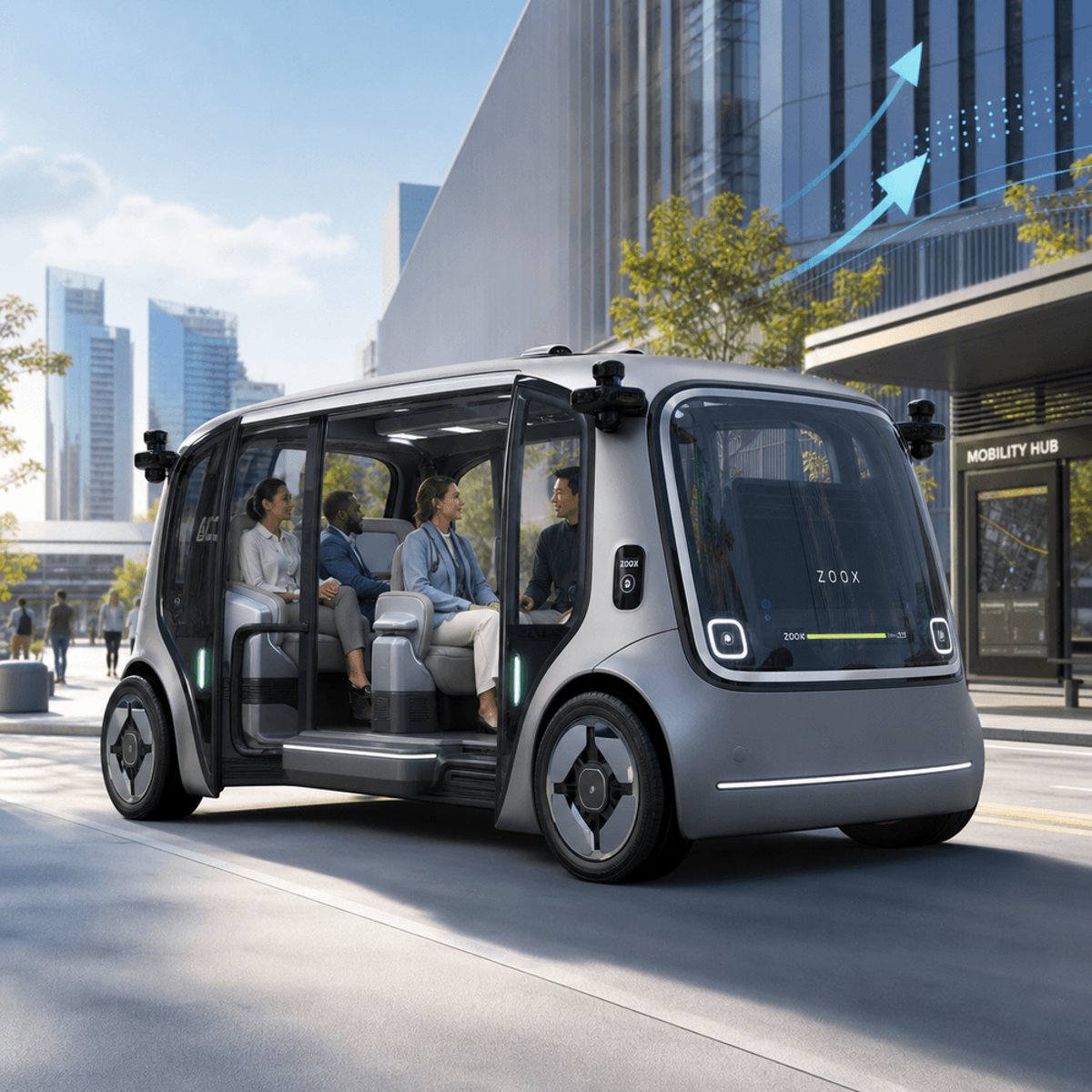
Amazon's self-driving unit Zoox just pulled back the curtain on its next-generation robotaxi, signaling the company's most aggressive push yet into commercial autonomous ride services. The redesigned vehicle arrives as Zoox prepares to expand beyond its current test markets and launch paid rides - a pivotal moment that puts Amazon squarely in competition with Waymo and Cruise in the race to monetize self-driving technology.
Amazon's autonomous vehicle bet is about to get real. The company's Zoox division revealed a redesigned robotaxi that represents more than just a facelift - it's the vehicle that will carry the company's commercial ambitions as it prepares to actually charge passengers for rides.
The timing isn't accidental. After years of development and testing, Zoox is gearing up to expand beyond its current operating footprint and launch paid services, transitioning from a research project into a revenue-generating business unit. It's a crucial inflection point for Amazon, which acquired Zoox for over $1 billion back in 2020 but has yet to see meaningful returns on that investment.
The redesigned robotaxi comes as the autonomous vehicle industry faces a moment of truth. Waymo, backed by Alphabet, has been operating commercial robotaxi services in Phoenix, San Francisco, and Los Angeles, reportedly completing over 100,000 paid rides per week. Cruise, despite recent setbacks and a temporary suspension of operations, continues to rebuild its commercial ambitions under General Motors' backing.
Zoox's approach differs from competitors in one fundamental way - the company designed its vehicle from scratch specifically for autonomous operation, rather than retrofitting existing cars with self-driving technology. The bidirectional vehicle has no traditional steering wheel or pedals, with passengers sitting face-to-face in a carriage-like configuration. This purpose-built design gives Zoox potential advantages in interior space, safety architecture, and passenger experience, but it also means higher upfront development costs and more regulatory hurdles.
The decision to unveil an updated design now suggests Zoox has incorporated learnings from its testing phase and is ready to scale. While specific technical improvements weren't detailed in the announcement, redesigns at this stage typically address manufacturing efficiency, component reliability, and features that improve the customer experience based on real-world feedback.
For Amazon, the Zoox expansion represents a strategic bet on multiple fronts. The company has long harbored ambitions in transportation and logistics - its massive delivery network already makes it one of the largest logistics operators in the world. Autonomous ride services could eventually connect to Amazon's broader ecosystem, potentially offering integrated delivery and passenger services, or providing last-mile transportation solutions that complement its e-commerce operations.
But the path to profitability remains steep. Autonomous vehicle companies have collectively burned through tens of billions in investment, and the technology still faces significant limitations in weather conditions, complex urban environments, and edge cases that require human intervention. The economics of operating robotaxi fleets - including vehicle costs, maintenance, charging infrastructure, remote operations centers, and insurance - remain largely unproven at scale.
The competitive landscape is also shifting. Tesla continues to promise an autonomous ride-hailing network using its customer fleet, though the timeline remains perpetually uncertain. Meanwhile, Chinese autonomous vehicle companies like Baidu's Apollo Go are rapidly expanding operations, demonstrating that the race isn't limited to American players.
Zoox's announcement of expansion plans and commercial launch preparation suggests the company believes it's ready to move from controlled testing to real-world operations at scale. But the question facing Amazon isn't just whether the technology works - it's whether the business model can deliver returns that justify the massive ongoing investment in a market where profitability remains theoretical for even the most advanced players.
Zoox's redesigned robotaxi and commercial expansion plans mark Amazon's most concrete step yet toward making autonomous ride services a real business rather than a research project. But unveiling a new vehicle is the easy part - the hard work comes in proving the technology can operate safely and reliably across diverse conditions while building a service that customers actually want to use and that generates sustainable economics. With Waymo already logging hundreds of thousands of paid rides and the competitive pressure intensifying, Zoox needs to move quickly from unveiling to operating. The robotaxi wars are entering a new phase, and Amazon just signaled it's ready to fight.