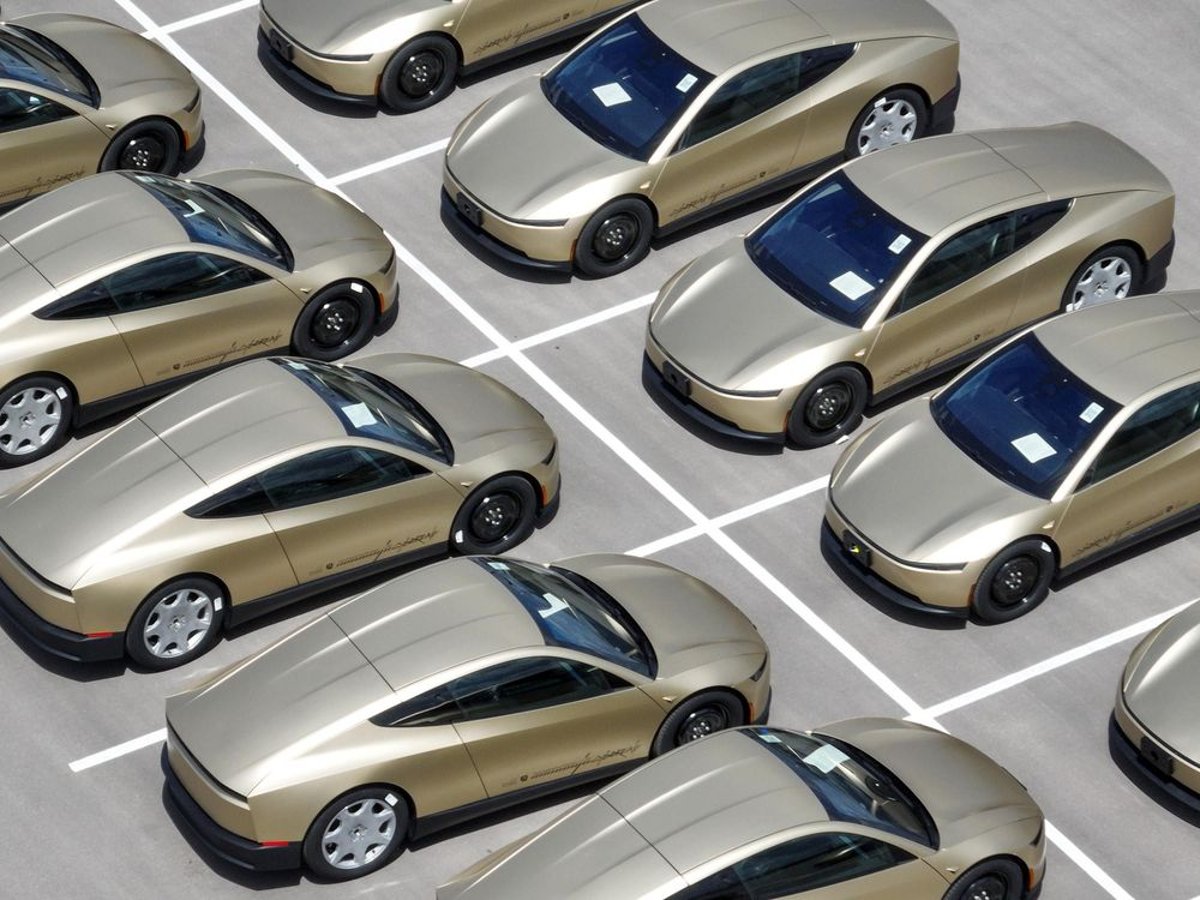
Tesla is gearing up to launch its Cybercab robotaxi in Austin, Texas, as soon as this month, marking a critical test of Elon Musk's vision for autonomous transportation. The golden two-seater, notable for having no steering wheel or pedals, has been spotted across the country in recent months as employees gather crucial testing data. But serious questions remain about whether the fully autonomous vehicle is actually ready for public roads, raising stakes for the company's self-driving ambitions.
Tesla is about to find out if its biggest autonomous driving bet pays off. The company is preparing to launch its Cybercab robotaxi in Austin, Texas, this month, putting a vehicle with no steering wheel and no pedals onto public streets for the first time. It's the kind of move that defines Elon Musk's approach - bold, ambitious, and leaving many wondering if the technology is truly ready.
According to The Information, the public launch could happen as soon as the end of August. The timing represents a major milestone for Tesla, which first unveiled the Cybercab concept back in October 2024. Since then, the distinctive golden two-seater has become central to Musk's vision of a future dominated by autonomous vehicles.
The Cybercab's design is intentionally provocative. Without traditional controls, the vehicle represents complete faith in Tesla's Full Self-Driving (FSD) technology. There's no backup plan, no steering wheel for a safety driver to grab in an emergency. It's autonomous or nothing - a design philosophy that's drawn both excitement and concern from industry observers.
Tesla employees have been conducting extensive testing to prepare for the launch. The fully driverless version has been running on private roads around the company's facilities, gathering data and refining the autonomous systems. But interestingly, The Verge reported that modified Cybercabs equipped with steering wheels and pedals have also been spotted across the country, suggesting Tesla is taking a more cautious approach to data collection than the final product would suggest.
The Austin launch comes at a pivotal moment for autonomous vehicle technology. While companies like Waymo and Cruise have been operating robotaxi services in limited markets, they've used vehicles packed with expensive lidar sensors and extensive mapping technology. Tesla's approach relies primarily on cameras and neural networks - a cheaper but more controversial strategy that's drawn skepticism from safety advocates.
Industry analysts have raised questions about whether Tesla's camera-only FSD system can match the safety record of competitors using multiple sensor types. The company's FSD technology, while impressive in many scenarios, still requires driver supervision in current Tesla vehicles. The jump to fully autonomous operation without any human backup represents a significant leap.
The regulatory environment adds another layer of complexity. While Texas has relatively permissive rules for autonomous vehicle testing compared to states like California, launching a truly driverless service still requires navigating a patchwork of local regulations and demonstrating safety to authorities. Tesla hasn't publicly disclosed what approvals it's secured for the Austin deployment.
Financially, the Cybercab represents a crucial part of Musk's long-term vision for Tesla. He's repeatedly promised that autonomous robotaxis could generate massive revenue by turning Tesla vehicles into money-making assets when owners aren't using them. The Cybercab, purpose-built for this mission without the cost of traditional controls, could theoretically operate more cheaply than human-driven alternatives.
But execution is everything. Waymo has shown that running a robotaxi service profitably remains challenging even with working technology. The company operates in San Francisco, Phoenix, and Los Angeles, but hasn't yet achieved the scale needed for clear profitability. Tesla will face similar challenges around fleet management, maintenance, customer service, and dealing with the inevitable edge cases that confuse autonomous systems.
The Austin launch will also serve as a real-world stress test for Tesla's AI systems. Private road testing can only reveal so much. Public streets bring unpredictable human drivers, jaywalking pedestrians, construction zones that appear overnight, and countless scenarios that are difficult to simulate. How the Cybercab handles these situations will largely determine whether this launch expands or becomes a cautionary tale.
Tesla hasn't announced pricing or availability details for the Cybercab service. Previous estimates suggested the vehicles could operate for less than a dollar per mile, undercutting traditional rideshare services. But those projections assumed fully functional autonomous technology and didn't account for the operational complexities of running a large-scale robotaxi fleet.
Tesla's Cybercab launch in Austin will be one of the most closely watched events in autonomous vehicle history. Success could validate Musk's vision and Tesla's camera-based approach, potentially reshaping urban transportation. But if the technology isn't ready - if the Cybercabs struggle with edge cases or encounter safety issues - it could set back public acceptance of robotaxis and raise serious questions about Tesla's autonomous strategy. Either way, we're about to get answers to questions the industry has been debating for years. The steering-wheel-free future starts now, ready or not.