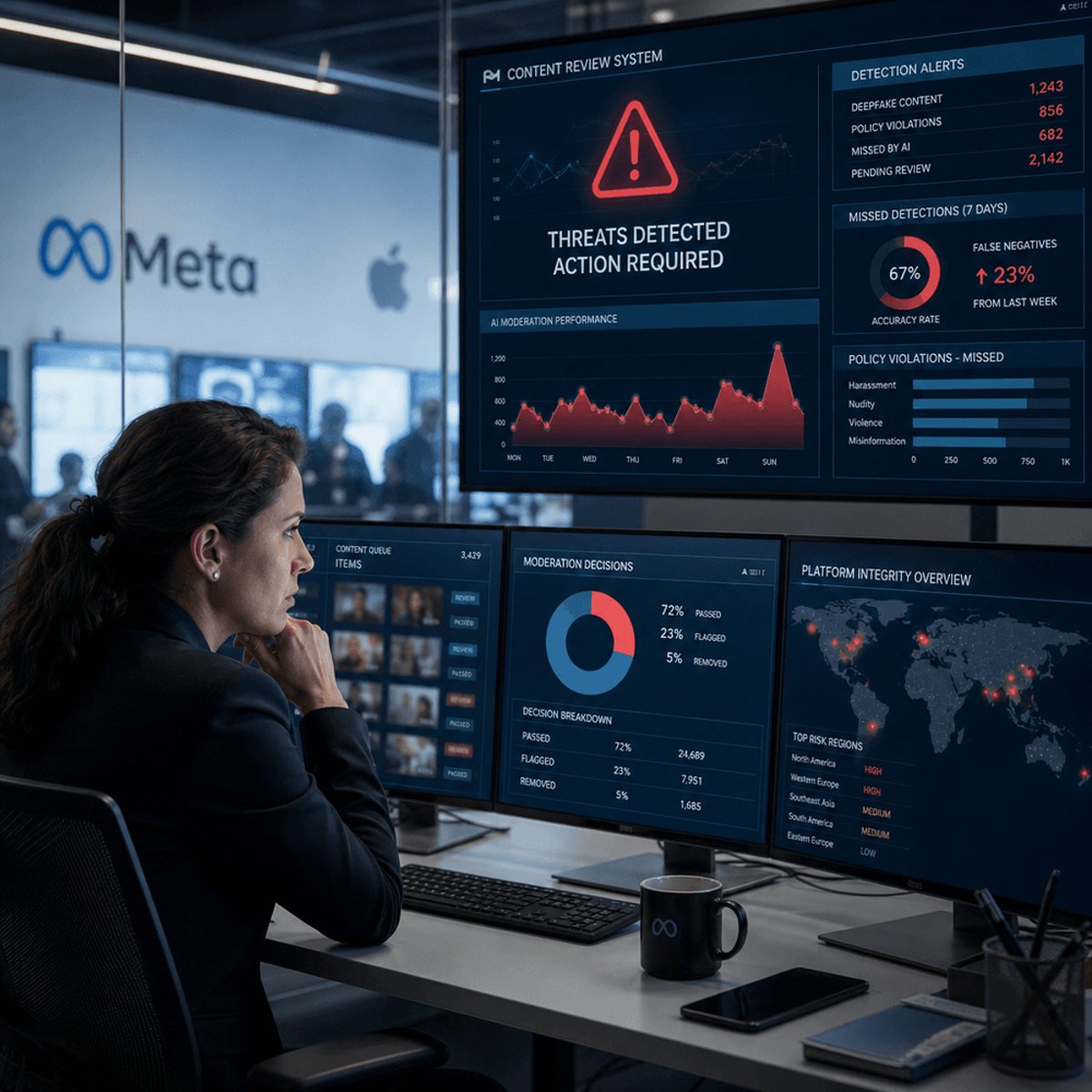
Meta just got caught running ads for an app that promised to create pornographic deepfakes of female politicians - and one of those ads featured AI-generated explicit content resembling a prominent US politician. The revelation, uncovered by WIRED, exposes a massive hole in Meta's content moderation systems and shows how AI-generated abuse is slipping through the cracks at the world's largest social platforms. Apple pulled the app from the App Store within hours of WIRED's inquiry, but the damage raises urgent questions about how platforms are - or aren't - policing deepfake technology as we head into a high-stakes election cycle.
Meta is facing a firestorm after WIRED reporters Vittoria Elliott and Matt Burgess discovered the company was running ads for an application that explicitly promised to create nude deepfakes of female politicians. The ads appeared on Meta's platforms despite the company's public commitments to crack down on non-consensual intimate imagery and harmful synthetic media.
One advertisement went beyond suggestive marketing - it featured an actual pornographic video using deepfake technology that closely resembled a prominent US politician. The ad ran on Meta's advertising network, meaning it passed through whatever automated and human review processes the company has in place to catch policy violations. For a platform that's spent years insisting it takes deepfake abuse seriously, the failure is damning.
The app itself was available on Apple's App Store, where it had apparently slipped past the company's review guidelines. But Apple moved quickly once WIRED came knocking - the tech giant pulled the app within hours of the inquiry. That rapid response only highlights how both companies seem to rely on journalists and researchers to catch what their billion-dollar moderation systems miss.
This isn't just about one sketchy app. The incident reveals how AI-generated abuse is industrializing. So-called "nudification" apps have proliferated over the past two years, weaponizing the same generative AI technology that powers tools like OpenAI's DALL-E and Midjourney. These applications use machine learning models to generate realistic nude images from regular photos, and they're increasingly targeting public figures - especially women in politics and media.
Meta has repeatedly pledged to stay ahead of synthetic media threats. The company introduced policies requiring disclosure of AI-generated content in political ads and built detection systems meant to identify deepfakes. CEO Mark Zuckerberg has testified before Congress about the company's investments in safety technology. Yet here's an app advertising its ability to sexually exploit political figures, and it sailed through Meta's ad approval process.
The timing couldn't be worse. We're in the middle of a presidential election cycle where deepfakes have already become a campaign issue. State legislatures are rushing to pass laws criminalizing non-consensual deepfake pornography. Federal regulators are circling, and this incident hands them fresh ammunition. Meta's already dealing with intense scrutiny over political content moderation - now it has to explain why it took ad revenue from deepfake pornographers targeting politicians.
For Apple, the episode is equally embarrassing. The company positions the App Store as a carefully curated marketplace where human reviewers ensure quality and safety. Apple frequently rejects apps for minor guideline violations, yet somehow an application explicitly marketing sexual deepfakes made it through. The company's quick removal after WIRED's inquiry suggests the app clearly violated existing policies - so why didn't reviewers catch it initially?
The app's marketing was hardly subtle. According to the WIRED investigation, it openly promised to "nudify" images of female politicians. This wasn't a general-purpose photo editing tool being misused - the entire pitch centered on creating non-consensual sexual imagery. That such an app could clear Apple's review process and secure advertising approval from Meta reveals just how overwhelmed platform moderation has become in the age of generative AI.
Deepfake technology has evolved faster than platform policies can adapt. What started as a niche concern among AI researchers has exploded into a mainstream threat. Women in public life face coordinated campaigns of deepfake abuse. Political candidates worry about synthetic videos dropping days before elections. And now we know the major platforms are inadvertently - or negligently - helping these tools reach users.
Neither Meta nor Apple has issued detailed statements about how this happened or what systematic changes they're implementing to prevent similar incidents. That silence is notable. Both companies usually respond to controversies with promises of policy reviews and enhanced detection. The lack of immediate response suggests they're still figuring out what went wrong and how exposed they are to similar issues.
The broader implications extend beyond platform accountability. This incident will fuel calls for federal regulation of AI-generated content. Lawmakers already skeptical of Big Tech's self-regulation now have a perfect example of moderation failure. Expect congressional hearings. Expect proposed legislation mandating content scanning for deepfake apps. Expect privacy advocates and tech companies to clash over what constitutes acceptable AI governance.
For women in politics and public life, this is another data point in an exhausting pattern. Deepfake abuse disproportionately targets women, and platforms consistently fail to protect them until media attention forces action. The message is clear: unless a journalist investigates, platforms won't proactively enforce their own policies on this stuff.
This isn't a one-off moderation mistake - it's a system failure that exposes how unprepared major platforms are for the deepfake era. Meta and Apple have spent years building trust and safety teams, implementing AI detection, and promising robust content policies. Yet an app openly marketing sexual deepfakes of politicians cleared both companies' review processes and only got pulled after journalists intervened. As generative AI makes this kind of abuse easier and more convincing, platforms face a stark choice: massively upgrade their prevention systems or face regulation that forces them to. Based on this incident, self-regulation isn't working, and lawmakers are watching.