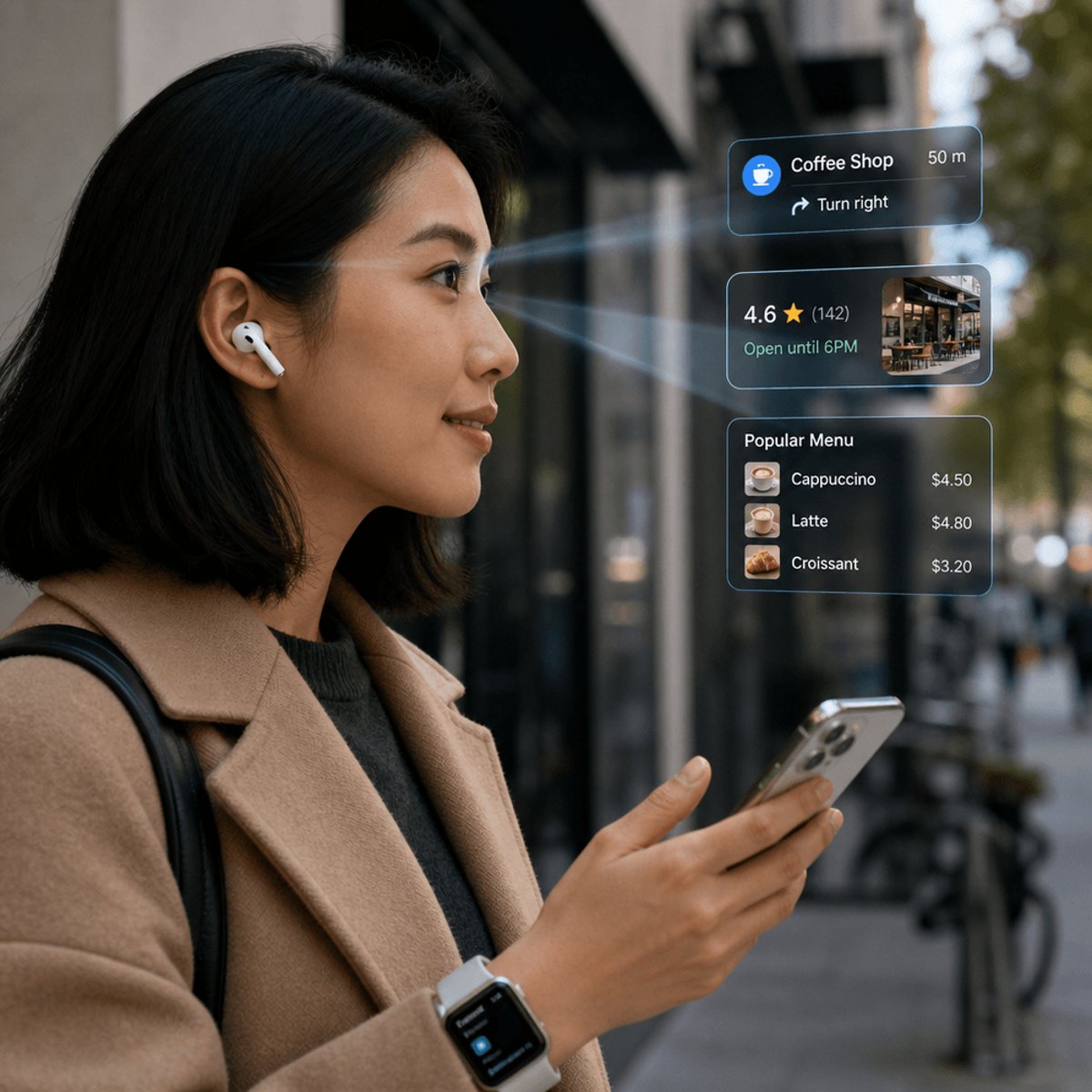
Apple just accidentally revealed its most ambitious AirPods upgrade yet. Buried in the macOS Tahoe release candidate, developers discovered a demo video showing a user wearing camera-equipped AirPods that can see what you're looking at and respond through Siri. The leak confirms months of speculation about Apple's plans to embed visual intelligence directly into its best-selling wearable, potentially turning 500 million AirPods users into walking AI cameras.
Apple didn't mean for anyone to see this yet. But the macOS Tahoe release candidate that dropped this week contains something the company definitely wasn't ready to announce - a promotional video showcasing AirPods with cameras.
The footage shows exactly what you'd expect from Apple's next big wearable play. A user wears the earbuds, glances at a book, and asks Siri a question. The AI responds with information about what the camera sees. It's visual intelligence, but liberated from your phone and mounted directly on your head.
This isn't just a concept. The video's polish and integration into shipping software suggests Apple's already deep into development. TechCrunch first spotted the leak, noting the demo appears production-ready rather than experimental.
The timing makes sense. Apple introduced Visual Intelligence for iPhone earlier this year, letting users point their camera at objects for instant AI-powered information. Extending that capability to AirPods transforms occasional utility into ambient intelligence. You're already wearing the earbuds for hours daily - why not let them see what you see?
But Apple's not alone in this race. Meta recently showcased its Orion AR glasses prototype, which similarly combines cameras with AI assistance. The difference? Meta's betting on dedicated eyewear. Apple's approach embeds cameras into a device millions already own and trust.
The technical challenges are substantial. Cameras on earbuds need to be tiny, power-efficient, and positioned to capture what the wearer actually sees - not just their collar. Battery life remains the eternal AirPods constraint, and adding always-ready cameras won't help. Apple's presumably solved these problems if they're confident enough to include demo videos in shipping code, even accidentally.
Privacy concerns will dominate the conversation. Camera-equipped earbuds are far more discreet than holding up a phone. Will there be indicator lights? Recording notifications? Apple's built its brand on privacy, but wearable cameras test that promise in new ways. The company will need ironclad safeguards and crystal-clear communication about what the cameras can and can't do.
The macOS Tahoe release candidate itself is interesting context. Apple typically locks down pre-release software tighter than this. The fact that a promotional video made it into code that external developers can access suggests either a significant oversight or preparation for an imminent announcement. September's iPhone event would be the logical venue.
What the video doesn't show is equally telling. There's no clear view of the AirPods hardware itself, no pricing hints, no availability timeline. Apple's keeping the actual product details locked down even as the concept leaks out. That's classic Apple - let the idea build buzz while controlling the reveal.
The book scenario in the demo is deliberately mundane. Apple's not showing off sci-fi use cases or enterprise applications. They're demonstrating everyday utility - the kind that justifies upgrading perfectly functional AirPods. Ask about what you're reading, get instant context, keep your hands free. It's accessible AI, not intimidating technology.
For developers, this leak offers a roadmap. If AirPods gain visual intelligence, apps will need to adapt. Imagine fitness apps that can see your form, cooking apps that identify ingredients, navigation that understands what you're looking at. The possibilities expand dramatically once audio-only earbuds become audio-visual sensors.
The broader implication? Apple's quietly building an ecosystem where intelligence flows between devices based on context. Your iPhone handles detailed visual tasks. Your AirPods provide ambient awareness. Your Watch tracks biometrics. Each device feeds the others, creating a mesh of sensors and processors that knows more together than separately.
Apple's accidental leak reveals where personal computing is headed - not flashy AR headsets, but intelligence embedded in devices you already wear daily. Camera-equipped AirPods turn 500 million users into potential early adopters of ambient AI without requiring new behavior or expensive hardware investments. The real question isn't whether Apple can build this technology - the polished demo suggests they already have - but whether consumers will embrace always-ready cameras inches from their eyes, and whether Apple's privacy promises can withstand that scrutiny. Expect answers in September.