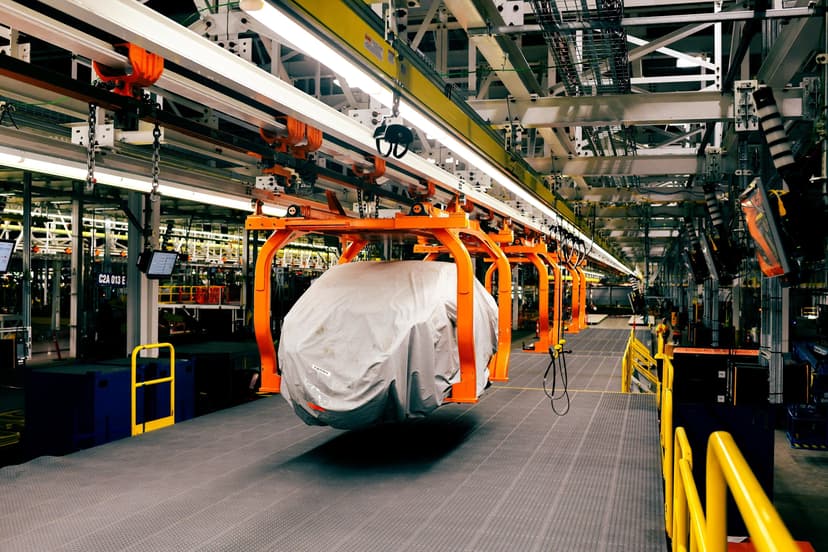
Tim Cook is offering the clearest signal yet of what his post-CEO role at Apple will look like. The outgoing chief executive joined Commerce Secretary Howard Lutnick in Houston today to open a new manufacturing facility, marking a rare convergence of Silicon Valley leadership transition and U.S. industrial policy. The appearance comes as Cook prepares to step down from the CEO role he's held since 2011, transitioning to chairman while Apple navigates its most significant leadership change in over a decade.
Apple is entering uncharted territory. For the first time since 2011, the company is preparing for life after Tim Cook as CEO, and Thursday's Houston plant opening offered a preview of what comes next.
Cook appeared alongside Commerce Secretary Howard Lutnick to inaugurate the new Texas manufacturing facility, a move that speaks volumes about how Apple envisions its leadership structure going forward. The pairing wasn't coincidental. With Cook transitioning to chairman, the Houston event suggests his future role will lean heavily on government relations, strategic partnerships, and the kind of high-level diplomacy that requires a statesman more than an operator.
The timing is critical. Apple has spent the past year quietly reshaping its supply chain, bringing more manufacturing to U.S. soil amid ongoing geopolitical tensions with China. According to CNBC, the Houston plant represents a significant bet on domestic production at a moment when Washington is pushing tech giants to reduce foreign dependency.
Lutnick's presence adds another layer. As Commerce Secretary, he's been at the center of the administration's push to reshore critical technology manufacturing. His background running Cantor Fitzgerald and his current government role make him an unusual but strategically important partner for Cook's ceremonial debut as chairman-in-waiting.
Cook's CEO tenure transformed Apple from a $350 billion company into a $3 trillion juggernaut. But the skills that made him successful as an operations-focused CEO - supply chain mastery, manufacturing efficiency, vendor relationships - are exactly the ones that translate to a chairman role focused on strategic expansion and policy navigation.
The Houston facility itself marks a departure from Apple's traditional offshore manufacturing model. While the company hasn't disclosed specific production plans for the plant, the location in Texas aligns with broader efforts to diversify beyond Asian manufacturing hubs. Previous reporting has indicated Apple plans to produce certain components domestically, though final assembly for most devices will likely remain overseas for the foreseeable future.
What remains unclear is who will replace Cook as CEO. Apple has historically kept succession plans tightly guarded, but the transition is now imminent enough that Cook is publicly stepping into his chairman role. The company's senior leadership team includes several potential candidates, though none have been formally announced.
The Houston plant opening also signals how Apple plans to navigate an increasingly complex regulatory environment. With antitrust scrutiny intensifying and geopolitical tensions reshaping global trade, having Cook in a chairman role focused on external relationships while a new CEO handles day-to-day operations could prove strategically valuable.
Industry watchers are paying close attention to how Apple structures this transition. Unlike other tech giants that have stumbled during founder or long-term CEO exits, Apple has experience with major leadership changes. Cook himself took over from Steve Jobs in 2011, maintaining momentum despite initial skepticism.
But this transition is different. Cook wasn't a founder, and his successor won't have the luxury of inheriting a company in growth mode. Apple now faces slowing iPhone sales, regulatory challenges across multiple continents, and intensifying competition in AI and services - categories where it's playing catch-up.
The Houston event offered a glimpse of how Apple plans to address at least one of those challenges: by positioning itself as a key partner in U.S. industrial policy. With Lutnick by his side, Cook wasn't just opening a factory. He was demonstrating that Apple's future chairman will serve as the company's primary liaison to Washington, leaving the next CEO to focus on products, services, and competition with Microsoft, Google, and emerging AI players.
What happens next will define not just Cook's legacy, but Apple's trajectory for the next decade. The Houston plant is a tangible symbol of that transition - a bet on American manufacturing, political partnerships, and a leadership structure that separates strategic vision from operational execution.
Cook's Houston appearance with Lutnick isn't just about a factory opening. It's a carefully choreographed signal about Apple's post-Cook era - one where the chairman handles Washington and strategic partnerships while a new CEO navigates product development and operational challenges. The question isn't whether Apple can survive this transition, but whether splitting leadership responsibilities will give the company an edge in an increasingly politicized tech landscape. For now, Cook is showing what a tech chairman can be: part diplomat, part strategist, and fully focused on keeping Apple aligned with U.S. policy priorities as the company enters its next chapter.