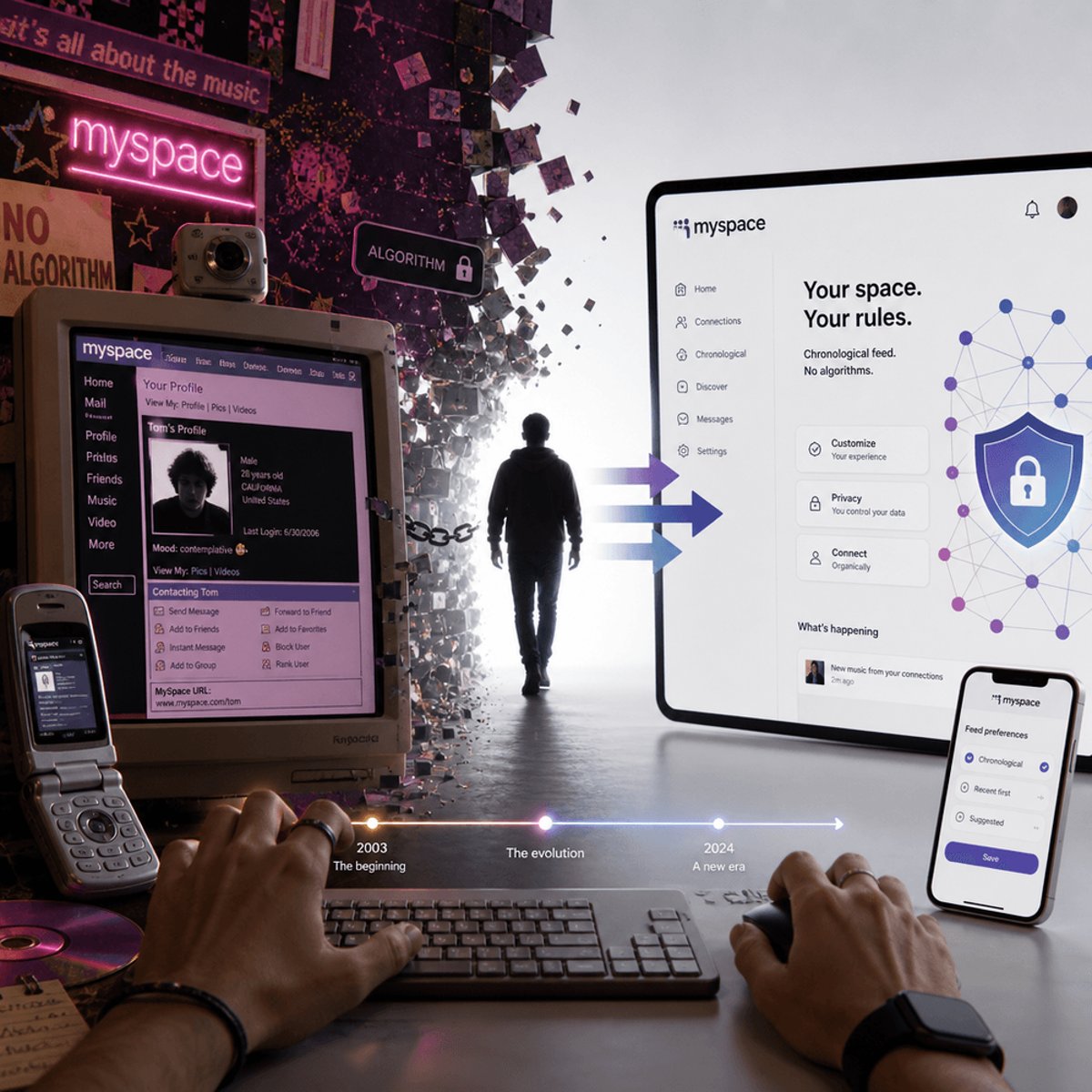
Myspace is betting on nostalgia and algorithm fatigue to stage one of tech's most audacious comebacks. The platform that once ruled social networking before Facebook's takeover is plotting a relaunch positioned as an escape from today's feed-obsessed giants. But with Meta, TikTok, and X dominating the landscape, the pioneer faces long odds in reclaiming relevance in a market it helped create two decades ago.
Myspace is making a play that sounds straight out of a time capsule - relaunching itself as the antidote to everything wrong with modern social media. The platform that gave millennials their first taste of digital self-expression is betting users are ready to ditch algorithmic feeds for something that feels more... 2005.
"Excitement about Myspace's relaunch reflects nostalgia for a more analog time, when algorithms were less dominant in our lives," an analyst told CNBC. It's a pitch that lands differently in 2026 than it would have five years ago. Back then, Meta and TikTok were still riding high on engagement metrics. Now, both face mounting criticism over addictive feeds, mental health concerns, and the creeping sense that users have become products rather than participants.
The timing isn't random. Social media fatigue is real and measurable. Younger users are fragmenting across niche platforms, BeReal proved appetite exists for anti-algorithm experiences, and even Meta has admitted its feed-ranking systems sometimes prioritize engagement over user wellbeing. Myspace appears to be positioning itself as the grown-up alternative - a place where you control what you see, not some black-box recommendation engine.
But nostalgia only gets you so far in an industry built on network effects. Myspace lost the social media wars specifically because it couldn't scale its user experience as fast as Facebook did. The platform's customizable profiles - once its signature feature - became its Achilles heel when Facebook offered clean, consistent interfaces that loaded faster and worked better on mobile.
That mobile problem hasn't gotten easier. Today's users expect Instagram-level polish and TikTok-speed content delivery. They want seamless messaging, stories, live video, and commerce integration. Building that infrastructure from scratch means competing with companies that spend billions annually on platform development. Meta alone employs thousands of engineers just maintaining Instagram's recommendation systems.
The market Myspace is entering looks nothing like the one it left. When the platform peaked around 2008 with 75 million users, social media was still finding its identity. Now it's a mature industry with entrenched players, established monetization models, and users who've already built years of social graphs on competing platforms. Convincing someone to rebuild their network elsewhere requires more than warm feelings about Top 8 friends lists.
Still, there's a case for optimism. X (formerly Twitter) proved existing platforms can stumble badly enough to create openings. Threads showed Meta-scale resources can launch a competitor to 100 million users in days when the positioning is right. And Mastodon demonstrated that decentralized, user-controlled alternatives can attract meaningful audiences even without billion-dollar marketing budgets.
Myspace's biggest advantage might be brand recognition. Unlike new entrants that need to explain what they are, Myspace carries instant nostalgia and cultural cachet with millennials who now have disposable income and purchasing power. If the platform can marry that emotional connection with genuinely better user experience - real chronological feeds, actual privacy controls, profile customization that works on mobile - it might carve out a sustainable niche.
The devil is in the execution. A relaunch means answering hard questions: Who owns Myspace now? What's the business model? How will it handle moderation at scale? Will it federate with other platforms or build another walled garden? And most critically, can it attract creators and brands that now treat social media as essential infrastructure for their businesses?
Industry observers remain skeptical but curious. The same fatigue driving Myspace's comeback pitch is why investors keep funding social media alternatives despite brutal failure rates. For every success story, dozens of well-funded challengers have disappeared after failing to reach critical mass. Ello, Peach, Vero - the social media graveyard is crowded with platforms that launched with buzz and faded into irrelevance.
What Myspace has that those platforms didn't is history. It's not introducing a new concept; it's reminding people of something they already loved and lost. Whether that's enough to compete with Meta's 3 billion users or TikTok's cultural dominance remains the billion-dollar question. But in an industry built on disruption, counting out the platform that helped invent modern social networking would be premature.
The relaunch represents a broader test of whether tech's nostalgia cycle can generate actual businesses or just viral moments. If Myspace succeeds, expect every dormant 2000s platform to dust off its servers and promise a return to simpler times.
Myspace's comeback bid is equal parts audacious and improbable. The platform is surfing a genuine wave of algorithm fatigue and nostalgia, but it's entering a market dominated by companies with near-infinite resources and billions of locked-in users. Success will depend less on warm feelings about the 2000s and more on whether Myspace can build modern infrastructure that delivers on its anti-algorithm promise while actually working as well as the apps people already use every day. It's a long shot, but in an industry where Facebook once seemed unstoppable and Twitter could collapse under new ownership, stranger comebacks have happened. The real test comes when nostalgia meets the daily grind of user retention and growth metrics.