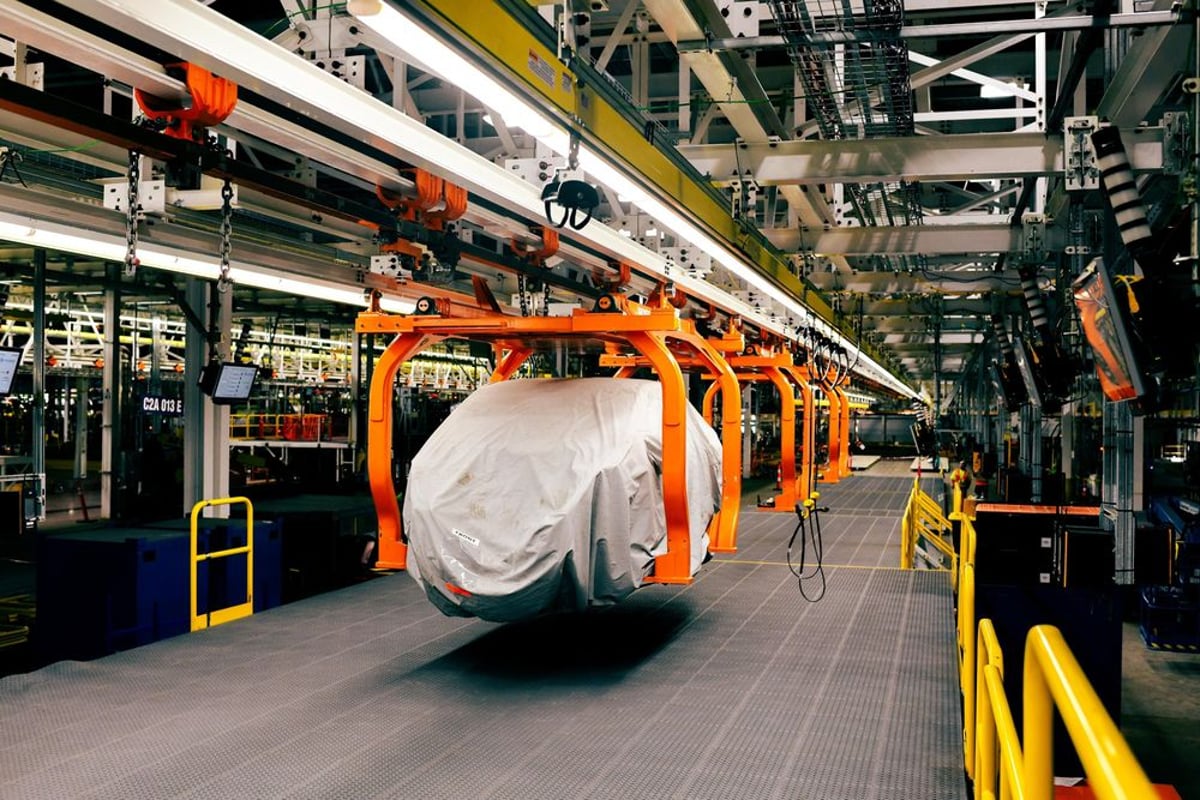
Ford is accelerating its comeback in the electric vehicle race. The automaker announced today that its next-generation Fathom EV will begin production at the newly retrofitted Louisville Assembly Plant in Q1 2027, with a $28,000 starting price that undercuts most competitors. The move marks Ford's most aggressive bet yet on affordable EVs, following a $2 billion factory overhaul that transformed a 70-year-old facility into a modern electric vehicle production line. Workers are already hand-building prototypes alongside the same team that designed the vehicle at Ford's skunkworks lab.
Ford just made its boldest move yet in the electric vehicle wars. The automaker confirmed today that its Fathom EV - the much-anticipated affordable electric vehicle that's been quietly brewing in Ford's California skunkworks - will roll off production lines at the Louisville Assembly Plant starting in the first quarter of 2027.
The timeline puts Ford in direct competition with Tesla and emerging Chinese EV makers who've been dominating the affordable electric vehicle segment. With a $28,000 starting price, the Fathom undercuts most competitors by thousands of dollars, potentially reshaping the accessible EV market.
But what's happening inside the Louisville facility tells an even bigger story. Ford poured $2 billion into transforming the 70-year-old plant, converting traditional assembly lines into a state-of-the-art EV production facility. According to The Verge's reporting, the factory is already in the pre-tooling phase, with workers hand-building Fathom prototypes alongside engineers from Ford's New Model Product Development Center in Dearborn, Michigan.
The integration of Ford's skunkworks team - the operators who spent months designing the vehicle in a secretive Long Beach facility - directly into the production process represents a significant shift in Ford's manufacturing approach. Traditionally, design teams hand off to production crews. Here, the people who conceived the Fathom will help build it, potentially reducing the gap between design intent and manufacturing reality.
This matters because Ford's been stumbling in the EV transition. The company delayed its next-gen EV platform multiple times, watched Tesla dominate market share, and struggled with production costs that made affordable EVs financially unviable. The Fathom represents a reset - a universal EV platform recently unveiled that Ford hopes will anchor its electric future.
The $2 billion Louisville investment signals Ford's commitment despite previous setbacks. Converting a decades-old facility rather than building greenfield capacity makes financial sense, but it's also risky. The plant needs to maintain quality standards while ramping production of an entirely new powertrain technology. Early prototype builds will test whether Ford's manufacturing systems can deliver on the Fathom's affordability promise without sacrificing margins.
Competitive pressure is mounting from every direction. Chinese automakers like BYD are flooding global markets with sub-$30,000 EVs. Tesla continues iterating on cost reduction. Legacy manufacturers including GM are pushing their own affordable EV platforms. Ford needs the Fathom to hit both price and volume targets, or risk losing the mass-market EV race before it really begins.
The Q1 2027 timeline also reveals Ford's production confidence. Initial builds will be prototypes, allowing the team to refine manufacturing processes before full-scale production ramps later in 2027. This staged approach could help Ford avoid the quality issues that plagued early F-150 Lightning production runs.
What makes the Fathom particularly interesting is Ford's platform strategy. Unlike single-model EVs, the Fathom architecture is designed to underpin multiple vehicles across different segments. If successful, Louisville could become the template for converting other Ford facilities, spreading the $2 billion investment cost across higher production volumes.
The involvement of factory workers in the prototype phase isn't just symbolic. It gives line employees early exposure to new manufacturing techniques and potential production bottlenecks. When full production starts, these workers will have months of hands-on experience rather than learning on the fly during critical ramp periods.
Ford's Fathom launch timeline crystallizes the stakes for traditional automakers in the EV transition. The $28,000 price point could finally bring electric vehicles within reach of mainstream buyers, but only if Ford can execute the production ramp without the delays and quality issues that have plagued competitors. The Louisville plant transformation shows Ford is willing to make massive bets on its EV future - now it needs to prove those bets will pay off when production starts in early 2027. Watch how prototype testing progresses over the next six months and whether Ford maintains its aggressive timeline as the market continues shifting beneath everyone's feet.