Mozilla just made its biggest AI play yet. Starting today, Firefox's new Smart Window mode delivers web-aware AI chat, natural language browsing history search, and intelligent tab management that actually makes sense. Through a partnership with Exa, the feature pulls real-time web data and surfaces source links directly in chat responses, while automatically organizing your tab chaos into visual groups. It's Mozilla's answer to the question: what does useful AI in a browser actually look like?
Mozilla is betting that AI in browsers should do more than just summarize pages. The company's new Smart Window mode in Firefox launches today with three core features that aim to solve actual browsing pain points, not just showcase AI for the sake of it.
The headline feature is web-aware chat through a partnership with Exa, a search startup that specializes in pulling current web information into AI responses. Unlike traditional chatbots that work from stale training data, Smart Window can answer questions using fresh web data and automatically includes source links in responses. It's the kind of cited, verifiable AI that Mozilla thinks users actually want.
But the more interesting play might be the natural language history search. During a live demo shown to The Verge, Mozilla showed how you can ask Smart Window to surface "running shoes I looked at last week" and get back visual previews pulled from your actual browsing history. The AI sorts through your selected history links and presents product images from the sites you visited, turning your browser history from a chronological list into something you can actually navigate conversationally.
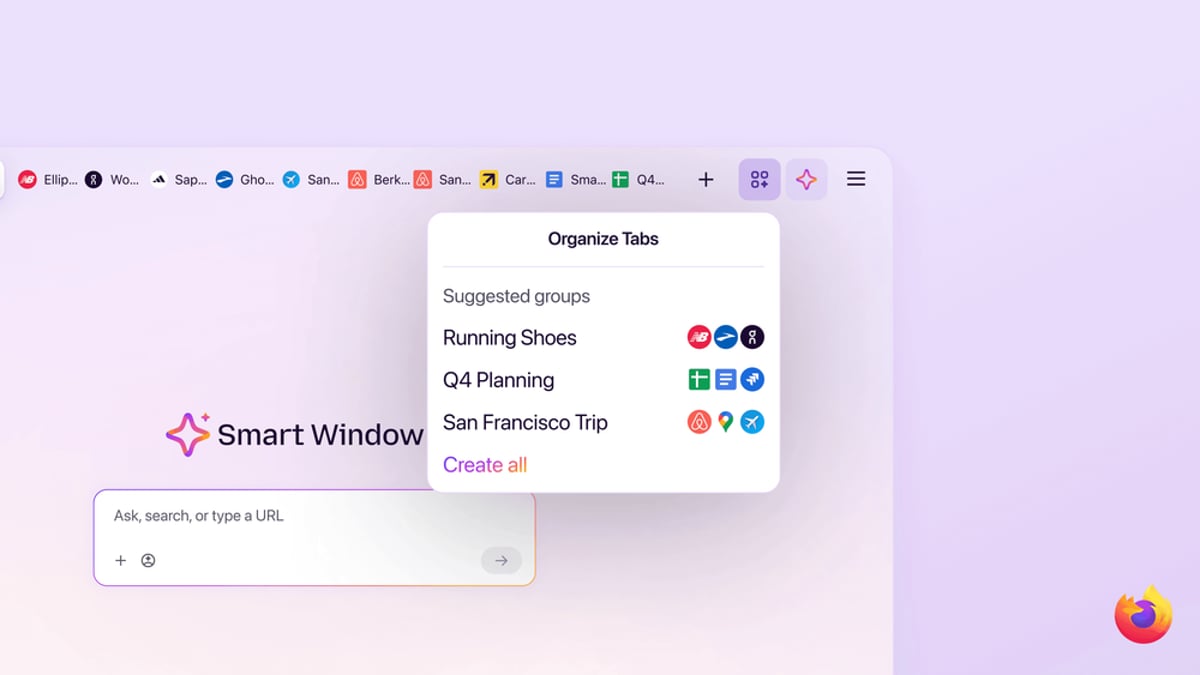
The third piece is automatic tab grouping, which tackles one of the most universal browser frustrations. Smart Window analyzes your open tabs and suggests logical groupings, complete with the ability to find and close duplicates. Anyone who's ever hit triple-digit tab counts knows this isn't a trivial problem, and Mozilla's approach feels more practical than flashy.
What's notable here is Mozilla's positioning. While Google and Microsoft have been racing to pack AI into Chrome and Edge, Mozilla's taken a slower, more deliberate path. The company has been vocal about building AI features that respect privacy and actually serve user needs rather than just chasing the hype cycle.
The Exa partnership is particularly strategic. Instead of building its own web search infrastructure or licensing from the usual suspects, Mozilla's tapping into a startup that's specifically focused on making web data accessible to AI systems. Exa's technology pulls from current web information rather than relying on periodically updated training data, which means Smart Window's chat responses should stay more current than traditional chatbot interfaces.
Timing-wise, this launch comes as browser makers are scrambling to figure out what AI features users will actually use versus what just sounds impressive in a press release. Google's Chrome has been testing AI-powered tab organization and theme generation. Microsoft has Copilot built directly into Edge. Opera added an AI sidebar months ago. Mozilla's sitting at maybe 3% browser market share, so it can't afford to launch AI features that are just for show.
The natural language history search could be the sleeper hit here. Everyone's browsing history is a mess of half-remembered product pages, articles they meant to read, and research rabbit holes. Being able to ask your browser to surface "that article about chip manufacturing I read in June" and actually get the right result would be genuinely useful in a way that most AI browser features aren't.
What Mozilla hasn't said much about yet is how the privacy angle works. The company's built its brand on being the privacy-conscious browser alternative, so the big question is how much of this processing happens locally versus in the cloud. Smart Window pulling from current web data through Exa suggests at least some cloud dependency, but Mozilla will need to be clear about what user data is being processed where.
The launch also positions Mozilla more aggressively in the consumer AI space. The company's made noise about responsible AI development and even launched Mozilla.ai as a separate initiative, but Smart Window is the first consumer-facing product that puts those principles into practice at scale. If it works well and respects privacy, it could give Mozilla a real differentiator in a browser market that's looked pretty stagnant for years.
Mozilla's Smart Window launch is less about joining the AI hype train and more about proving AI can solve real browsing problems. Web-aware chat with source links, conversational history search, and automatic tab organization address actual user pain points rather than just showcasing technology for its own sake. The real test will be whether users find these features genuinely helpful and whether Mozilla can deliver them while maintaining its privacy-first reputation. If Smart Window gains traction, it could finally give Firefox a meaningful edge in a browser market that's been dominated by Chrome for years. And for an underdog with 3% market share, that's exactly the kind of differentiation Mozilla needs.