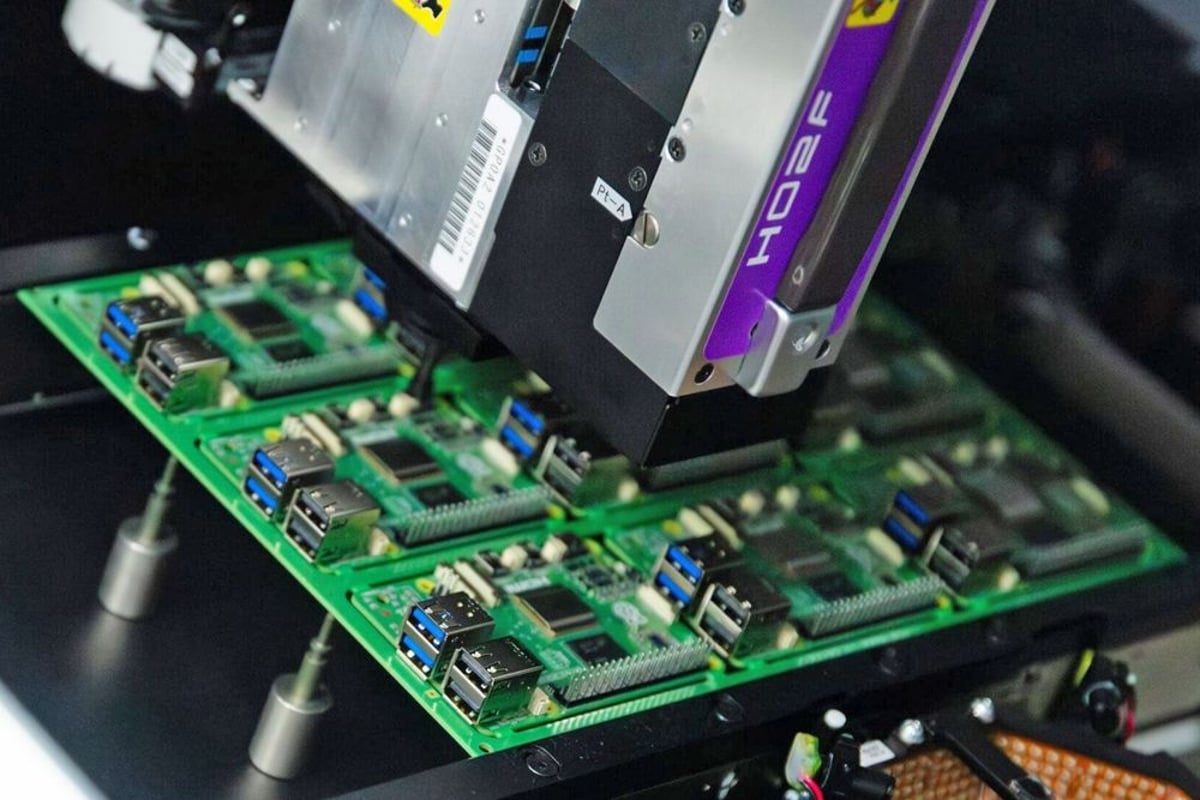
Raspberry Pi is raising prices again - the second increase in just two months - as memory component costs spiral out of control. CEO Eben Upton announced today that models with 2GB or more RAM will see hikes ranging from $10 to $60, with 16GB configurations taking the biggest hit. The move affects the company's flagship Pi 4 and Pi 5 boards, plus Compute Module variants, as memory suppliers more than double their prices amid what Upton calls "another challenging year" for the component market.
Raspberry Pi just delivered unwelcome news to its maker community. The UK-based computer company is raising prices across its product line for the second time since December, forced by memory costs that have more than doubled in a single quarter. It's a rare crack in the pricing discipline that's defined the brand since its 2012 launch.
"The cost of some parts has more than doubled over the last quarter," CEO Eben Upton wrote in today's announcement. "As a result, we now need to make further increases to our own pricing, affecting all Raspberry Pi 4 and 5, and Compute Module 4 and 5, products that have 2GB or more of memory."
The new pricing structure hits hardest on higher-memory configurations. Models with 2GB of RAM will increase by $10, while 4GB variants jump $15. The pain intensifies for power users - 8GB models rise by $30, and 16GB configurations face a $60 premium. That's on top of December's increases, which ranged from $5 to $25 depending on memory capacity.
For context, the original Raspberry Pi Model B launched at $35 in 2012. The Pi 5 with 8GB started at $80 before December's hike. With today's additional $30 increase, that same configuration now approaches $110 - more than triple the original Pi's price point. It's a fundamental shift for a platform built on affordability.
The memory crunch isn't hitting all products equally. Raspberry Pi's older devices - the Pi 3, Pi Zero, and budget-oriented 1GB variants - escape unscathed. Upton explained the company holds "several years' inventory" of the LPDDR2 memory used in legacy products. The newer Pi 4, Pi 5, and Compute Modules rely on modern LPDDR4 and LPDDR5 memory, where supply constraints are biting hardest.
This isn't an isolated incident. The broader memory market has been tightening since late 2025, driven by surging AI infrastructure demand and production constraints at major suppliers. Samsung, Micron, and SK Hynix dominate global memory production, and all three have prioritized high-margin HBM (high-bandwidth memory) for AI accelerators over commodity DRAM and LPDDR chips.
Raspberry Pi went public on the London Stock Exchange in June 2024, raising £166 million at a £542 million valuation. The IPO was meant to fund expanded production capacity and reduce dependence on constrained component supplies. But even with that capital injection, the company can't escape broader market dynamics when memory suppliers more than double their prices in 90 days.
The timing is particularly tough for educational and hobbyist users - the core audience that made Raspberry Pi a household name in maker circles. School districts that standardized on Pi-based computing labs now face budget overruns. Hobbyists planning projects around specific price points need to recalculate. Industrial customers using Compute Modules in embedded applications face bill-of-materials increases they'll need to pass downstream.
Upton struck an optimistic note about the future, calling the situation "ultimately a temporary one" and promising the company looks forward "to unwinding these price increases once it abates." But his outlook for 2026 remains cautious. "2026 looks likely to be another challenging year for memory pricing," he wrote, suggesting relief won't arrive quickly.
The question now is whether competitors like Arduino, BeagleBoard, and the growing crop of RISC-V single-board computers can capitalize on Raspberry Pi's forced price increases. Many alternatives already compete on performance or specialized features, but couldn't match Pi's pricing. That advantage is narrowing.
Raspberry Pi's second price increase in 60 days marks a turning point for a company built on affordability. Memory costs spiraling beyond manufacturer control are forcing painful decisions that ripple through education, hobbyist, and industrial markets. While Upton promises eventual relief, his warning about 2026 being "another challenging year" suggests the maker community should brace for higher prices to stick around. The real test comes next - whether alternatives can finally chip away at Raspberry Pi's market dominance while its signature price advantage erodes.