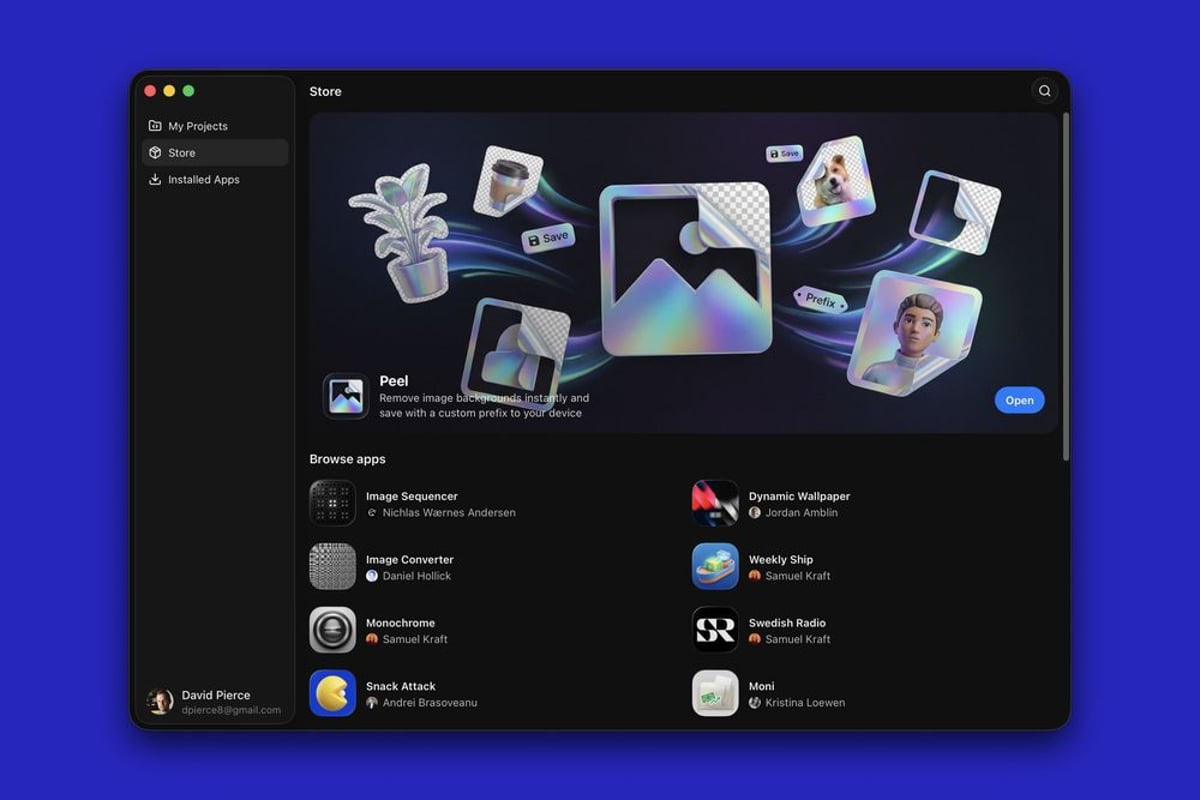
The Mac productivity tool Raycast is making a big bet on the no-code revolution. The company just launched Glaze, a new platform that turns AI-generated "vibe code" into shareable apps complete with its own app store. While tools like Claude Code already let anyone build software through natural language prompts, they still require terminal knowledge and deployment skills. Glaze aims to eliminate those barriers entirely, letting Mac users create, discover, and install AI-coded tools without touching a command line.
Raycast, the productivity launcher that's become a staple for Mac power users, is diving headfirst into the AI-powered no-code movement. The company just unveiled Glaze, a platform designed to make building, sharing, and using AI-generated software as simple as browsing an app store.
The timing couldn't be more strategic. AI coding assistants like Claude Code have already proven that you don't need to write a single line of code to build functional software. But there's a catch - you still need to navigate your computer's terminal, understand deployment workflows, and troubleshoot technical issues when things break. For most people, that's still a bridge too far.
Glaze attempts to collapse that gap entirely. Instead of wrestling with command-line interfaces, users can prompt an AI to build tools directly within the Glaze environment. Once created, these "vibe-coded" apps can be published to the Glaze Store, where other users can discover and install them with a single click. It's essentially an App Store model applied to AI-generated micro-applications.
The approach mirrors what's happening across the broader no-code landscape, where platforms are racing to lower the technical floor for software creation. But Glaze's integration with Raycast - already deeply embedded in many developers' and power users' workflows - gives it a potential distribution advantage. Users who already rely on Raycast for launching apps, managing windows, and automating tasks now have a native environment for creating custom tools.
The Glaze Store represents the platform's most interesting bet. By creating a marketplace for vibe-coded apps, Raycast is essentially crowdsourcing the discovery problem that plagues most no-code tools. Instead of every user starting from scratch, they can browse what others have already built, fork existing projects, or remix ideas. It's a social layer that could accelerate adoption if it gains traction.
But there's a significant limitation right out of the gate - Glaze is Mac-only. In an era where cross-platform compatibility is increasingly table stakes, especially for developer tools, the decision to launch exclusively on macOS narrows the addressable market considerably. While Mac users are disproportionately represented among developers and early adopters, the strategy risks ceding ground to competitors building for Windows, Linux, and web-based environments from day one.
The competitive landscape is getting crowded fast. Beyond Claude Code, platforms like Replit, Bolt, and v0 are all vying to become the default environment for AI-assisted development. Each has taken a different approach - Replit focuses on collaborative coding, Bolt emphasizes instant deployment, v0 specializes in UI generation. Glaze's angle is simplicity and discoverability, but it'll need to prove those advantages outweigh its platform constraints.
Raycast has built credibility with developers by consistently shipping polished, thoughtful tools. The company raised a $15 million Series A in 2022 and has steadily expanded its feature set while maintaining a reputation for quality. Glaze represents its biggest product bet yet, moving beyond productivity enhancement into actual software creation.
What remains unclear is how Glaze will handle the messy reality of AI-generated code - bugs, security vulnerabilities, and maintenance challenges. No-code platforms have historically struggled with technical debt and scalability issues. When the code is AI-generated and potentially shared across thousands of users, those problems could compound quickly. Raycast hasn't detailed its moderation, testing, or quality assurance processes for the Glaze Store.
The launch also raises questions about monetization. Will Raycast take a cut of paid apps in the Glaze Store? Will there be premium features or compute limits? The company hasn't announced a business model yet, but the app store structure suggests commercial possibilities down the line.
For now, Glaze is available as a free download for Mac users willing to experiment with the bleeding edge of no-code AI development. Whether it becomes the breakthrough platform that finally makes software creation accessible to everyone - or just another niche tool for Mac enthusiasts - will depend on how quickly Raycast can expand platform support, build the Glaze Store ecosystem, and prove the reliability of vibe-coded apps at scale.
Raycast's Glaze represents an ambitious attempt to democratize software creation by removing the technical barriers that still exist even in AI-powered no-code tools. The integrated app store model could solve the discovery problem that plagues similar platforms, and Raycast's existing user base provides built-in distribution. But the Mac-only launch significantly limits its immediate impact, and the platform will need to prove it can handle the quality, security, and scalability challenges that come with crowdsourced AI-generated code. If Glaze can expand beyond macOS and build a thriving ecosystem of reliable vibe-coded apps, it could become a meaningful player in the no-code revolution. For now, it's an intriguing experiment that Mac users can try today, with broader implications still to be determined.