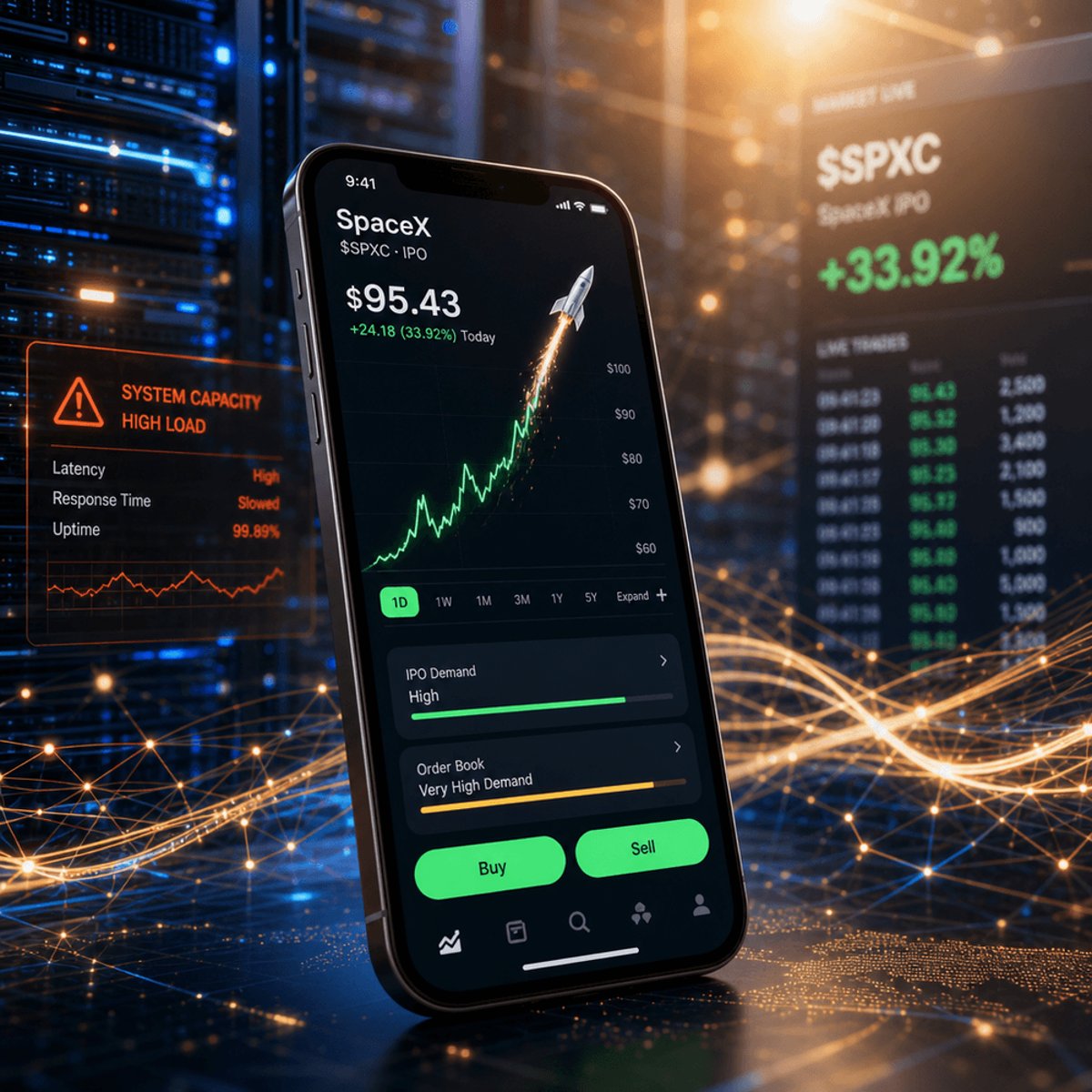
Robinhood just experienced what the company is calling "record-breaking" traffic as retail investors flooded the platform to trade SpaceX shares on debut day. The surge was so intense it triggered intermittent service disruptions across the trading app, though the company says those issues have now been resolved. The infrastructure strain signals just how much pent-up retail demand existed for access to Elon Musk's space venture, which has remained private for over two decades.
Robinhood wasn't ready for the SpaceX stampede. The trading platform confirmed it saw "record-breaking" traffic levels today as SpaceX shares hit public markets for the first time, causing intermittent service disruptions that left some customers unable to execute trades during the critical opening hours.
The company said the issues have since been resolved, but the brief outage marks another high-profile stumble for a platform that's become synonymous with retail trading access. For Robinhood, which has spent years trying to live down its role in the 2021 meme stock saga and subsequent trading restrictions, any whiff of platform instability during a major market event is exactly the kind of PR nightmare it can't afford.
But the traffic surge also tells a bigger story about just how hungry retail investors were to get a piece of SpaceX. Elon Musk's rocket company has remained private since its founding in 2002, building a cult following among retail traders who've watched from the sidelines as institutional investors got access through secondary markets. Now that the gates are finally open, the flood of demand was enough to stress test Robinhood's infrastructure in ways even the platform didn't anticipate.
The timing couldn't be more critical for Robinhood. The company has been fighting to rebuild trust and demonstrate it can handle the big moments after its controversial decision to restrict trading in GameStop and other meme stocks in early 2021. That episode triggered a congressional hearing, multiple lawsuits, and a permanent stain on the company's reputation among the very retail investors it claims to champion.
Today's disruptions weren't nearly as severe or prolonged as that 2021 incident, and the company moved quickly to acknowledge the issue and confirm resolution. But any service hiccup during what's shaping up to be one of the most anticipated IPOs in recent memory is bound to revive questions about whether Robinhood's infrastructure can truly support the retail trading revolution it helped create.
The SpaceX debut represents a watershed moment for retail market access. Unlike many recent tech IPOs that have disappointed or underperformed, SpaceX arrives with a proven business model, dominant market position in commercial space, and the kind of name recognition that typically belongs to consumer brands. The company's Starlink satellite internet service alone has attracted massive interest, while its reusable rocket technology has fundamentally reshaped the economics of space access.
For trading platforms like Robinhood, the SpaceX IPO is both opportunity and stress test. The company has built its entire brand around democratizing finance and giving everyday investors access to the same opportunities as Wall Street. When a once-in-a-generation offering like SpaceX goes public, Robinhood's infrastructure needs to deliver - or the whole promise falls apart.
Other trading platforms have faced similar challenges when retail demand collides with major market events. During the height of the meme stock frenzy, multiple brokerages experienced outages and slowdowns as trading volumes exploded. But those incidents occurred during an unprecedented period of market volatility and social media-driven trading. The SpaceX IPO, by contrast, is a traditional public offering that simply happens to carry enormous retail appeal.
The incident raises questions about how brokerages are preparing for an era where retail investors increasingly drive trading volume in major offerings. Robinhood and competitors like Webull and Public have democratized access, but that democratization only works if the underlying infrastructure can scale to meet demand when it matters most.
What happens next will likely depend on whether today's issues were a one-time capacity crunch or a sign of deeper infrastructure limitations. Robinhood will need to prove it can handle sustained high-volume trading in SpaceX shares as retail investors continue piling in. Any additional outages or slowdowns could send frustrated traders to competing platforms - and give ammunition to critics who argue retail brokerages still aren't ready for prime time.
For now, Robinhood is emphasizing that the record traffic is a sign of customer enthusiasm and that technical issues have been fully resolved. But in an environment where trust is currency and alternatives are just a download away, the platform can't afford many more stumbles like this one.
The SpaceX traffic surge is a double-edged sword for Robinhood. On one hand, it validates the platform's position as the go-to destination for retail traders chasing blockbuster opportunities. On the other, it exposes infrastructure vulnerabilities that could erode trust if they become a pattern. As retail investors continue claiming a bigger seat at the table in major market events, platforms like Robinhood will need to prove their infrastructure can match their ambitions. The SpaceX IPO is just the beginning - if Robinhood wants to own the retail trading revolution, it needs to make sure its servers can keep up with the revolution's appetite.