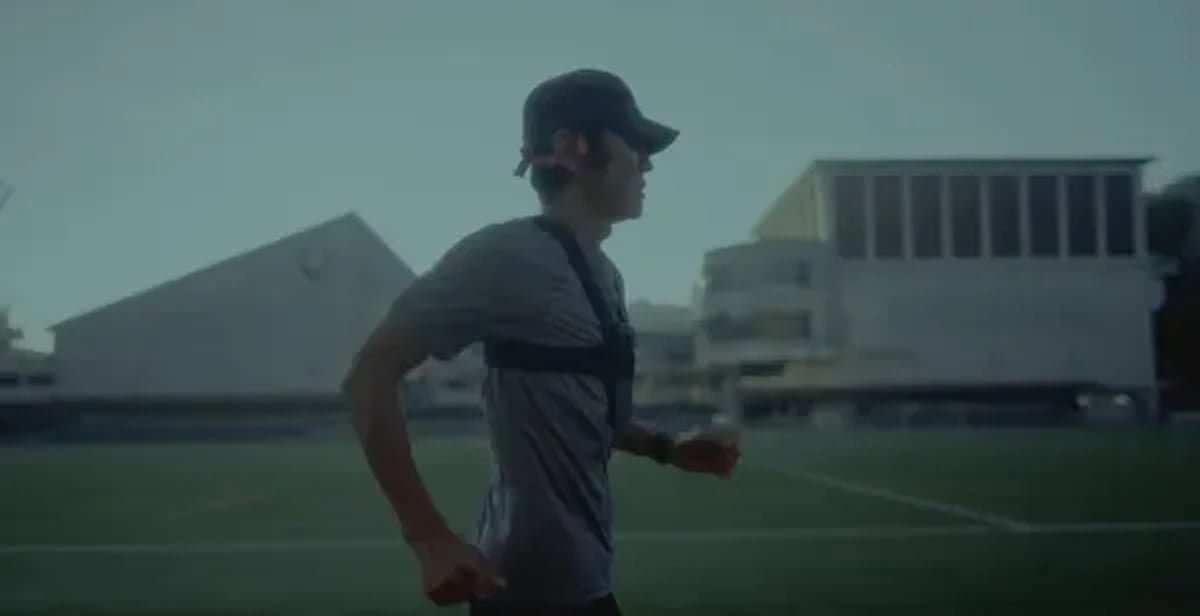
Google DeepMind just handed blind and low-vision athletes something they've never had: the freedom to run alone. The company's new Running Guide agent uses real-time computer vision and audio cues to navigate runners around obstacles, eliminating the need for human guides or tethers. Announced today by Senior Director Robin Dua, the AI agent represents a leap forward in assistive technology, turning smartphones into intelligent running companions that see the path ahead and speak directions into runners' ears.
Google is betting AI can do what decades of assistive technology hasn't quite managed - give blind runners true independence. The company's DeepMind division rolled out Running Guide agent today, an AI system that turns a smartphone into a seeing-eye companion for athletes who are blind or have low vision.
The timing isn't coincidental. As tech giants race to prove AI agents can handle complex real-world tasks, Google found a use case where the stakes are deeply personal and the technology gap is glaring. Most blind runners today rely on human guides connected by tethers, or they stick to indoor tracks where they can count laps. Running Guide promises to change that equation entirely.
Here's how it works in practice. The AI agent processes live camera feeds from a runner's smartphone, analyzing the path ahead for obstacles, turns, and hazards. When it spots something - a curb, a pedestrian, a sudden bend - it delivers instant audio cues through bone-conduction headphones or earbuds. The system doesn't just warn about barriers; it actively navigates, telling runners when to veer left, when the path clears, when to slow for an intersection.
"Running Guide agent is an AI agent that provides real-time audio navigation and obstacle detection to help BLV athletes run independently," Robin Dua, Google's Senior Director of AI Innovation & Research for Platforms & Devices, explained in the official announcement. The straightforward description masks the technical complexity underneath - computer vision models that process frames in milliseconds, natural language systems that convert spatial data into conversational guidance, and edge computing that keeps latency low enough for safety.
The project builds on Google's existing accessibility work, including Lookout for object recognition and TalkBack for screen reading. But Running Guide represents something different: an autonomous agent making split-second decisions in unpredictable environments. That's a harder problem than most consumer AI applications, where mistakes mean bad recommendations, not physical injuries.
DeepMind didn't detail which specific models power Running Guide, but the system likely draws from the company's advances in multimodal AI - models that blend vision, language, and spatial reasoning. The challenge isn't just identifying a trash can in a runner's path; it's calculating whether that obstacle requires a direction change, how urgent the warning needs to be, and how to communicate it without overwhelming the athlete with constant alerts.
The accessibility angle gives Google a narrative edge in the AI agent wars, but the technical validation matters more. If Running Guide works reliably, it proves AI agents can handle safety-critical tasks in chaotic real-world settings. That's the kind of capability that transfers to autonomous vehicles, robotic assistants, and industrial automation - markets where Google competes with Microsoft, Amazon, and a swarm of startups.
There's also a regulatory dimension. Assistive technologies often get faster approval pathways than general consumer products, and they generate goodwill with policymakers worried about AI safety. Google positioning itself as an accessibility leader could smooth the path for more ambitious agent deployments down the line.
The announcement didn't include availability timelines, pricing, or hardware requirements - typical for early-stage Google projects that might stay in research mode for months or years. The company has a mixed track record with accessibility tools; some, like Live Transcribe, became mainstream features, while others languished in pilot programs.
What's clear is that Google DeepMind sees real-world AI agents as the next battleground. While competitors focus on chatbots and coding assistants, Google is training models to navigate physical space, interpret complex environments, and make judgment calls that affect human safety. Running Guide might help a relatively small community of blind athletes, but the lessons learned will scale far beyond the track.
The shift from accessibility feature to autonomous navigation system also reflects changing expectations for AI. A few years ago, obstacle detection would've been impressive. Now, users expect agents that don't just identify problems but solve them proactively, without human intervention. Running Guide hits that mark - it's not a tool you control, it's a companion that guides.
For the blind and low-vision running community, the promise is profound. Independence in athletics has always meant freedom to train on your own schedule, explore new routes, and push limits without coordinating guides. If Running Guide delivers on that promise reliably, it won't just be an accessibility win - it'll be proof that AI agents can handle the messiest, most unpredictable parts of human life.
Google DeepMind's Running Guide agent isn't just an accessibility feature - it's a proof point for AI agents operating in high-stakes physical environments. If the system can keep blind runners safe on unpredictable outdoor routes, it validates autonomous AI decision-making in ways that chatbots and image generators never could. The real test comes when Running Guide moves from research announcement to actual runners pounding pavement, but the ambition signals where Google sees the AI agent race heading: out of the cloud and into the messy, unpredictable real world where mistakes have consequences and independence means everything.