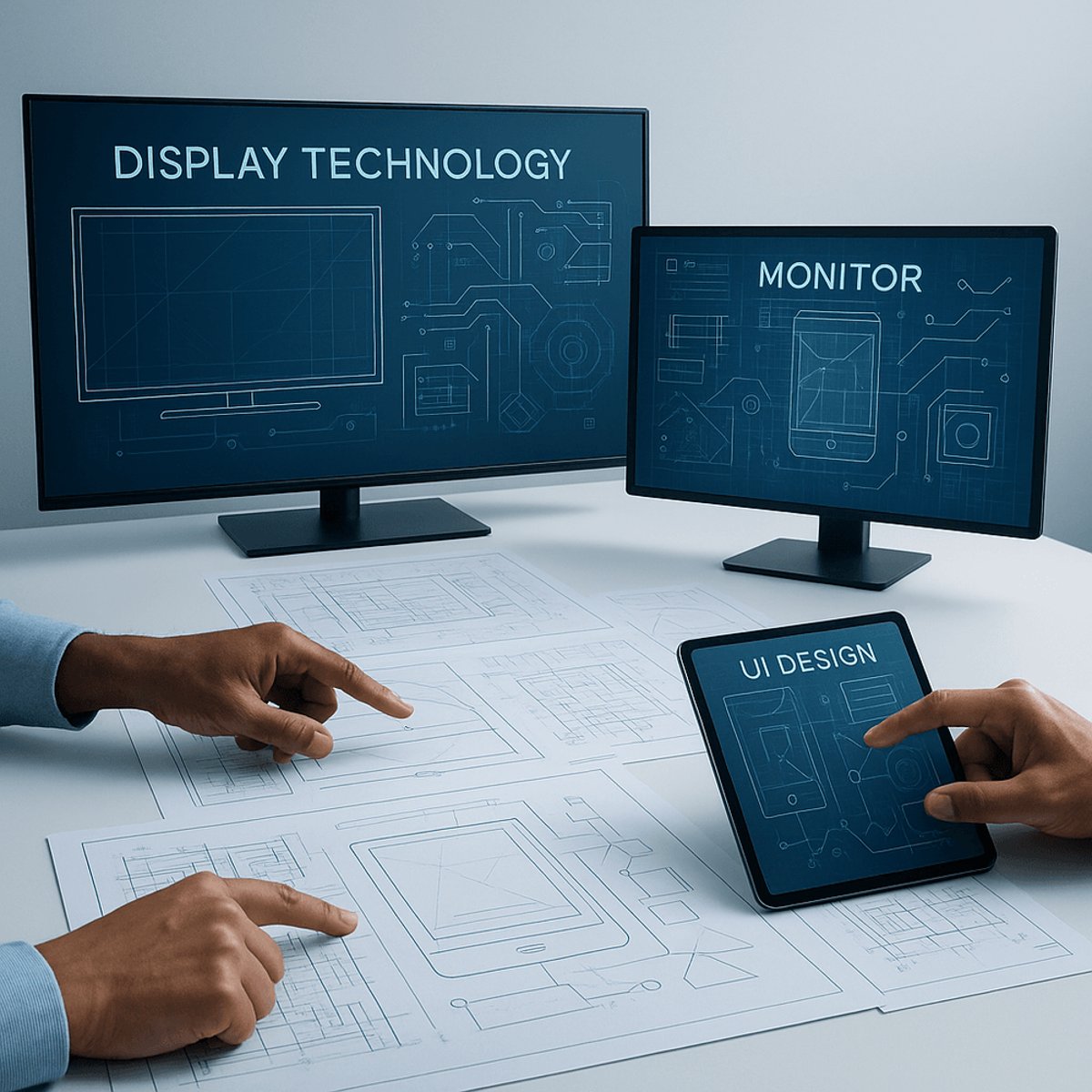
Samsung engineers are breaking down the complex development story behind The Movingstyle, revealing how the company created an entirely new product category by merging TV, monitor, and mobile device technologies. In an exclusive interview with Samsung Newsroom, Product Planning Group's Seokmin Baek and Enterprise R&D Lab's Michael Kim explain the engineering decisions that transformed static screens into portable companions.
Samsung just pulled back the curtain on one of its most ambitious engineering projects. The Movingstyle portable touchscreen represents more than just another display - it's the company's attempt to create an entirely new product category that nobody knew they needed.
Seokmin Baek from Samsung's Product Planning Group and Michael Kim from the Enterprise R&D Lab sat down with Samsung Newsroom to reveal the technical challenges behind this hybrid device. Their insights paint a picture of a development process that required reinventing everything from safety standards to manufacturing processes.
"We recognized the demand for a more comfortable viewing experience - even at home - and paired that insight with Samsung's expertise in portable screen technology," Baek explained. The concept builds on Samsung's portable viewing legacy, from The Sero's pivoting screen to The Freestyle projector, but The Movingstyle pushes further into uncharted territory.
The engineering team faced an immediate problem: existing industry standards didn't account for a device that needed to function as a TV, monitor, and tablet simultaneously. Unlike traditional TVs viewed from a distance, monitors require stricter safety standards due to close-proximity viewing. Add touch functionality, and suddenly durability, accuracy, and response rates become critical factors.
"We had to redefine everything - from planning and development to manufacturing - to deliver a completely new user experience," Kim revealed. The development team essentially had to write the rulebook as they went, establishing specifications and safety standards from scratch. "I often pulled all-nighters, driven by the determination to create a brand-new category."
The device's most distinctive feature - its integrated kickstand - exemplifies the engineering complexity hidden beneath simple appearances. While a standard hinge would have been easier to manufacture, Samsung chose a circuit-integrated design that houses cables, power management circuits, and other components directly within the hinge structure.
"There's a sturdy hinge, and housed inside it are the cables, power management circuit and other parts," Kim explained. This approach required significantly more complex design and manufacturing processes but was essential for achieving The Movingstyle's durability targets.
The positioning of connection ports on the device's rear panel reflects similar attention to user experience details. Rather than placing ports for convenient access during manufacturing, Samsung centered them to minimize visual distraction. "We especially wanted users to focus entirely on the screen without being distracted by exposed cables," Baek noted.
Samsung's approach targets what the team calls the transition between "lean-forward" and "lean-back" viewing experiences. The touchscreen enables intuitive interaction for tasks like adjusting settings or looking up cooking videos, while remote control support maintains comfort for movie watching. "The Movingstyle is a product that allows users to move naturally between these two viewing experiences," Baek said.
The device's ability to switch between landscape and portrait modes while maintaining full functionality adds another layer of versatility. This feature extends beyond entertainment to professional applications, with Kim noting its potential as a presentation prompter or meeting display.
Behind the scenes, The Movingstyle represents unprecedented collaboration across Samsung's typically separate divisions. "The Movingstyle was born from close collaboration across our TV, monitor and mobile teams, achieving a higher level of perfection by bringing together the best technologies from each field," Kim said with evident pride.
This cross-division approach allowed Samsung to leverage mobile device portability, monitor accuracy, and TV visual appeal in a single product. The result challenges traditional product categories while creating new opportunities for how people interact with screens throughout their daily routines.
The engineering decisions reveal Samsung's confidence in creating new market segments rather than simply competing within existing ones. By prioritizing user satisfaction over manufacturing simplicity, the company signals its willingness to invest in complex solutions that may define the next generation of display technology.
The Movingstyle interview reveals Samsung's methodical approach to creating new product categories through engineering excellence rather than marketing gimmicks. By prioritizing durability, user experience, and cross-division collaboration over manufacturing simplicity, Samsung demonstrates how established tech giants can still pioneer entirely new market segments. The device's success will ultimately determine whether portable touchscreens become the next major display category or remain a premium niche - but Samsung's engineering foundation suggests they're building for the long term.