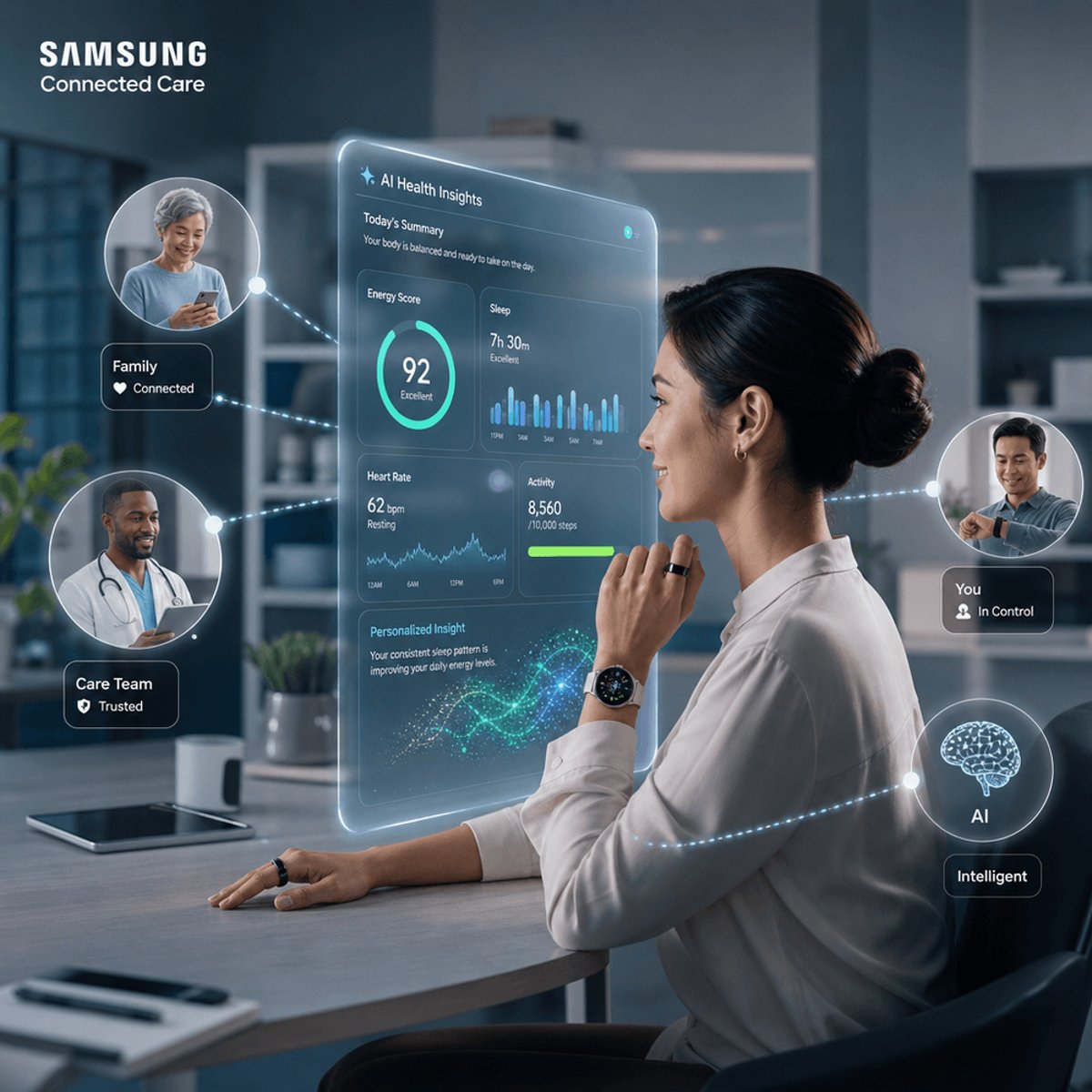
Samsung is betting big on AI to simplify healthcare. At Galaxy Unpacked July 2026 in London, the company's Digital Health Team head Dr. Hon Pak laid out a vision for Connected Care that goes beyond fitness tracking - using AI to learn individual rhythms and connect patients, doctors, and families through Samsung Health. The move positions Samsung to compete directly with Apple Health and Google Fit in the increasingly crowded AI health space.
Samsung just made its clearest statement yet about where it's taking health tech. At Galaxy Unpacked July 2026 in London on July 22, Dr. Hon Pak, Senior Vice President and Head of the Digital Health Team at Samsung Electronics, sat down with cognitive neuroscientist Dr. Dong-seon Chang to unveil the company's Connected Care vision - and it's more ambitious than just counting steps.
The core pitch is simple but powerful: health management has become too complicated, and AI can fix that. "The body changes from day to day," Dr. Pak explained during the session captured on Samsung's YouTube channel. The company's approach uses AI to learn individual daily rhythms and patterns, transforming what Dr. Pak called "fragmented health data" into meaningful, personalized guidance.
This isn't just about better algorithms. Samsung Health's Connected Care vision extends well beyond devices and data points. According to Dr. Pak, the platform aims to connect people - from healthcare professionals and family members to partners across the broader health ecosystem. It's a recognition that health tech has focused too much on gadgets and not enough on the human relationships that actually drive better health outcomes.
The timing is strategic. Apple continues to dominate the premium health wearables market with Apple Watch, while Google has been quietly building out Fitbit's health infrastructure since its $2.1 billion acquisition. Samsung's angle appears to be ecosystem integration - leveraging its Galaxy device footprint to create a more connected health experience.
But there's a broader question lurking beneath the product vision. As Dr. Pak and Dr. Chang discussed, the conversation ultimately points to how society can embrace AI while keeping people at the center. It's the same tension playing out across the tech industry as companies race to deploy AI everywhere from smartphones to operating rooms.
For Samsung, the stakes are particularly high. The company has been investing heavily in health sensors across its Galaxy Watch and Galaxy Ring lineup, but it's been playing catch-up to Apple in terms of clinical validation and developer ecosystem. Connected Care seems designed to leapfrog that competition by focusing on AI-powered insights rather than just hardware sensors.
The presentation was light on specifics - no launch dates, no pricing, no hard technical details about which AI models Samsung is using or how the data privacy will work. That's typical for Galaxy Unpacked sessions, which tend to focus on vision over technical minutiae. But the strategic direction is clear: Samsung wants to own the AI layer that sits between raw health data and actionable medical insights.
What's particularly interesting is the emphasis on connection. While competitors have focused on individual health tracking, Samsung is positioning Connected Care as a way to bring healthcare professionals and families into the loop. That could mean everything from automatically sharing concerning health metrics with your doctor to giving family members visibility into elderly relatives' wellbeing.
The conversation between Dr. Pak and Dr. Chang also touched on personalization - a key differentiator in the AI health race. Instead of generic health advice, Samsung's vision involves AI that understands your specific patterns and provides guidance tailored to your body's rhythms. It's the difference between "you should walk more" and "your activity levels drop every Tuesday afternoon - here's why that matters for your sleep quality."
For the broader health tech industry, Samsung's move represents another validation that AI is becoming table stakes. Every major player is now betting that the future of consumer health isn't just passive monitoring but active, intelligent guidance. The question is who can execute on that vision first - and who can do it in a way that users actually trust with their most intimate data.
Samsung's Connected Care vision represents a strategic bet that AI-powered health insights - not just better sensors - will define the next generation of consumer health tech. By focusing on connecting people rather than just collecting data, Samsung is carving out a different angle than Apple's clinical focus or Google's data-driven approach. The real test will come when Samsung moves from vision to execution, with specifics on AI models, privacy protections, and actual clinical validation. For now, it's clear that the health tech race is becoming an AI arms race, and Samsung just signaled it's playing to win.