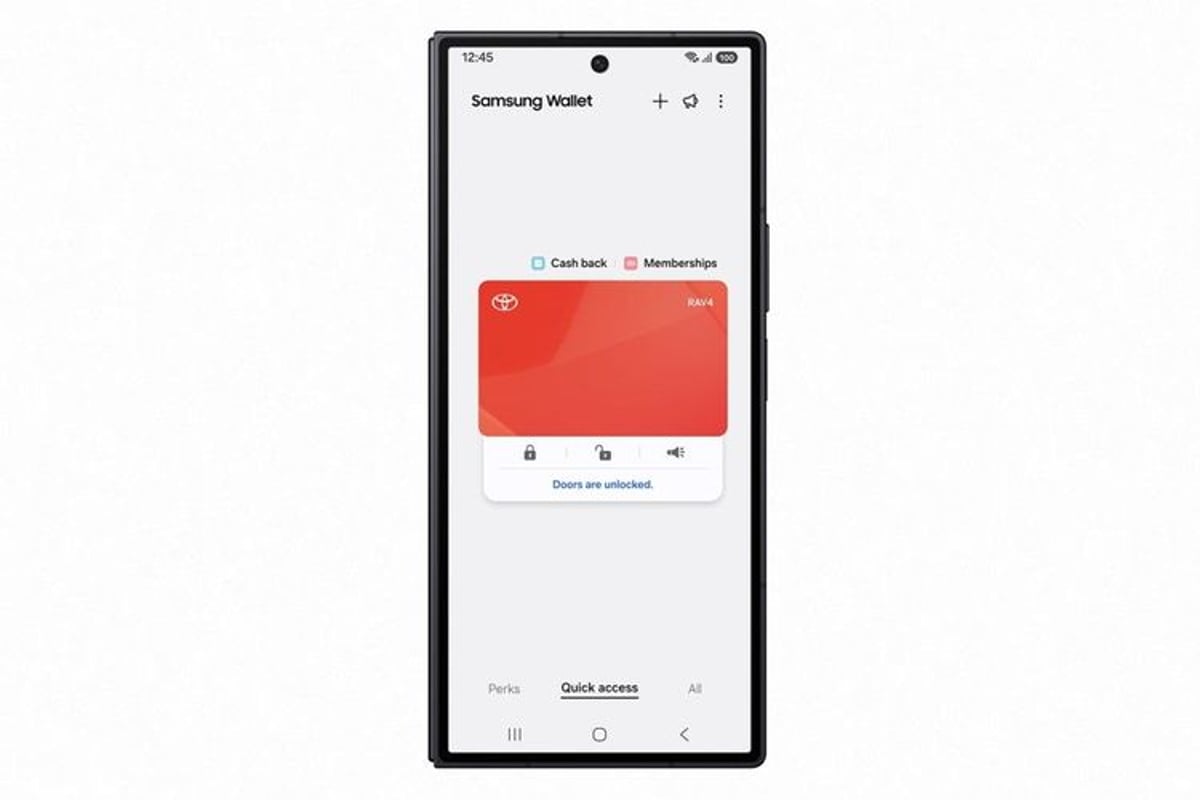
Samsung just unlocked a new frontier for mobile wallets. Starting this month, Samsung Wallet users with compatible Galaxy smartphones can now ditch their physical car keys for select 2026 Toyota RAV4 models. The partnership marks a major step in mobile authentication moving beyond payments and IDs into the physical world of vehicle access, starting with the US, Canada, and Mexico before expanding across Europe.
The smartphone is becoming your entire life - wallet, ID, key - and Samsung just added another check to that box. On Tuesday, the company announced that Samsung Wallet now supports digital key functionality for select 2026 Toyota RAV4 models. Starting this month, Galaxy users can unlock, lock, and start their vehicles straight from their phones, without ever pulling out a physical key.
The rollout is deliberate but significant. This isn't vaporware or a limited beta. Samsung is kicking off availability this month across the US, Canada, and Mexico, with Europe to follow in alignment with Toyota's own launch timeline. More Toyota models will support the feature down the line, but for now it's the 2026 RAV4 leading the charge.
"Samsung Wallet is designed to remove friction from daily life through the combination of seamless convenience and uncompromising security," Woncheol Chai, EVP and Head of Digital Wallet Team at Samsung Electronics, told the press. "By bringing Digital Key support to Toyota vehicles, starting with the 2026 Toyota RAV4, we're extending those benefits to more people, so that Galaxy users can get on the road faster, safer and more easily."
What makes this work is the underlying hardware. The system relies on Ultra-Wideband (UWB) technology for hands-free entry and Near Field Communication (NFC) for proximity-based unlocking and engine start. UWB, which is a standardized protocol set by the Car Connectivity Consortium, offers precision that prevents the relay attacks that plague older wireless car access systems. The technology knows exactly where your phone is relative to the vehicle, making it much harder to spoof.
Not every Galaxy phone gets UWB support - you'll need a relatively recent flagship or foldable. The list includes the S21 Ultra/S21+ and newer models, plus the Z Fold series and Z Flip lineup. NFC support extends the capability to more affordable Galaxy phones later this year, which is where the real democratization happens.
Security was clearly top of mind here. The digital keys are encrypted and stored directly on your Galaxy device, protected by Samsung Knox, Samsung's enterprise-grade security platform. They meet EAL6+ certification standards - that's the same rigorous evaluation assurance level governments and Fortune 500 companies demand for sensitive operations. If your phone gets stolen, you can remotely lock or delete the key through Samsung Find. Add biometric or PIN authentication on top, and you've got security that arguably rivals a traditional car key, minus the ability to actually lose it forever in the couch cushions.
There's also a practical feature for shared access. You can hand off digital keys to trusted contacts through Samsung Wallet, and revoke them at any time. Multi-driver households will appreciate the flexibility, and rental-car companies might eventually build entire business models around this.
This partnership between Samsung and Toyota matters beyond just convenience. It signals that the auto industry is finally moving past skepticism toward digital key adoption. Apple got there first with Apple Wallet integration on certain BMW and Genesis models, but the ecosystem remains fragmented. Now Google Wallet is pushing digital keys too. Samsung's move with Toyota - the world's largest automaker by volume - suggests we're entering a phase where phone-as-key becomes the norm rather than the exception.
The geographic rollout tells you something about priorities. North America first makes sense for Toyota, which sells massive volumes of RAV4s there. Europe gets the full feature set but on Toyota's own timeline. That's smart sequencing - no need to rush a simultaneous global launch when you can validate the experience in the biggest market first.
This Samsung-Toyota partnership represents a tipping point for digital vehicle access. As Apple, Google, and now Samsung push digital keys, the physical key becomes increasingly obsolete. For Galaxy users with compatible devices, that future arrives this month. For automakers, it signals that staying on the sidelines of mobile authentication isn't an option anymore - it's table stakes.