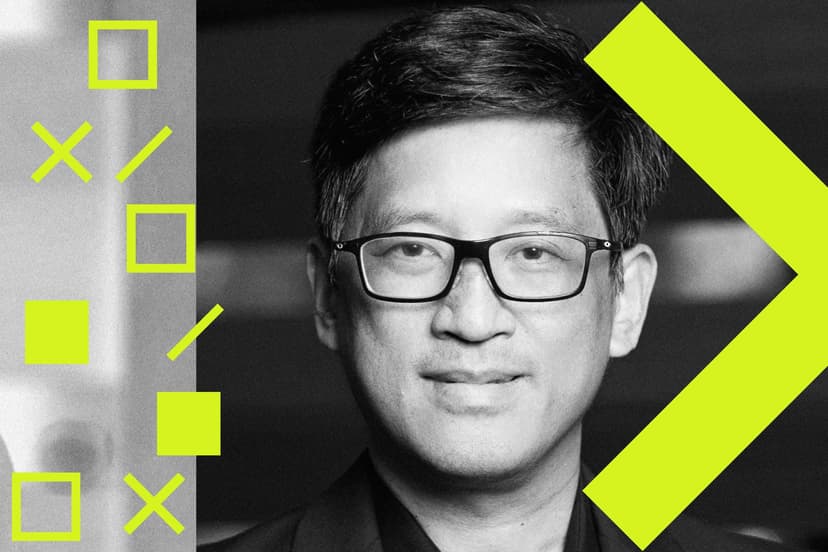
Uber is betting big on AI and autonomous vehicles, but it's not trying to be a super-app. Chief Product Officer Sachin Kansal sat down with TechCrunch to reveal how the ride-hailing giant is threading the needle between expansion and focus. From financial services ambitions to an increasingly complex dance with Waymo, Kansal's vision suggests Uber is entering a new phase where strategic restraint matters as much as innovation.
Uber is making its biggest product pivot in years, and it's not what you'd expect. While competitors race to become everything-apps, Chief Product Officer Sachin Kansal is pumping the brakes on unbridled expansion.
In a wide-ranging conversation with TechCrunch, Kansal laid out a vision that's equal parts ambitious and disciplined. The company is pushing into financial services, doubling down on autonomous vehicles, and weaving AI throughout its platform. But it's doing so with a surprisingly clear sense of what it won't do.
"We've learned that trying to be everything for everyone is a recipe for mediocrity," Kansal told TechCrunch. It's a striking admission from an executive at a company that once seemed hellbent on dominating every corner of urban logistics.
The AI integration happening across Uber's platform isn't the flashy ChatGPT-style interface you might expect. Instead, the company is embedding machine learning into the invisible infrastructure that matches riders with drivers, optimizes routes, and predicts demand surges. Kansal says these improvements are already showing up in measurable ways - shorter wait times, more accurate ETAs, and better earnings predictions for drivers.
But it's Uber's relationship with Waymo that's getting complicated. The two companies have been partners since 2020, with Waymo's autonomous vehicles available through the Uber app in select markets. Now, as both companies scale their robotaxi ambitions, the lines between collaboration and competition are blurring.
Kansal wouldn't elaborate on specific tension points, but the dynamics are clear. Waymo wants to own the customer relationship. Uber wants to be the platform layer. Both companies are betting billions that autonomous vehicles will reshape urban transportation within the next decade.
Enter AV Labs, Uber's new data operation designed to help the company stay relevant in an autonomous future. The initiative is collecting vast amounts of trip data, road condition information, and rider preferences to build what Kansal describes as "the most comprehensive dataset on urban mobility in the world." It's a hedge against becoming irrelevant if robotaxi operators decide they don't need a middleman.
The financial services push is equally strategic. Uber has quietly been testing banking features, instant payouts, and credit products for drivers in several markets. Kansal sees this as a natural extension of the platform - the company already handles billions in transactions, so why not capture more of the financial value chain?
But here's where the restraint comes in. Uber isn't trying to become a bank, launch a hotel booking service, or build a social network. "Every new product has to ladder up to our core mission of movement," Kansal explained. "If it doesn't make getting from A to B easier, faster, or cheaper, we're probably not going to build it."
That philosophy represents a marked shift from the Travis Kalanick era, when Uber seemed willing to enter any market tangentially related to logistics. Under CEO Dara Khosrowshahi and product leadership like Kansal, the company is projecting a more mature, focused image to Wall Street.
The AI features rolling out to riders include smarter pickup location suggestions that account for real-time factors like construction, events, and weather. For drivers, the platform is getting better at predicting which areas will have high demand in the next 30-60 minutes, helping them maximize earnings between rides.
Kansal also hinted at more experimental AI applications in development, including natural language trip planning that could handle complex requests like "get me to the airport but I need to stop at a pharmacy first." The company is testing these features internally but hasn't committed to a public launch timeline.
The interview revealed a company at an inflection point. Uber has achieved profitability, proven its business model works, and is now trying to figure out what adjacencies make sense. Kansal's message is clear - growth matters, but so does knowing what not to build.
For an industry that's spent the last decade chasing growth at any cost, that's a surprisingly mature stance. Whether Wall Street rewards that discipline or punishes it for leaving opportunity on the table remains to be seen. But Kansal seems convinced that in a world of infinite possibilities, focus is Uber's competitive advantage.
Kansal's vision for Uber signals a company transitioning from disruptive upstart to strategic incumbent. By embracing AI, navigating the autonomous vehicle transition, and expanding into financial services while explicitly rejecting the super-app model, Uber is betting that depth beats breadth. The real test comes when Waymo and other AV operators scale up and Uber has to prove it's more than just a middleman with an app. For now, Kansal is preaching focus, discipline, and the long game - a refreshing change in an industry that usually moves fast and breaks things.