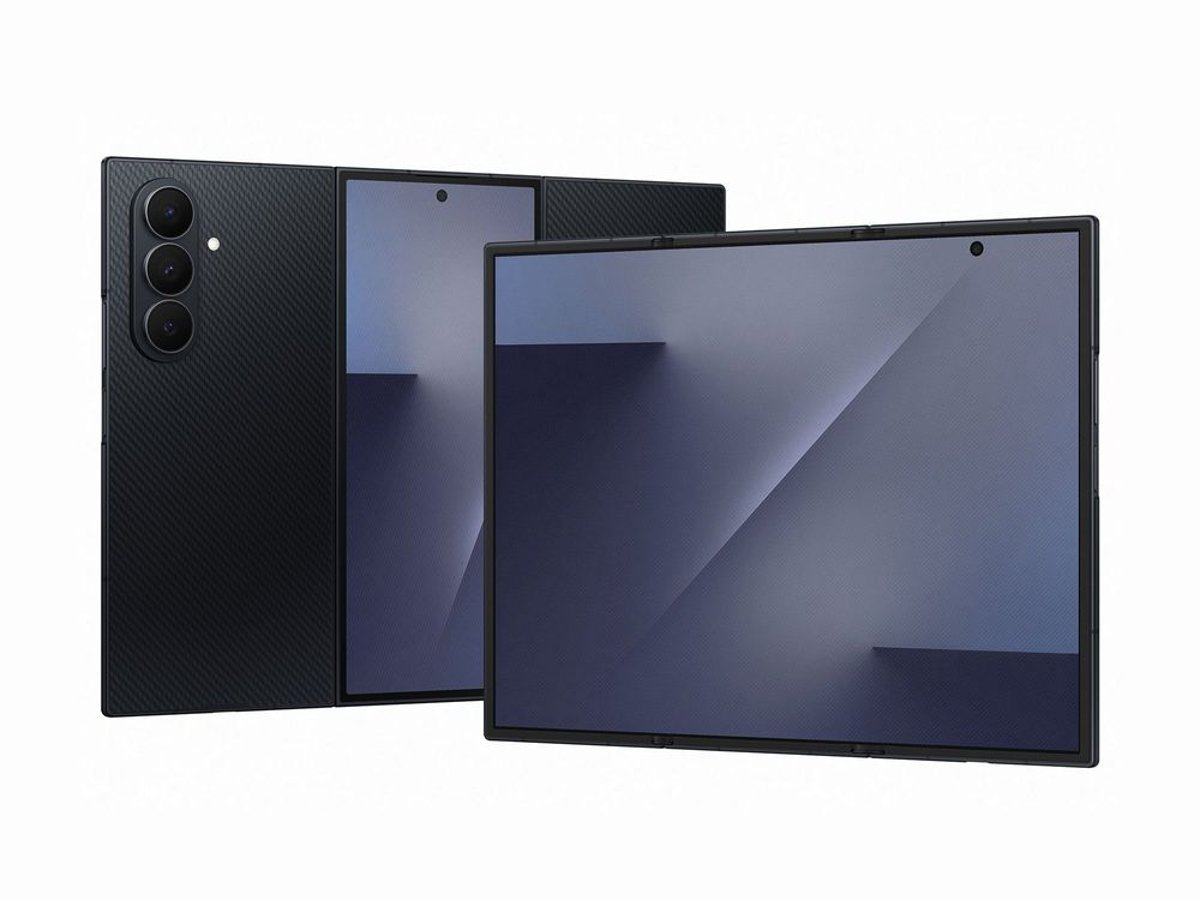
Samsung just dropped the Z TriFold bombshell - their first phone with two hinges that unfolds into a 10-inch tablet. The device launches December 12th in Korea, with US availability planned for Q1 2026. No pricing yet, but given their regular Z Fold costs $2,000, this tri-folding beast will likely demand serious wallet commitment from early adopters.
Samsung just made foldable phones a lot more complicated - and a lot more interesting. The Korean tech giant officially unveiled the Z TriFold today, marking their biggest leap yet in the foldable space with a device that literally unfolds twice to reveal a tablet-sized 10-inch screen.
The announcement comes as Samsung races to catch up with Huawei in the tri-fold segment, where the Chinese company's Mate XT has been turning heads since its debut. But Samsung's taking a different approach entirely - while Huawei's device folds in a Z-pattern, the Samsung TriFold uses an inward-folding design where both side panels close over the center section like a book with extra pages.
That massive inner display measures 10 inches diagonally with a 2160 x 1584 resolution and adaptive 120Hz refresh that can drop all the way to 1Hz for battery savings. Samsung's betting big on productivity here - you can run three apps side by side vertically, or even fire up their DeX desktop environment without needing an external monitor. It's essentially turning your phone into a portable workstation that fits in your pocket, assuming you have very large pockets.
The engineering here gets pretty wild when you look at the specs. Each of the three panels has different thickness measurements - the center panel is 4.2mm thick and houses the USB-C port, while the thinnest panel measures just 3.9mm including a physical SIM tray. When folded, the whole thing comes in at 12.9mm thick, which is actually pretty reasonable considering what's packed inside. For comparison, that's just slightly thicker than Huawei's Mate XT at 12.8mm, though Samsung's device weighs 309 grams versus the XT's 298 grams.
Samsung didn't skimp on the camera system despite all the folding complexity. The TriFold packs a 200-megapixel f/1.7 main camera, 12-megapixel ultrawide, and 10-megapixel 3x telephoto on the back. Both the cover screen and inner display get their own 10-megapixel selfie cameras, so you're covered no matter how the device is configured.
Power comes from a distributed 5,600mAh battery system spread across all three panels, paired with the same Snapdragon 8 Elite for Galaxy chipset that powers Samsung's S25 series. The company loaded it with 16GB of RAM, which should handle all that multitasking Samsung's promising.
The durability story gets interesting too. Samsung built the back panel from what they're calling "ceramic-glass fiber-reinforced polymer" designed to resist cracking - a crucial consideration when you're dealing with a device that unfolds like origami. The dual hinges use different sizes but both feature dual-rail designs protected by titanium housing. Like other Samsung foldables, it carries an IP48 rating - fully water resistant but not completely dust-tight.
One notable absence from the spec sheet? S Pen support. Samsung used to include stylus compatibility with their Z Fold series, but that feature disappeared with the most recent Z Fold 7. Given the TriFold's tablet-like form factor when unfolded, the lack of stylus support feels like a missed opportunity for productivity workflows.
Samsung's keeping pricing details close to their chest for now, both for the Korean launch and eventual US release. But given that their current single-hinge Z Fold carries a $2,000 price tag, expect the TriFold to push well into premium territory. Early adopters willing to bet on Samsung's tri-fold vision should probably start saving now - this level of engineering innovation rarely comes cheap.
The timing of Samsung's announcement puts them in direct competition with Huawei's established tri-fold presence, particularly as both companies push into 2026 with more refined second-generation devices. But Samsung's betting that their inward-folding approach and ecosystem integration will give them an edge in markets where they can actually sell the device.
Samsung's Z TriFold represents a bold bet on the future of foldable devices, pushing beyond the single-hinge design that's defined the category so far. With its December Korean launch and Q1 2026 US arrival, Samsung's clearly targeting early adopters willing to pay premium prices for cutting-edge tech. But the real test will be whether consumers see enough value in that 10-inch unfolded experience to justify what's likely to be a hefty price tag. The foldable race just got a lot more interesting.