Google just made its biggest move yet in the AI assistant race. The company's AI Mode feature is breaking out of the search box, gaining the ability to connect with and control select third-party apps. This marks Google's entry into the emerging AI agent space, where assistants don't just answer questions but actually get things done across your digital ecosystem. The update puts Google in direct competition with Anthropic's Claude and other AI assistants racing to become your go-to productivity copilot.
Google is no longer content with AI that just talks. The company's latest update to AI Mode transforms it from a conversational search interface into something far more ambitious - an AI agent that can reach into your apps and actually do things.
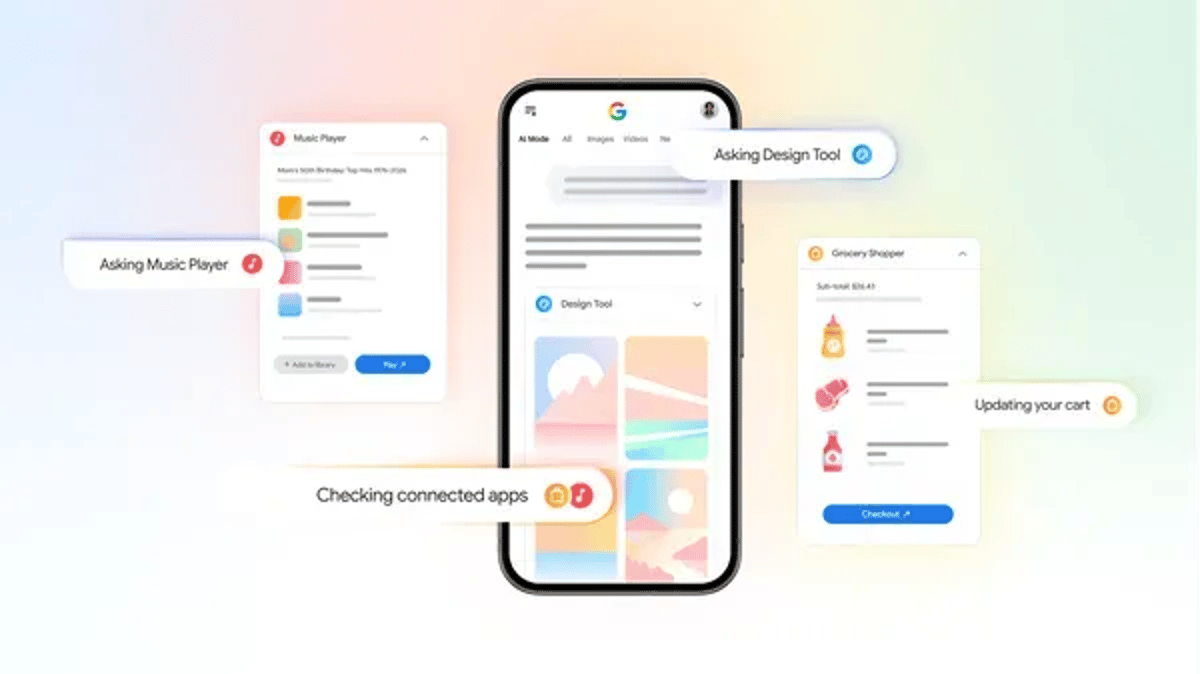
The expansion lets users link select apps to AI Mode, enabling the assistant to complete tasks across their digital workflow. Instead of just telling you how to update a spreadsheet or schedule a meeting, AI Mode can now potentially do it for you. It's a fundamental shift in how Google thinks about AI interaction, moving from information retrieval to task execution.
This puts Google squarely in territory that Anthropic has been aggressively claiming with Claude's computer control capabilities. Just weeks ago, Claude demonstrated the ability to interact with desktop applications and complete multi-step workflows. Microsoft is pushing similar functionality with Copilot across its Office suite, while OpenAI has been testing agentic behaviors in ChatGPT.
The timing isn't coincidental. The AI industry is pivoting hard from chatbots to agents - systems that can reason, plan, and execute tasks with minimal human oversight. According to TechCrunch, Google is expanding AI Mode "beyond answering questions and into completing tasks across the apps they use regularly."
What's interesting is Google's approach. Rather than building a standalone agent product, the company is extending AI Mode, which already exists as a feature within Google Search. This gives Google an immediate distribution advantage - millions of users already have access to the underlying technology. The app integration layer simply adds new capabilities to something people are already using.
The devil, as always, is in the implementation details. Which apps can AI Mode actually connect to? How does authentication work? What level of control can the AI exercise? Google hasn't disclosed the full partner list yet, but the phrase "select apps" suggests a curated ecosystem rather than open API access. That's probably smart from a safety and reliability standpoint, even if it limits initial functionality.
This controlled approach contrasts with Anthropic's more aggressive "computer use" API, which can theoretically interact with any application on your screen. Google's method trades flexibility for predictability - the AI can only do what it's explicitly been programmed to do with approved partners.
But the strategic implications are massive. Google is sitting on an enormous behavioral dataset from Search, Gmail, Calendar, Maps, and YouTube. If AI Mode can tap into that contextual awareness while executing tasks across third-party apps, it could become frighteningly useful. Imagine asking AI Mode to "book a restaurant near my next meeting" and having it automatically check your Calendar, search Maps, make an OpenTable reservation, and add it to your schedule.
That's the promise of AI agents - reducing the cognitive overhead of digital life by having AI handle the tedious coordination work. But it also raises questions about data access, privacy, and how much control we're comfortable handing over to automated systems.
For app developers, this represents both an opportunity and a threat. Integration with Google's AI Mode could drive user engagement, but it also means ceding some control over the user experience. If users start interacting with your app primarily through AI intermediaries rather than your carefully designed interface, does that strengthen or weaken your relationship with customers?
The enterprise implications are equally significant. If Google can make AI Mode work smoothly with business productivity apps, it becomes a serious competitor to Microsoft Copilot and other enterprise AI assistants. Google Workspace customers would get cross-app automation that extends beyond Google's own ecosystem.
This is also a defensive move. Apple is rumored to be building similar capabilities into Siri, leveraging on-device AI to coordinate actions across iOS apps. If Google wants Android users to stick with Google Assistant and AI Mode rather than switching to ChatGPT or Claude, it needs to match that functionality fast.
Google's AI Mode update is less about a single feature and more about a fundamental repositioning. The company is racing to prove that AI can be more than a fancy search engine - it can be the connective tissue between all your digital tools. Whether users will trust Google with that level of access remains to be seen, but the technical capability is clearly there. As AI agents move from research demos to production features, expect Google to keep pushing AI Mode deeper into the productivity stack. The question isn't whether AI will automate more of our digital tasks, but which company's AI we'll trust to do it.