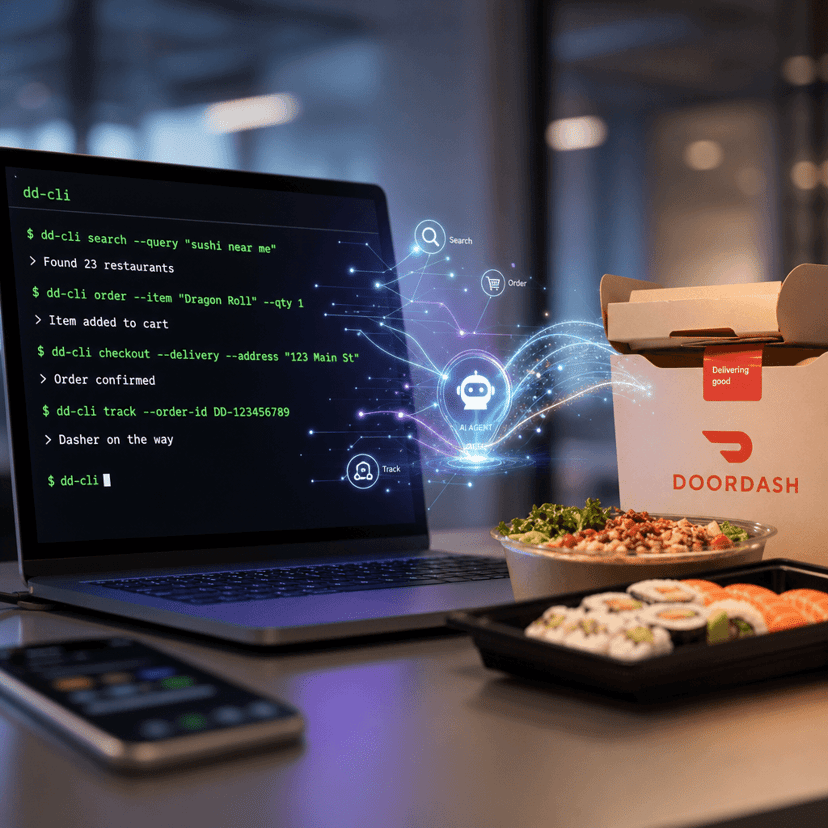
DoorDash just opened the door to a future where your AI assistant orders lunch without opening a browser. The food delivery giant's new dd-cli tool - now in limited beta - lets developers and AI agents search restaurants, build carts, and place orders straight from the command line. It's the latest signal that Silicon Valley is building software for machines first and humans second, a shift that could reshape how we interact with everyday services.
DoorDash is betting that the next wave of food orders won't come from hungry humans tapping their phones - they'll come from AI agents running in the background. The company's new dd-cli tool, announced in limited beta, represents a fundamental shift in how consumer software gets built.
The command-line interface does exactly what it sounds like: it brings the entire DoorDash experience into the terminal. Developers can now type commands to search local restaurants, add items to carts, and complete orders without ever touching the DoorDash app or website. But the real innovation isn't for developers manually typing commands at 2 AM - it's designed for AI agents that can automate the entire process.
This isn't just a novelty for command-line enthusiasts. It's part of a larger pattern emerging across tech where companies are building "headless" versions of their services specifically for AI consumption. While consumers still interact with polished apps, AI agents need programmatic access that's more structured than screen scraping and more flexible than rigid APIs.
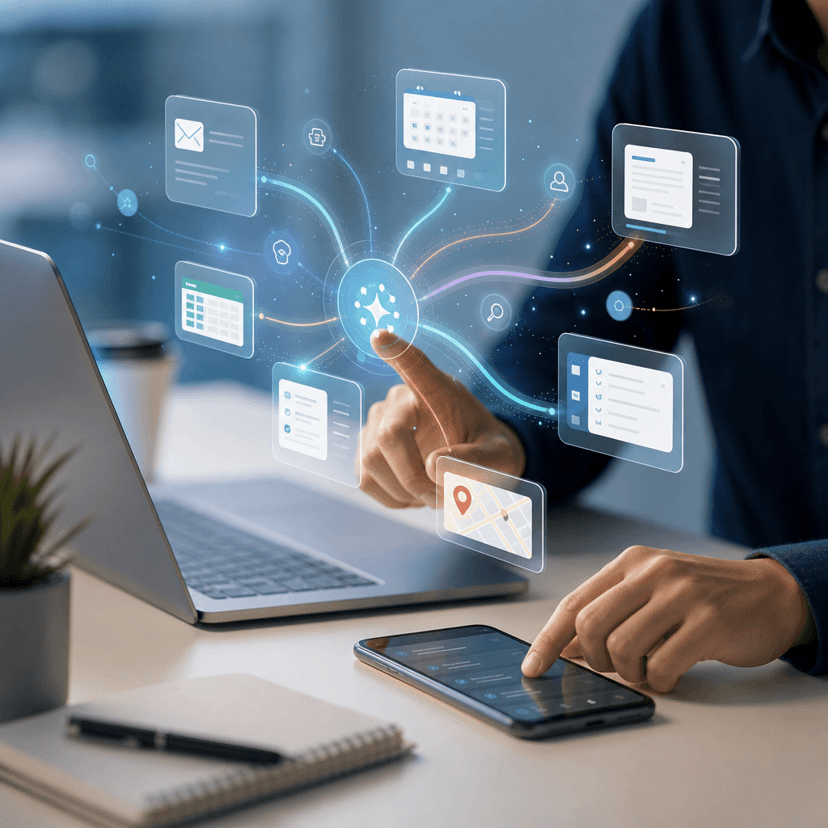
DoorDash has been quietly positioning itself at the intersection of food delivery and automation. The company's existing API platform already powers integrations with workplace tools and smart home devices, but dd-cli takes it further by making the interface conversational and agent-friendly. An AI assistant could theoretically monitor your calendar, notice you have a working lunch scheduled, check your dietary preferences, and place an order - all without you lifting a finger.
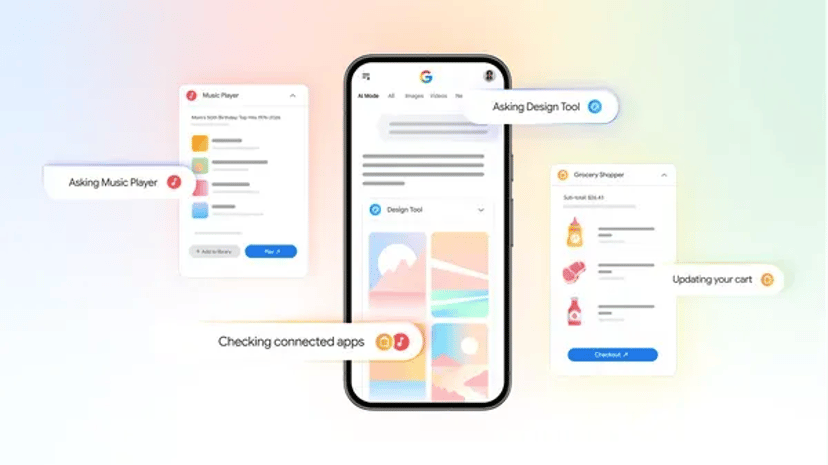
The timing matters. AI agents are moving from science fiction to daily reality faster than most predicted. OpenAI's ChatGPT can now browse the web and interact with services. Google's expanding its AI agent capabilities across its ecosystem. Anthropic's Claude can control computers. Every major tech company is racing to build agents that can actually do things, not just answer questions.
But here's the challenge these AI companies face: most consumer services weren't built for machine interaction. They're optimized for human eyes and fingers. Web scraping is fragile and often violates terms of service. Traditional APIs are too rigid for natural language requests. DoorDash's CLI tool represents a middle path - structured enough for reliable automation, flexible enough for agent-driven workflows.
The limited beta rollout suggests DoorDash is being cautious. Opening food ordering to automated agents raises obvious questions about fraud prevention, payment verification, and order accuracy. If an AI agent places the wrong order, who's responsible? How do you verify that an agent has permission to spend someone's money? These aren't trivial problems.
Other companies are watching closely. If DoorDash can crack the code on agent-friendly commerce, expect competitors like Uber Eats and Grubhub to follow. The implications extend beyond food delivery - imagine AI agents booking travel, scheduling appointments, or managing subscriptions through similar CLI tools.
The developer community's response will be telling. Command-line tools have a devoted following among technical users who prefer keyboard efficiency over GUI simplicity. But the real test is whether third-party developers build interesting integrations - think Slack bots that order team lunches or calendar apps that automatically arrange dinner during late meetings.
For DoorDash, this is also a defensive play. As AI agents become the new interface layer between users and services, companies that don't provide agent-friendly access risk getting cut out entirely. If OpenAI builds a food ordering feature into ChatGPT that scrapes restaurant websites directly, it bypasses DoorDash's platform entirely. By offering dd-cli, DoorDash ensures it remains part of the transaction flow.
The command-line approach also aligns with how many developers already work. DevOps engineers and software teams live in the terminal, and being able to order lunch without context-switching is genuinely useful. It's a small quality-of-life improvement that could drive real adoption among technical users who then evangelize it to others.
What makes this particularly interesting is the transparency. Unlike black-box integrations where you don't know how an AI agent is completing tasks, a CLI tool shows exactly what commands are being executed. That visibility could help build trust as people get comfortable delegating more tasks to AI assistants.
DoorDash's dd-cli beta is more than a developer novelty - it's a preview of how consumer services will adapt as AI agents become everyday tools. The companies that provide clean, agent-friendly interfaces will own the next generation of automated commerce, while those that don't risk becoming invisible to the AI assistants mediating our digital lives. Whether ordering lunch or booking flights, the future might not involve apps at all - just agents running commands in the background while we focus on actual work. The question isn't whether this shift is coming, but which companies will be ready when AI agents become our default interface to the internet.