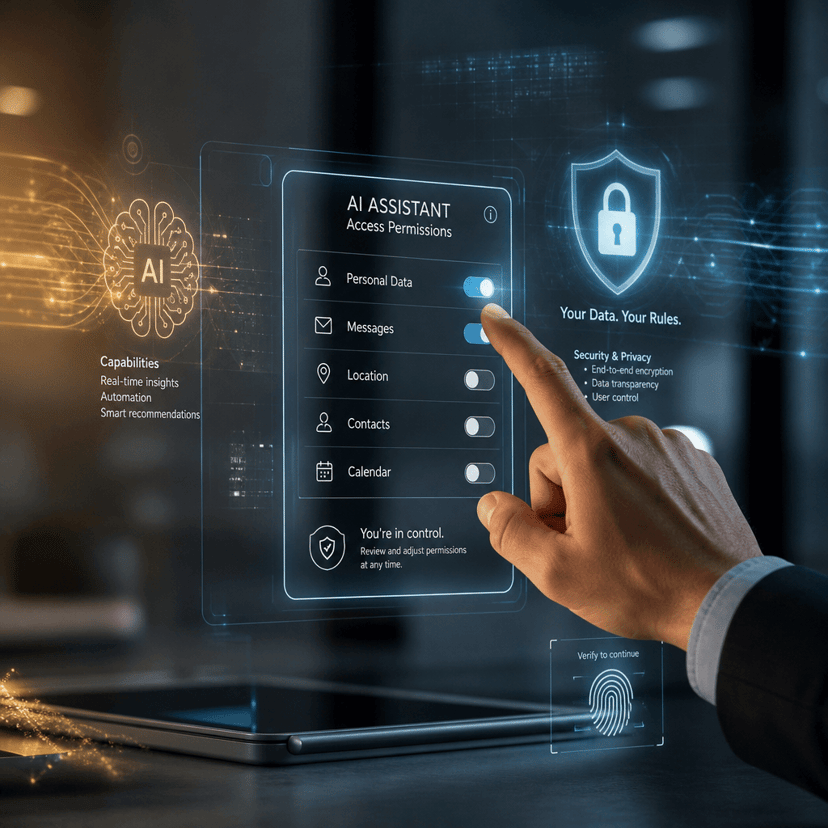
1Password just unveiled a browser integration that lets Anthropic's Claude AI agent directly access your stored passwords and credentials. The partnership marks a notable shift in how AI assistants handle authentication, allowing Claude to book travel, manage accounts, and complete multi-step tasks without users manually entering login information. But here's the twist - your passwords never actually touch Anthropic's AI models, thanks to what 1Password calls a 'zero-exposure security framework' that injects credentials at the browser level.
1Password is betting that users are ready to let AI agents handle their passwords. The company announced a browser integration for Anthropic's Claude today that fundamentally changes how AI assistants interact with password-protected services.
The integration works by connecting 1Password's vault directly to Claude's browser-based interface. When Claude needs to log into a service - say, to book a flight or update account settings - it can request credentials from 1Password without the user copying and pasting passwords or the AI model ever seeing the actual login information. According to 1Password's announcement via The Verge, this creates a new category of AI-powered automation that doesn't compromise security fundamentals.
The technical approach relies on what 1Password describes as a 'zero-exposure security framework.' Instead of sending passwords to Claude's servers or exposing them to the language model itself, the system injects credentials directly at the browser level during task execution. Think of it as 1Password acting as a secure intermediary - Claude requests access to a specific service, 1Password verifies the request matches user authorization, then fills in credentials without Claude ever processing the actual password data.
This architecture matters because it addresses the elephant in the room with AI agents: trust. Letting an AI assistant handle sensitive credentials sounds convenient until you consider what happens if the model gets compromised, hallucinates, or sends data to the wrong endpoint. By keeping passwords isolated from the AI layer, 1Password is trying to have it both ways - the automation benefits of AI agents without exposing the crown jewels.
The timing aligns with Anthropic's broader push into AI agents that can actually do things on your behalf rather than just answer questions. Claude's recent updates have focused heavily on computer use capabilities, allowing it to navigate interfaces, click buttons, and complete workflows. But those capabilities hit a wall the moment authentication is required. This partnership with 1Password removes that friction point.
For 1Password, the move represents a strategic play into the emerging AI agent ecosystem. Password managers have spent years fighting relevance battles as biometric authentication and passkeys gain traction. Positioning as the secure credential layer for AI automation opens a new growth vector. If AI agents become as ubiquitous as some predict, being the trusted authentication partner could be more valuable than just storing passwords for humans.
The feature requires explicit user authorization for each task category. You're not giving Claude blanket access to your entire password vault. Instead, you approve specific workflows - like 'book travel' or 'manage subscriptions' - and 1Password only provides credentials relevant to those approved actions. It's a permissions model borrowed from mobile operating systems, where apps request specific capabilities rather than total access.
Security researchers will likely scrutinize how well the zero-exposure framework holds up in practice. The concept sounds solid, but implementation details matter enormously. How does the system verify that Claude is requesting credentials for legitimate purposes? What prevents a compromised browser extension from intercepting the credential injection? Can the AI agent be tricked into requesting access to unintended services? These questions will need answers as the integration sees real-world use.
The broader implications extend beyond just 1Password and Claude. If this model proves successful, expect competing password managers and AI assistants to adopt similar architectures. Google, Microsoft, and Apple all have both password management systems and AI assistants that could benefit from tighter integration. The race to become the authentication layer for AI agents is just beginning.
The 1Password-Claude integration represents a calculated bet on AI agents evolving from assistants to operators. By solving the authentication bottleneck without compromising security architecture, both companies are positioning themselves for a future where AI handles increasingly complex workflows on our behalf. The real test comes when users actually trust it with their credentials - and when security researchers finish poking holes in the zero-exposure claims. What's clear is that password managers and AI labs now see their futures as intertwined rather than separate.