Apple just cleared a major regulatory hurdle in its biggest international market. The company secured approval to launch Apple Intelligence in China through partnerships with Alibaba's Qwen AI and Baidu, ending months of speculation about how Apple would navigate the country's strict AI regulations. The move could unlock AI features for millions of iPhone users in a market where Apple has struggled to maintain momentum against local competitors like Huawei and Xiaomi.
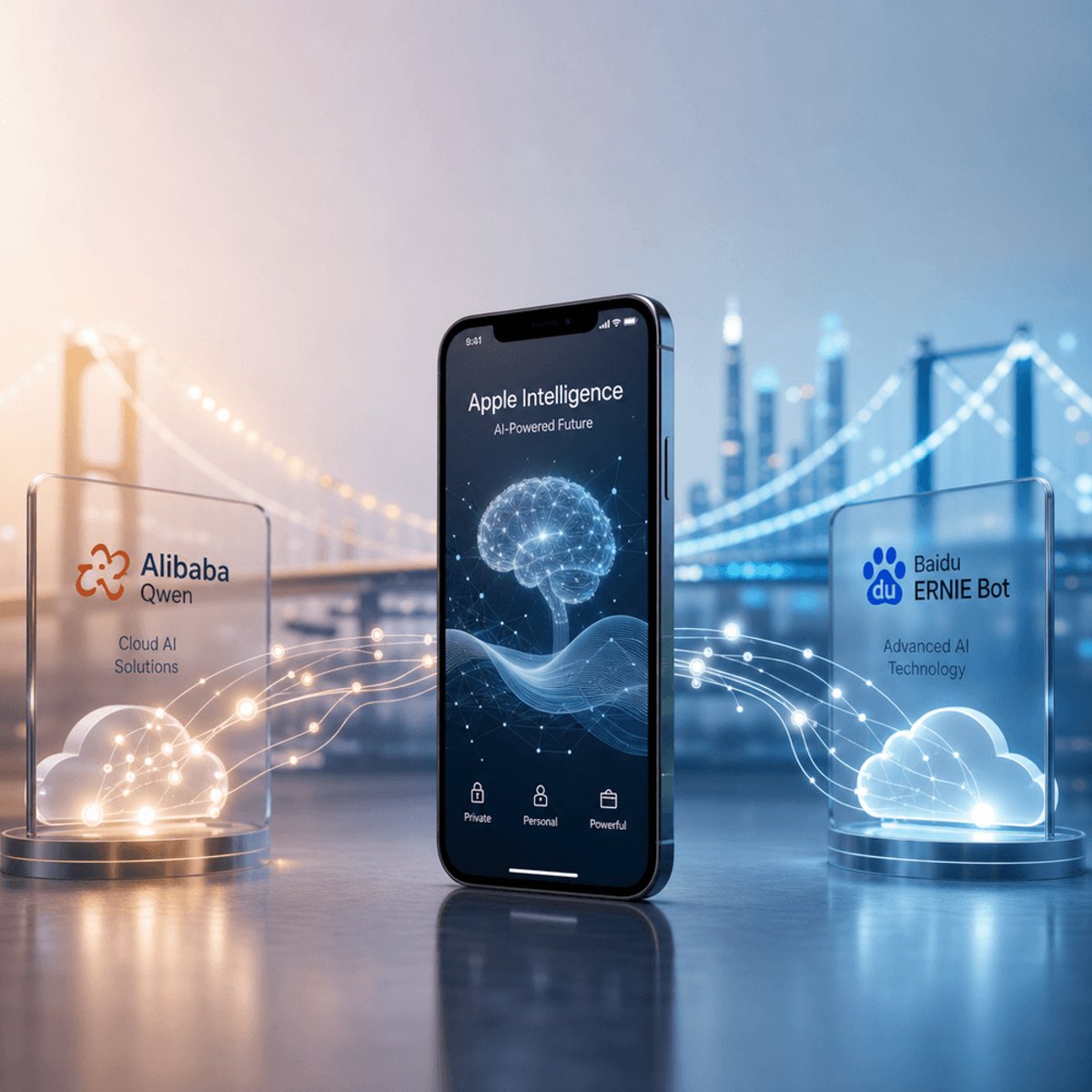
Apple just landed the regulatory green light it desperately needed. After months of negotiations and speculation, Chinese authorities approved the company's plan to bring Apple Intelligence to the mainland through partnerships with homegrown AI powerhouses Alibaba and Baidu.
The approval represents a significant strategic pivot for Apple, which has historically kept its AI development in-house. But China's regulatory framework left little room for negotiation - foreign AI models must partner with approved local providers to operate in the country. By teaming up with Alibaba's Qwen large language model and Baidu's Ernie Bot technology, Apple found a path forward that satisfies regulators while keeping its AI ambitions alive in a market that accounts for roughly 20% of the company's total revenue.
The deal, first rumored by Reuters last year, marks a notable departure from Apple's typical approach to core technologies. The company has long prided itself on vertical integration, but Chinese regulations around data sovereignty and AI model approval forced a different playbook. According to sources familiar with the negotiations, Apple explored multiple partnership configurations before settling on the dual-provider strategy with Alibaba and Baidu.
Alibaba's Qwen has emerged as one of China's most capable open-source language models, competing directly with OpenAI's GPT series in Chinese language tasks. The model has been trained extensively on Chinese internet data and cultural context, making it well-suited for local users. Baidu's Ernie Bot, meanwhile, brings search integration and real-time information retrieval capabilities that complement Apple's on-device processing.
The timing couldn't be more critical for Apple's position in China. Local competitors like Huawei, Xiaomi, and Oppo have already integrated AI features into their flagship devices, often marketing them as key differentiators against the iPhone. Huawei's Mate series, in particular, has gained traction with AI-powered photography and productivity features that Apple users in China couldn't access - until now.
Apple Intelligence launched globally in late 2023, bringing features like advanced text generation, image editing, and contextual Siri improvements to iPhone 15 Pro and later models. But Chinese users were left out, seeing placeholder screens where AI features should have been. That gap created a tangible disadvantage in a market where local brands have rapidly closed the hardware quality gap with Apple.
The regulatory approval process in China requires AI companies to register their models with the Cyberspace Administration of China and demonstrate compliance with content moderation and data localization requirements. For Apple, partnering with pre-approved local providers streamlined this process considerably compared to seeking independent approval for its own models.
Industry analysts see the move as pragmatic rather than ideal from Apple's perspective. The company will need to ensure that Alibaba and Baidu's AI outputs align with Apple's quality standards and privacy commitments - a challenging proposition when the underlying models are controlled by partner companies. There are also questions about how data will flow between Apple's on-device processing and the cloud-based components powered by Chinese providers.
The financial implications extend beyond iPhone sales. Apple has been positioning Apple Intelligence as a key driver for its services business, which generates higher margins than hardware. AI-powered features could boost subscriptions to iCloud+ and other services by making them more essential to the user experience. Unlocking those revenue streams in China adds significant long-term value.
Competitors are already responding. Huawei reportedly accelerated development of its own next-generation AI features following news of Apple's pending approval. The Chinese tech giant has been rebuilding its smartphone business after US sanctions disrupted its chip supply, and AI capabilities have become central to its comeback strategy.
For Alibaba and Baidu, the partnership delivers validation and massive scale. Having their AI technology power features on potentially hundreds of millions of iPhones in China provides invaluable real-world testing and brand association with Apple's premium image. Both companies have been investing heavily in AI research but have struggled to find consumer-facing applications that match the reach of their cloud and search businesses.
Apple's China approval solves an immediate competitive problem but creates new dependencies the company has historically avoided. The success of this partnership model will likely influence how Apple approaches other markets with strict AI regulations. For now, Chinese iPhone users finally get access to the AI features their devices were designed to support - just in time for Apple to defend its premium position against increasingly capable local rivals. The real test comes when these features actually ship and users discover whether the Alibaba-Baidu integration feels as seamless as Apple's own technology.