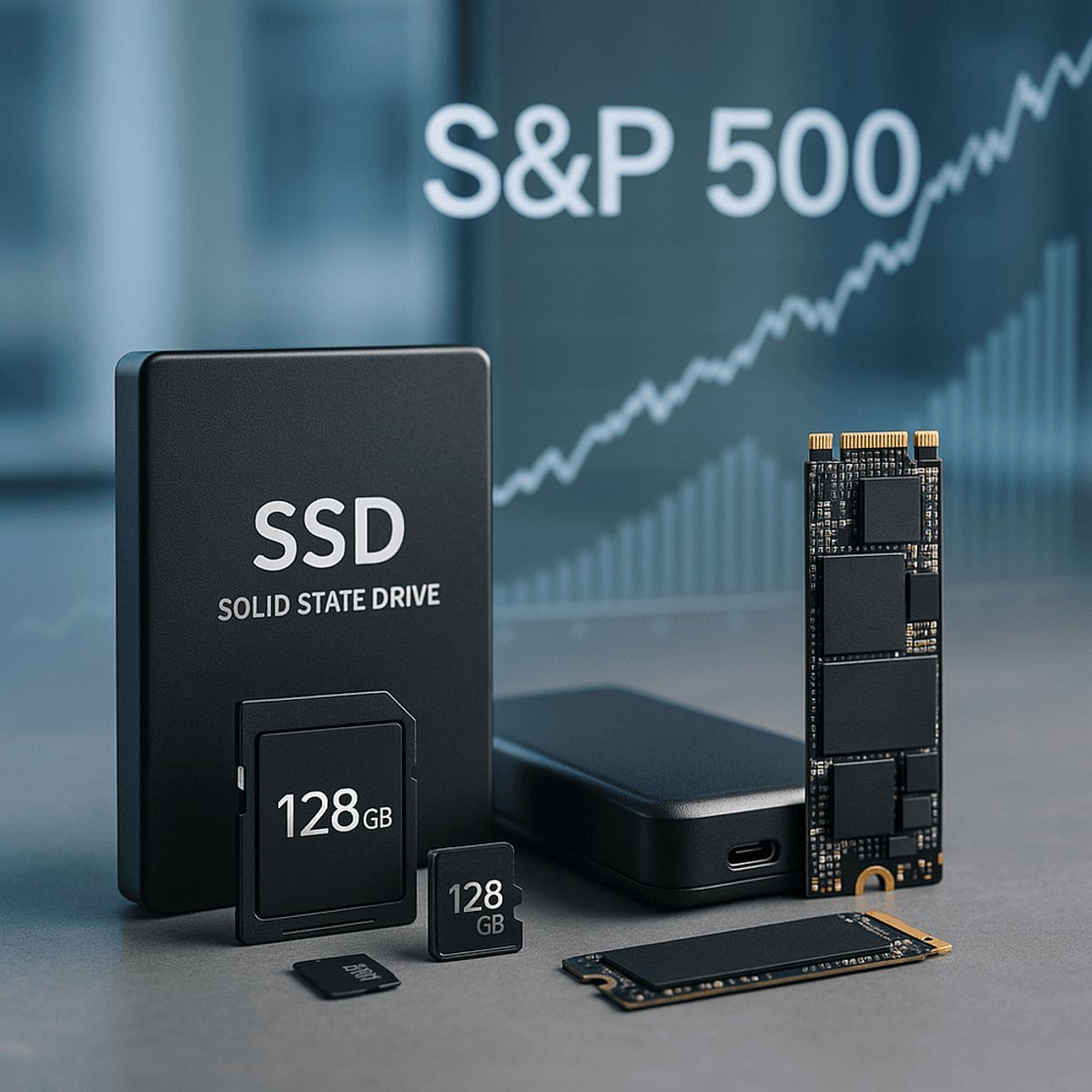
SanDisk just scored a major market milestone, joining the S&P 500 nine months after spinning out from Western Digital. The flash storage company's shares jumped 7% in after-hours trading as it prepares to replace marketing giant Interpublic Group, marking another tech company's ascent into the benchmark index.
SanDisk just pulled off one of the year's most impressive corporate transformations. The flash storage giant's entry into the S&P 500 caps a remarkable journey from being buried inside Western Digital to standing as an independent $33 billion powerhouse that's now commanding serious Wall Street attention.
The announcement sent SanDisk shares surging 7% in extended trading Monday, as investors recognized what this S&P inclusion really means. Fund managers tracking the benchmark will be forced to buy shares, creating immediate demand that typically drives prices higher. But this isn't just about short-term trading dynamics - it's validation that SanDisk has emerged as a legitimate player in the increasingly critical flash storage market.
S&P Global confirmed SanDisk will replace Interpublic Group, the marketing conglomerate that's being absorbed by Omnicom in a deal that just cleared European antitrust hurdles. The timing couldn't be better for SanDisk, which has been quietly building momentum since its February spinoff.
The numbers tell the story of a company hitting its stride. SanDisk's latest quarterly results showed revenue climbing 23% to $2.31 billion, while the company shipped 31% more storage capacity measured in exabytes. That growth is coming from multiple fronts - gaming PCs hungry for faster load times, content creators needing reliable storage for 4K video, and increasingly, large-scale data center operators looking for enterprise-grade flash solutions.
"We've been preparing for this moment since the spinoff," the company's management indicated in recent earnings calls, though they couldn't have predicted the S&P timing. What they did anticipate was the market's growing appetite for high-performance storage as AI workloads and data-intensive applications drive demand.
The S&P 500's tech tilt continues accelerating, with SanDisk joining a parade of technology companies that have entered the index this year. AppLovin, Datadog, DoorDash, and Robinhood all secured spots earlier in 2025, reflecting how software, internet, and semiconductor businesses increasingly dominate market valuations.
For SanDisk, this represents vindication of Western Digital's 2016 decision to acquire the company for $15.6 billion. That deal, which seemed expensive at the time, now looks prescient given SanDisk's current $33 billion valuation. The spinoff strategy has clearly worked for both companies, allowing each to focus on their core strengths without the complexity of managing disparate business lines.
The broader storage market is undergoing massive shifts as cloud computing, AI training, and edge computing create new demand patterns. SanDisk's position in high-performance flash storage puts it at the center of these trends, competing directly with memory giants like Micron that are already S&P 500 members.
Investors are betting that SanDisk's focus on premium storage solutions - from gaming SSDs to enterprise data center drives - will continue driving outsized growth. The company's ability to increase both revenue and unit shipments suggests it's gaining market share while maintaining pricing power, a combination that's rare in the typically commoditized memory business.
The S&P inclusion also positions SanDisk for increased institutional ownership, as passive index funds and ETFs tracking the benchmark will need to add the stock to their portfolios. This creates a more stable shareholder base while potentially reducing volatility compared to the company's early post-spinoff trading patterns.
SanDisk's S&P 500 entry marks more than just another index addition - it's proof that well-executed spinoffs can unlock tremendous value. With flash storage demand accelerating across gaming, AI, and enterprise applications, SanDisk is positioned to benefit from multiple growth drivers while enjoying the institutional support that comes with S&P membership. The real test will be whether the company can maintain its growth momentum as competition intensifies and maintain the premium positioning that's driven its remarkable post-spinoff performance.