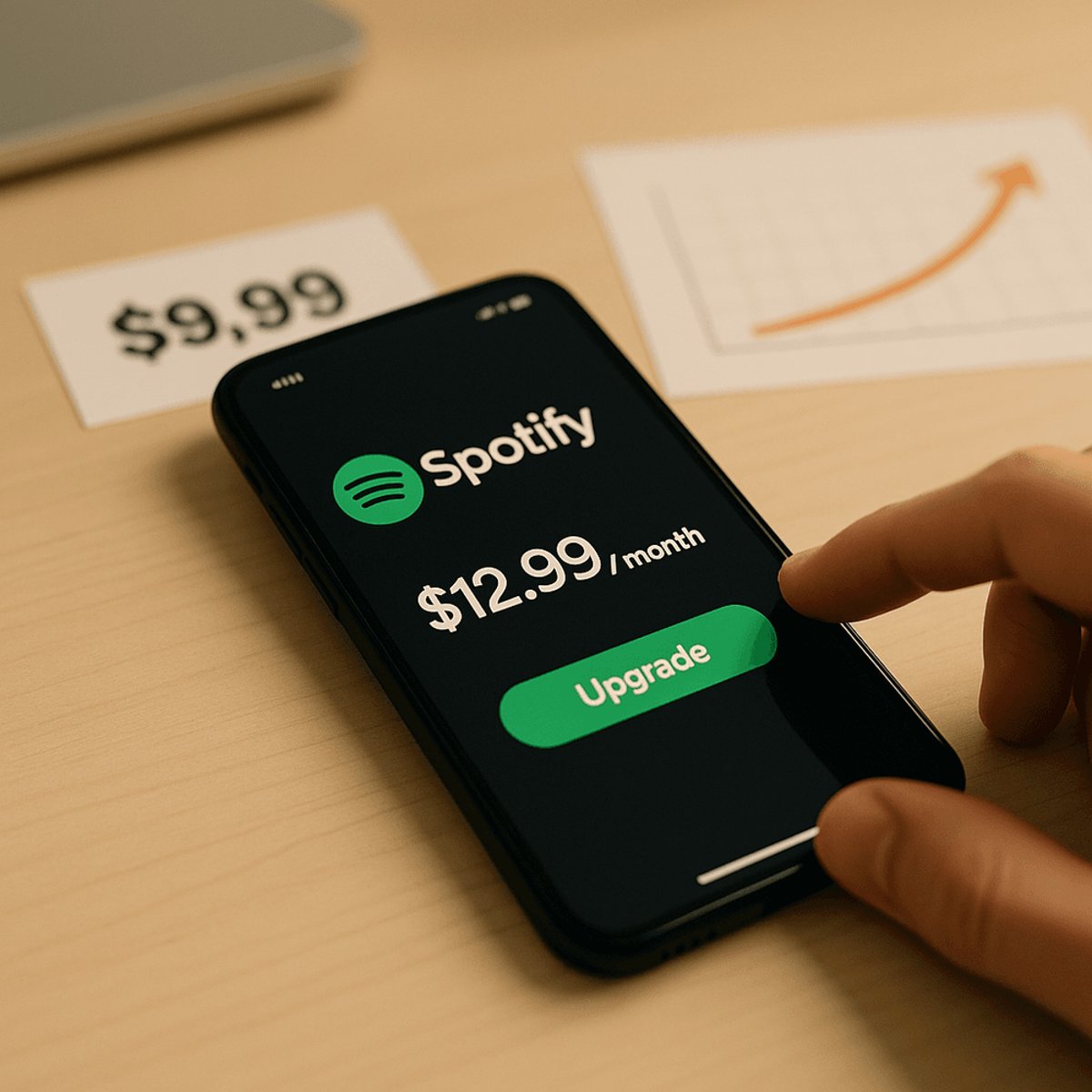
Spotify is raising prices again. The streaming giant is bumping its Premium subscription from $11.99 to $12.99 per month for U.S. customers starting in February, marking the second price increase in seven months. The move comes as new co-CEOs Gustav Söderström and Alex Norström settle into their roles following co-founder Daniel Ek's January departure, signaling aggressive monetization under fresh leadership.
Spotify just turned the pricing screw again. The streaming platform announced Thursday that Premium subscriptions will jump from $11.99 to $12.99 per month starting with February billing cycles in the U.S., Estonia, and Latvia. It's a dollar increase that might seem incremental, but it's the clearest signal yet that the music streamer's fresh leadership team plans to prioritize profitability over subscriber growth.
The timing matters here. Spotify raised prices just seven months ago in June 2025, moving from $10.99 to $11.99 per month. That was supposed to reflect new features and improved service. Now, eight months into 2026, there's a new $1 jump with the same familiar line about "keeping delivering a great experience." The company will email users sometime in the next month with the notification.
For context, consider where we were just two years ago. In July 2023, Premium cost $10.99. Today it's climbing to $12.99 - an 18% increase in roughly 30 months. That's a pace that tests subscriber loyalty, especially as the music streaming wars have become brutally competitive.
The announcement lands squarely in the era of co-CEOs Gustav Söderström and Alex Norström, who took the helm at the beginning of January after co-founder Daniel Ek stepped down from the CEO role. That transition was announced back in September, but it's becoming clear now what it signals. Ek was the visionary pushing podcasts, video expansion, and AI features. The new leadership appears more focused on the spreadsheet.
It's worth noting that Spotify's actual business is working. The company reported strong third-quarter earnings in November with solid financial metrics. But here's the tension: fourth-quarter revenue guidance and premium subscription projections came in below what analysts were expecting. When guidance disappoints, even with good current results, public markets get nervous. Price hikes are one way to offset that anxiety.
The artist community isn't making this easier for Spotify. A wave of musicians - King Gizzard & the Lizard Wizard, Deerhoof, Massive Attack, and others - pulled their music from the platform last year to protest Ek's personal investment in Helsing, a defense technology startup. That controversy strained the already-complicated relationship between Spotify and artists who've long complained about how little they earn per stream. The company's expansion into AI and podcasts felt like a distraction to the music-first mission. Now, with Ek removed from daily operations and prices going up, the narrative shifts to "cost optimization under new management."
Spotify's positioning is worth examining here. The company isn't just a music player anymore. They've spent years emphasizing podcast integration and are now experimenting with video content. They're leaning harder into AI-powered personalization to justify the premium tier. Each of these is technically a "feature" that theoretically justifies higher pricing. Whether subscribers see it that way is another question entirely.
The competitive landscape adds urgency to Spotify's move. Apple Music still costs the same $10.99 for most users (though it occasionally runs promotions). Amazon Music Unlimited sits at $11.99 - putting it below Spotify's new price. YouTube Music is $13.99. So Spotify's new pricing doesn't look outrageous compared to the field, but it's also not gaining ground in a race where every dollar can influence switching behavior, especially during churn season after price hikes.
What's telling is that Spotify felt confident enough to pull the trigger on this increase under brand-new co-CEO leadership. There's no cautious wait period. There's no "let's see how things settle." It's aggressive, it's quick, and it suggests the board gave marching orders to optimize revenue. Whether that pays off depends on how many of the company's 626 million users accept the new reality - or start shopping around.
Spotify's move to $12.99 represents a calculated bet that brand loyalty and feature expansion justify premium positioning in an increasingly crowded streaming market. Under new co-CEO leadership, the company is signaling it will prioritize margin growth over subscriber acquisition - a strategic pivot that could work if the company delivers on its AI and content promises, but could equally backfire if competitors exploit the price gap. The next few quarters will reveal whether Spotify can maintain its subscriber momentum while collecting more revenue per user, or whether the artist boycotts and competitive pressure make this an overreach.