By The Chief Editor of The Tech Buzz
Iran possesses a functional nuclear weapon. And it told Trump it is prepared to prove it. According to Professor Robert Pape, Iran is emerging as the fourth centre of global power.
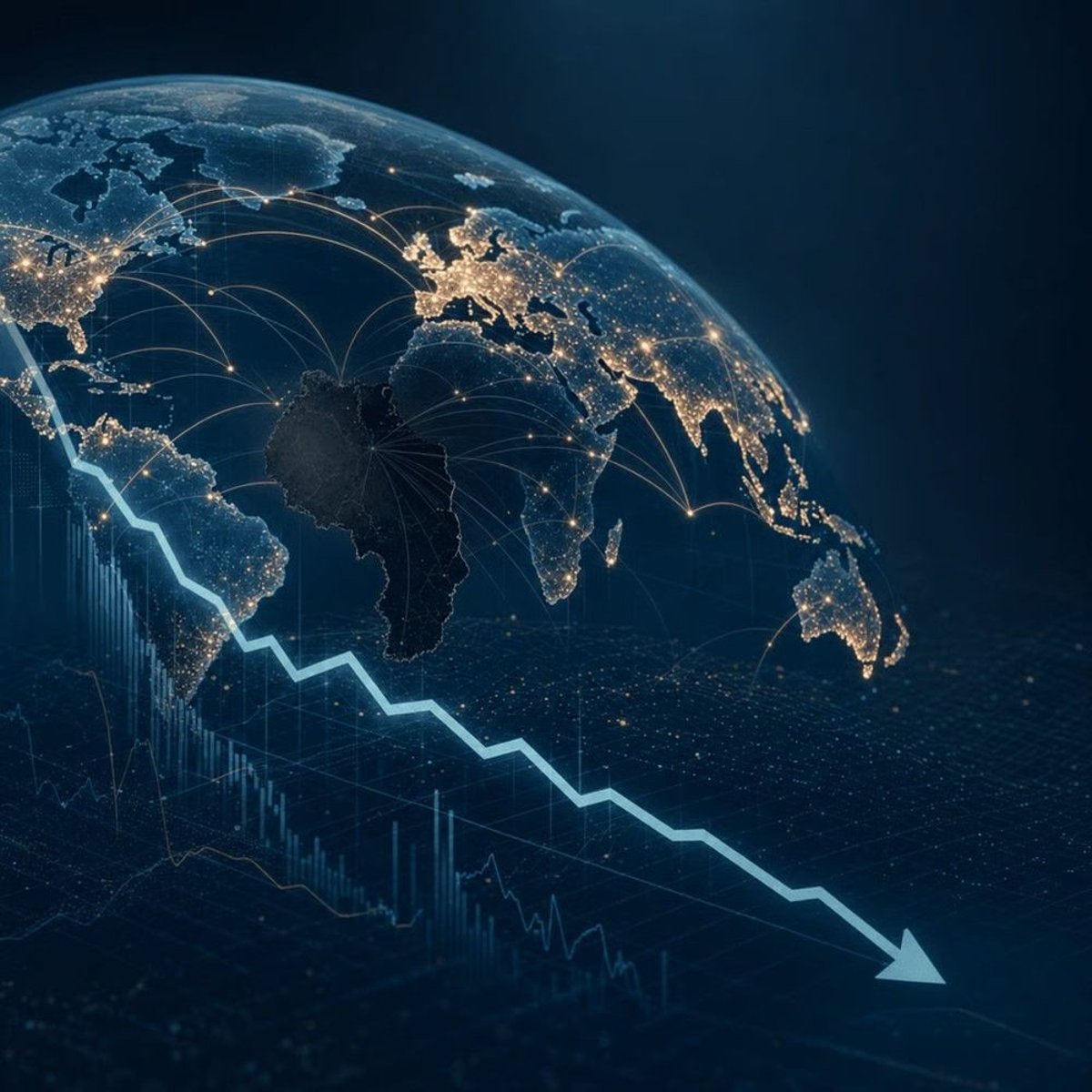
Breaking the News: Independent reporter Pepe Escobar and Former CIA Analyst Larry Johnson recently broke details of a direct ultimatum from Iran delivered via Pakistan to Washington. The message from their Pakistani diplomatic sources was clear. The immediate response from the US government was to halt kinetic military operations, and on Wednesday, the US House passed a measure seeking to halt Trump from taking further military action amid growing opposition to the war. Even Donald Trump's tone towards Iran has shifted remarkably. In addition markets are reacting as if, at least, a temporary peace is now likely. Other nations (including Gulf States) are jumping on the bandwagon and moving towards the new Iran, Russia, China alliance. Are we now on the verge of a new, more decentralized global multipolar economy?
The Islamabad Leak
We usually wait for mainstream confirmation on geopolitical news before bringing it to our Tech Buzz readers. The current media blackout regarding a serious development in Iran and the credibility of both the journalists, who I have followed closely for some time, and their source, makes it impossible to ignore. The financial and technological implications of this geopolitical shift are massive for enterprise executives and tech founders. We base our investment models on a stable global order. That order is gone. It is being replaced by a power shift to a new system yet to be determined. I'm not calling, (nor cheering on), the end of the US empire, but as to the significant control over the region and energy supplies the US has exerted, that reality appears to be over. And it seems the hard economic, geopolitical and supply chain realities mean there is little any faction of US politics can do to change it at this point.
The Three-Stage Ultimatum
According to Escobar, and Johnson, Iranian President Masoud Pezeshkian communicated a formally structured, three-step strategic ultimatum if US strikes continued as follows:
-
Immediate Withdrawal from the ongoing nuclear peace talks.
-
Total Abandonment of the prospective Nuclear Treaty framework.
-
The Detonation of a Nuclear Device on Iranian soil—executed not as a weapon of war, but as an undeniable demonstration of sovereign capability and ultimate control over the escalation ladder.
Escobar and Johnson bypassed traditional Western media networks to break this story via a thriving YouTube independent Geopolitical analysis network. Major outlets have ignored an event of this magnitude, while markets and insiders are busy cashing in on the new scenario, including the disruption of energy routes and the rise of contested waterways across Asia and Europe. It looks a lot like the US plan may be to quietly back out of the region while maintaining the current policy of disrupting China, Russia, Iran and even its own allies through trade disruption, proxy wars. Information asymmetry is a massive risk for investors right now. If you are relying solely on legacy media for macro trends on geopolitics you are flying blind.
Escalation Dominance
Iran removed the secrecy surrounding its nuclear program to establish escalation dominance. The goal was to prove 100% that Western military pressure is no longer effective. The strategy succeeded. Economists Richard Wolff and Michael Hudson observe absolute panic among neoconservatives regarding the global oil trade. Many in the sector who were positioned for the new reality may be making record gains on US-based energy, but on a bigger scale, the shift is that Washington historically used energy and financial systems to enforce compliance. Iran now controls the Strait of Hormuz with a nuclear deterrent. They have full backing from Russia and China. They control the crucial Strait of Hormuz and a huge amount of energy and fertilizer supplying East Asia and beyond.
Hudson argues the US built an empire based on debt dependency through the IMF and the World Bank. That financial architecture is fracturing right in front of us. Hudson compares the magnitude of this structural break to the aftermath of World War II. We are watching the birth of a new economic order. The implications for global supply chains and international finance are profound. Enterprise leaders need to factor this multipolar reality into every single long term forecast.
The Eurasian Hardware Pipeline
Like its defensive military capacity with drones, space-based intelligence and hypersonic weapons, Iran did not suddenly develop this capability in isolation. Escobar identifies a coordinated alignment between China, Iran, and Pakistan. Pakistan handled the diplomatic mediation. China supplied advanced strategic defense systems overland via Central Asian nations with plausible deniability and efficient rail based trade routes as part of its Belt and Road initiative to connect Europe and Asia. Industry watchers suspect either Russia or North Korea provided the final technical assistance for the nuclear program. This represents a unified bloc actively sharing top tier military hardware.
The rapid deescalation by the US over the past day appears to finally acknowledge a hard limit to US power. The West (and Israel) must now accommodate a nuclear Iran and a united Eurasia. Does this raise the threat of nuclear war in the region? Under the mutually assured destruction doctrine, it should not do so. Israel has "unofficially officially" possessed nukes for some time despite this being under-reported. However, the Ukraine war and European and US support for attacks on Russia also shows that this doctrine does not prevent conventional wars between nuclear-armed nations. There is even growing support in Russia for Professor Kagan's idea of a demonstration involving use of strategic nuclear weapons to prevent European involvement by Nato nations. Will the US and Israel beat them to it? These are dangerous times so it pays to consider the prospect.
The Flight From the Dollar Continues
The geopolitical realignment is already driving capital flight. Financial analyst Sean Foo tracks how the weaponization of the dollar is causing deep structural damage. The recent US confiscation of Russian and Iranian assets in the Western banking system, and of Iranian and Venezuelan cryptocurrency assets terrified the Gulf states. Traditional allies are quietly moving capital out of Western institutions and into gold and Asian markets. They want protection from American overreach.
China is rushing for the exits too. Beijing recently sold off $40B in US Treasuries. They see Washington trying to corner their economy using Middle Eastern conflicts. They are actively restricting capital flows to the West and concentrating investments within the BRICS ecosystem. This massive reallocation of wealth will fundamentally alter venture capital flows and global liquidity over the next decade.
Silicon Valley Meets Shenzhen
The technology sector is feeling the most direct impact of this division. The tech war is a central focus for any serious investor. Washington attempted to kneecap the Chinese tech industry by restricting access to advanced Nvidia hardware. The policy completely backfired. Chinese firms like Huawei were forced to develop custom AI processors internally. They accomplished this at a terrifying speed. China holds a massive structural advantage in cheap energy. Power costs a fraction of what it does in the US. They are utilizing that cheap electricity to win the AI and advanced manufacturing race through sheer volume. The US tech sector is simultaneously battling high inflation and navigating a highly speculative AI bubble. The national debt is approaching $40T. It is very hard to maintain technological supremacy when your foundational economy is stretched this thin.
The European Factory Floor
Europe is absorbing the worst of the economic fallout from this global fracturing. They voluntarily severed access to cheap Russian energy. Now they face a high risk of restricted oil flows from the Middle East and are buying much more expensive gas from US suppliers. The continent is experiencing rapid deindustrialization. Factory operating costs are unmanageable and heavy industry is shutting down. Europe lacks the bargaining power to negotiate favorable terms in a multipolar system.
What This Means For The Economy
The macro picture shows a permanent structural change taking place in real time. The Global South is actively abandoning the dollar to pursue self sufficiency. The nuclear demonstration in Iran was the catalyst forcing a new reality onto the markets. The global operating system just received a permanent update.
How do we protect capital in this chaotic environment? The old models of passively holding tech stocks and US bonds are incredibly risky right now. First, you need to diversify heavily. Market analyst Sean Foo recommends moving away from a purely US-centric portfolio. The AI and semiconductor sectors are trading at extreme bubble valuations and face severe risks from energy inflation and supply chain bottlenecks. While oil companies like Chevron and Exxon will see short term windfalls, relying solely on them is a trap when broader consumer spending collapses.
Second, hard assets are mandatory. Gold and silver remain the ultimate protection against the currency debasement that will inevitably happen when the Federal Reserve is forced to print money to stabilize the system.
Finally, look toward emerging markets that are insulated from Western sanctions. Investing in the Chinese market or broader Asian equities offers a necessary hedge. The Chinese yuan remains strong and capital is consolidating within the BRICS nations. The global operating system just received a permanent update. Investors who refuse to adapt to this new multipolar reality will be left behind.