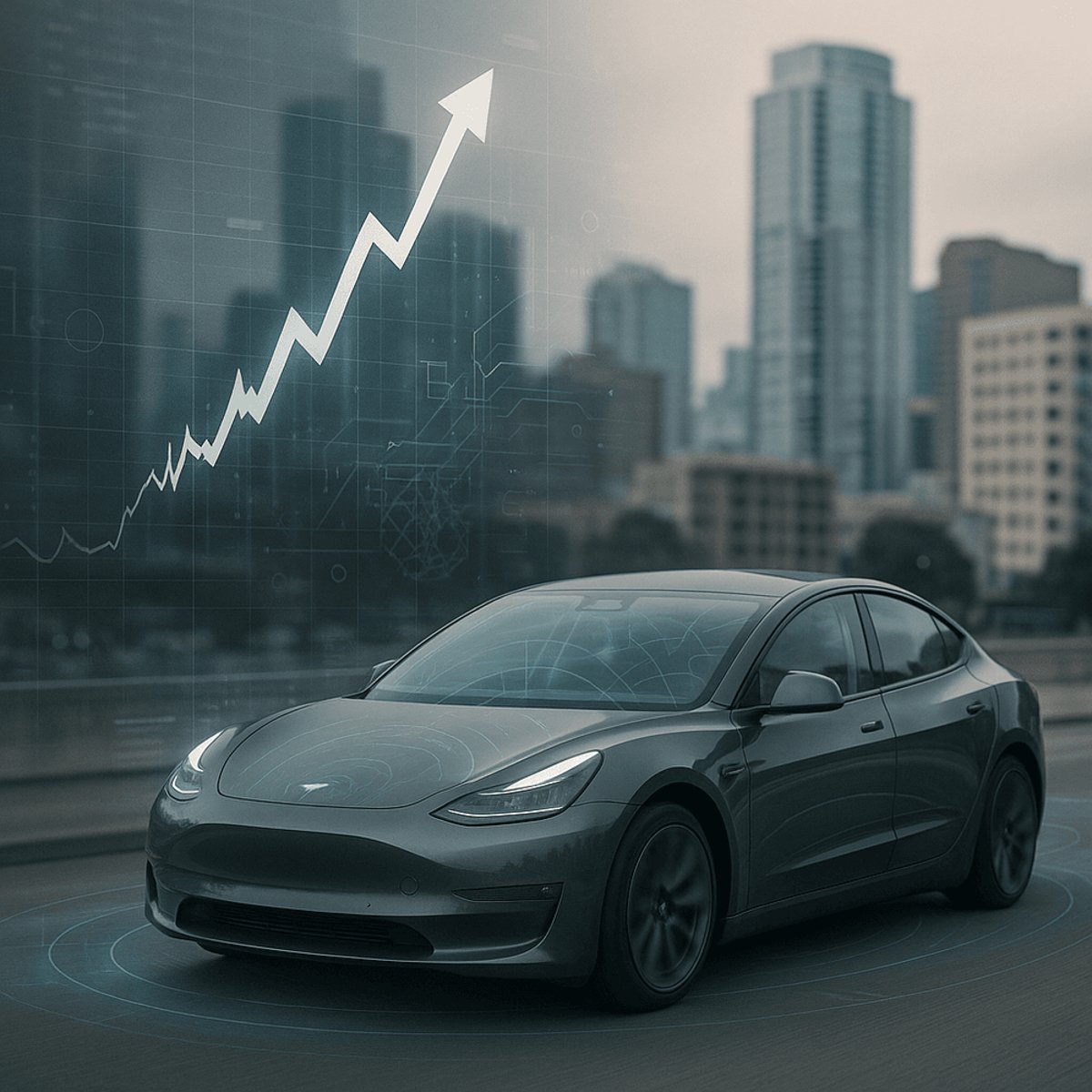
Tesla just pulled off a comeback that few saw coming. After getting hammered 36% in the first quarter, the worst showing since 2022, the stock rallied all the way back to an all-time closing high of $489.88 on Tuesday—up 3.1% for the day and 21% for the year. The catalyst? CEO Elon Musk's announcement that the company is testing fully driverless vehicles in Austin with zero occupants on board. For investors betting on the robotaxi future, it's validation that Tesla's long-promised autonomous revolution might finally be arriving.
What started as a brutal year for Tesla investors is turning into something else entirely. The stock's journey from a 36% plunge in Q1—its worst quarter since 2022—back to record highs feels less like a comeback and more like a complete market narrative flip. All it took was a week of robotaxi headlines.
The spark came from Elon Musk, who announced this week that Tesla has been testing fully autonomous vehicles in Austin, Texas with no occupants on board. It's a significant step up from the pilot program the company launched six months earlier, which still included safety drivers. For a market hungry for proof that autonomous driving is real and coming, not just vaporware, this was exactly what bullish investors needed to hear.
The move sent Tesla's market cap soaring to $1.63 trillion, landing it as the seventh-most valuable publicly traded company—behind Nvidia, Apple, Alphabet, Microsoft, Amazon, and Meta, but ahead of Broadcom. Musk's personal wealth jumped along with it. His net worth now sits at roughly $684 billion according to Forbes, a staggering $430 billion lead over Google co-founder Larry Page, who ranks second.
But here's the twist: the stock rally is masking some uncomfortable truths about Tesla's actual business right now.
The company entered 2025 seemingly positioned for success. Musk's role in the Trump White House running the Department of Government Efficiency promised regulatory tailwinds. Instead, his political rhetoric and endorsements sparked a consumer backlash that's proven harder to shake than most observers expected. Q1 hit hard with a 13% decline in deliveries and a 20% drop in automotive revenue. Q2 followed suit with auto revenue falling another 16%. The narrative shifted from regulatory advantage to brand risk almost overnight.
Q3 offered some relief. Tesla reported a 12% revenue increase in October as U.S. buyers rushed to grab EVs and claim a federal tax credit before it expired at the end of September. The stock jumped 40% in response. But the second quarter showed the limits of that boost. In November, according to Cox Automotive, Tesla's U.S. sales dropped to a four-year low—even after the company released cheaper variants of its Model Y SUV and Model 3 sedan.
That's the central tension. Tesla is now fighting on multiple fronts: a loss of federal tax credits that made EVs more affordable, ongoing backlash against Musk's public persona, and intensifying competition from lower-cost options from BYD and Xiaomi in China and Volkswagen in Europe. The cheaper Model variants aren't lifting the company's boat. If anything, they're cannibalizing sales of higher-priced models in the U.S. market.
Yet Wall Street is choosing to look past all that. Mizuho raised its price target on Tesla this week to $530 from $475, keeping a buy rating. Analysts at the firm wrote that improvements in Tesla's Full Self-Driving (Supervised) technology "could support an accelerated expansion" of the robotaxi fleet across Austin, San Francisco, and potentially enable "earlier elimination of the chaperone." The bet is that robotaxis become the next growth engine, overshadowing near-term EV sales struggles.
It's a reasonable thesis if you believe the technology works and regulatory approval comes. But it's also a very big if. Tesla's autonomous systems in Austin remain limited in scope and availability, and they still operate in geographically constrained areas. A myriad of safety questions linger. How does the system handle edge cases? What happens in bad weather? What's the actual liability model? These aren't rhetorical—they're regulatory questions that could take years to resolve.
The reality is that Tesla's stock right now lives in two worlds. There's the present-day world of slowing EV sales, brand challenges, and intensifying competition. And there's the future world where robotaxis become profitable, scalable businesses and autonomous driving gets regulatory approval. Investors are pricing in the future while the present remains uncertain. Whether that's optimism or delusion depends entirely on whether Tesla's Full Self-Driving technology actually delivers on its promise. For now, the market has decided to believe.