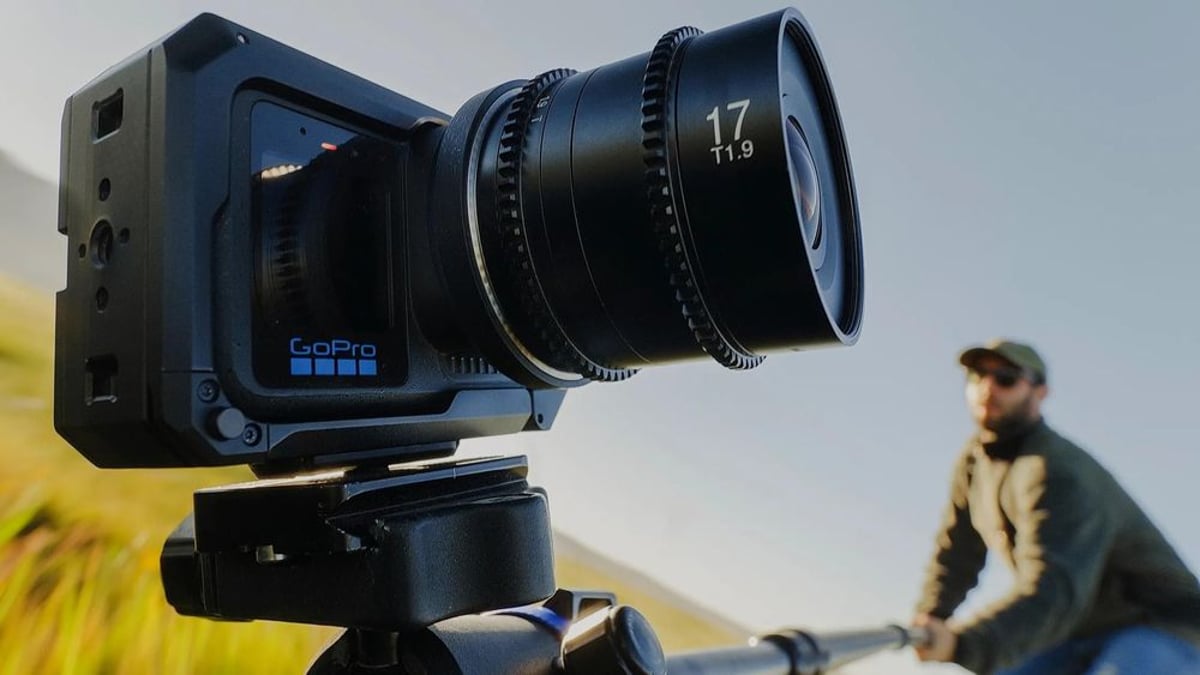
GoPro CEO Nick Woodman is moving quickly to calm nervous fans after this week's bombshell $285 million acquisition news. In a letter posted directly to customers, Woodman insists that building cameras remains the company's 'core DNA,' even as GoPro pivots toward defense-adjacent tech under new ownership. The reassurance comes as questions swirl over what the Starman deal actually means for the action-camera brand's future.
GoPro is trying to get ahead of a growing wave of fan anxiety. Just days after news broke of a $285 million acquisition by Starman, CEO Nick Woodman published an open letter to the company's community, insisting that making cameras remains, in his words, GoPro's 'core DNA.' It's the kind of reassurance you write when you're worried people think otherwise.
And honestly, it's not hard to see why fans might be worried. When the Starman deal was first announced, the language around it didn't exactly scream action-camera enthusiast. GoPro said it would work with Starman to address what it called 'important areas of national security related to cameras, optics and AI infrastructure.' That's a pretty big departure from selfie sticks and surf footage, and it left plenty of longtime GoPro users wondering whether the brand they grew up with is about to become something else entirely.
Woodman's letter attempts to bridge that gap. According to the letter posted on GoPro's site, the merger actually puts the company in a stronger position to keep developing its content creation technology, not abandon it. He frames the Starman relationship as additive rather than a replacement for GoPro's consumer business, telling the community the company remains committed 'to your collective stoke.' It's classic Woodman: casual, brand-voice language dropped into what is fundamentally a corporate ownership announcement.
What's conspicuously missing from that letter, though, is any mention of Mark 'Markiplier' Fischbach, the YouTuber who, just prior to the acquisition, became GoPro's largest individual shareholder. Fischbach's investment was itself a notable story, a creator-economy figure putting real money behind a hardware brand he'd built content around for years. His absence from Woodman's messaging is the kind of detail that tends to get noticed fast in shareholder and creator circles alike, especially given how much attention his stake attracted when it was first reported.
[embedded image placeholder: GoPro Mission 1 Pro ILS camera product shot]
The silence raises an obvious question: does Fischbach still have a seat at the table, or has this new ownership structure sidelined the very investor GoPro leaned on to signal confidence in its consumer camera future? Neither GoPro nor Starman has addressed that directly, and Woodman's letter, while warm in tone, doesn't clarify the cap table dynamics at play.
There's also the bigger strategic question hanging over all of this. GoPro has spent years trying to diversify beyond action cameras, dabbling in subscription software and licensing its tech to other hardware makers, with mixed results. A defense-and-security-adjacent parent company is a very different kind of diversification. Optics and AI infrastructure work tied to national security typically comes with government contracts, compliance requirements and a completely different investor base than the outdoor-adventure crowd GoPro built its brand on. Whether those two worlds can coexist under one roof, with Woodman still steering the consumer side, is the thing to watch.
For now, GoPro's messaging strategy is clear: keep talking directly to the fans, keep the brand voice intact, and hope the underlying ownership changes don't spook the community that actually buys the cameras. Whether that's enough to keep Fischbach, other shareholders, and everyday users on board through this transition is still very much an open question, and one Woodman's letter doesn't fully answer.
The bigger story here isn't just Woodman's letter, it's what it doesn't say. GoPro fans and shareholders are left reading between the lines of a reassurance campaign that sidesteps the elephant in the room: a national-security-flavored acquisition and a suddenly unmentioned major shareholder. Until GoPro or Starman offer more concrete details on how the consumer camera business fits into this new structure, expect the speculation, and the scrutiny, to keep building.