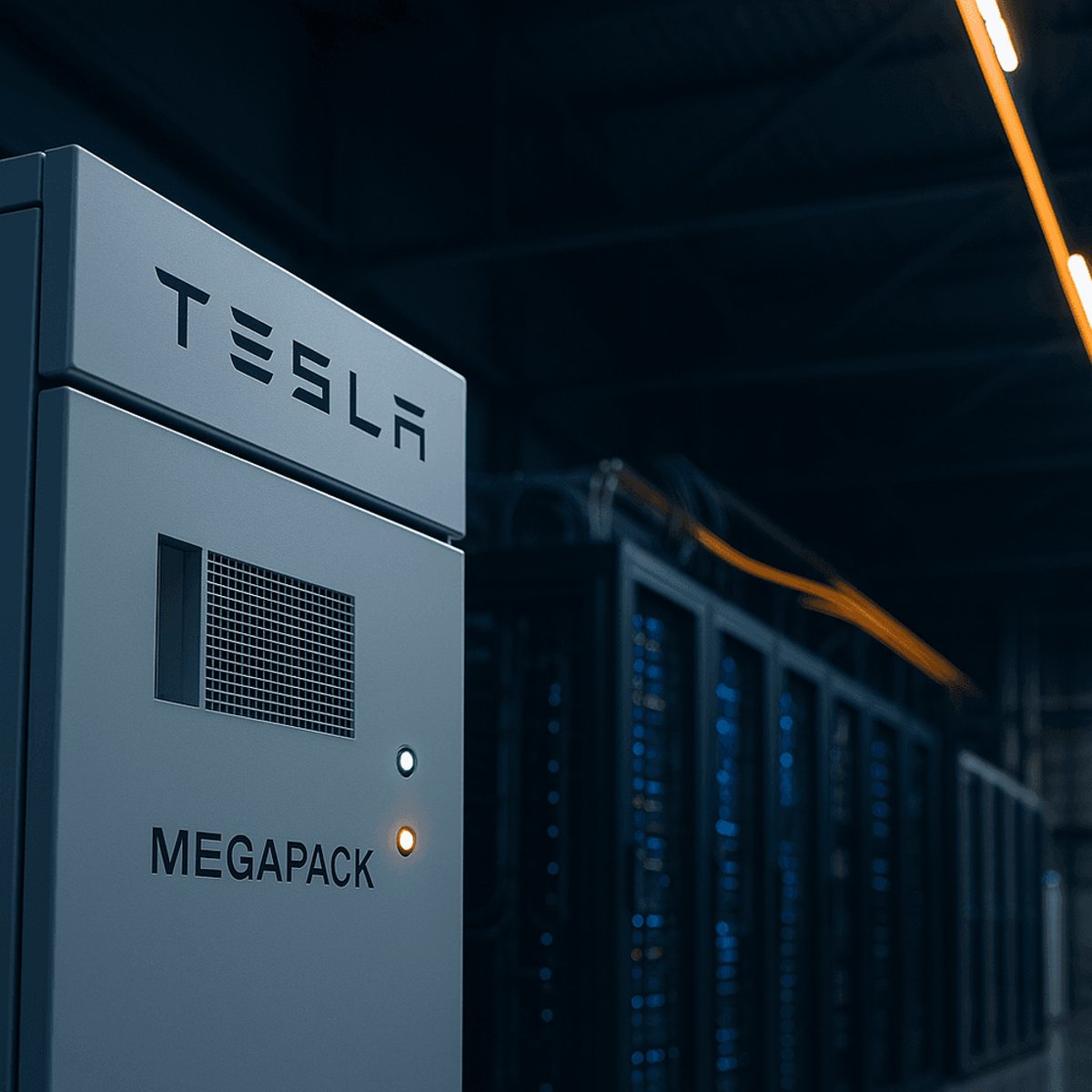
Tesla just disclosed a $430 million related-party transaction that's raising eyebrows across corporate governance circles. The electric vehicle maker sold a massive tranche of its Megapack energy storage systems to xAI, Elon Musk's AI startup, throughout 2025, according to the company's annual SEC filing released Thursday. The deal - representing 3.4% of Tesla's $12.8 billion energy division revenue - comes as Musk faces mounting scrutiny over potential conflicts of interest across his interlocking business empire.
Tesla buried a bombshell in its latest regulatory paperwork. The company's annual 10-K filing revealed that xAI - Elon Musk's 22-month-old AI venture - purchased $430 million worth of Tesla's industrial-scale Megapack battery systems throughout 2025. The timing couldn't be more awkward. Just one day earlier, Tesla announced it's pumping $2 billion into xAI's latest funding round.
The battery deal represents a significant chunk of Tesla's energy business, which has become the automaker's unexpected bright spot. While Tesla's core automotive revenue slumped 10% to $69.5 billion last year - dragged down by an aging product lineup and brand reputation challenges - the energy storage division posted a robust 27% gain, climbing from $10.1 billion in 2024 to $12.8 billion in 2025. It's the first time Tesla's overall revenue has declined since the company went public.
XAI needs those batteries to power Colossus, its massive data center operation sprawling across Memphis, Tennessee. The facility is central to xAI's ambitions to challenge OpenAI, the company Musk co-founded in 2015 before departing in 2018. The two are now locked in heated litigation, with a trial scheduled for April. Musk launched xAI in March 2023, positioning it as what he called a "politically incorrect" alternative to ChatGPT.
Tesla's Megapacks are industrial workhorses - each unit stores enough lithium-ion battery capacity to power thousands of homes, and the newer Megablocks stack four Megapacks around a single transformer. For data centers burning through electricity to train AI models, they're essential backup infrastructure, storing energy from solar and wind sources while preventing blackouts during peak demand.
But xAI's energy appetite goes far beyond batteries. The company installed 35 natural gas-burning turbines at Colossus in 2025, according to aerial footage obtained by the Southern Environmental Law Center. Local residents quickly complained to NBC News about foul odors, health issues, and being unable to open their windows at home. The Environmental Protection Agency responded by updating its rules to clarify that such turbines aren't exempt from Clean Air Act permitting requirements.
The $430 million disclosure adds fuel to an already contentious Delaware lawsuit where Musk stands accused of breaching his fiduciary duty to Tesla shareholders by allegedly diverting company resources to xAI. Corporate governance experts have long questioned the overlapping interests across Musk's portfolio of companies - Tesla, SpaceX, xAI, and others - but this marks one of the first concrete dollar figures attached to inter-company dealings.
XAI's fundraising machine hasn't slowed down despite the controversies. Earlier this month, the startup closed a $20 billion funding round featuring Nvidia and Cisco among its backers. Tesla's $2 billion contribution makes it one of the largest single investors in xAI's latest round. Reuters reported Thursday that SpaceX is now exploring a potential merger with xAI ahead of a planned IPO for Musk's aerospace company, which would create yet another layer of interconnection.
Tesla's investment came at an awkward moment - just as regulators worldwide launched investigations into xAI's Grok chatbot and its image generator. The tools enabled the widespread creation and distribution of nonconsensual explicit deepfake images, triggering scrutiny from multiple governments.
For Tesla shareholders, the energy division's performance offers a rare bright spot in an otherwise challenging year. The company sold and deployed a record amount of battery storage capacity in 2025, capitalizing on growing demand from utilities, data centers, and commercial customers looking to stabilize power grids and reduce reliance on fossil fuels.
But the xAI transactions raise uncomfortable questions about how Musk allocates opportunities across his companies. Did Tesla offer xAI preferential pricing or priority access to Megapacks when other customers faced wait times? The SEC filing doesn't provide those details, noting only that the sales occurred throughout 2025 as part of xAI's buildout of its Memphis operations.
The data center arms race is reshaping the energy storage market. Microsoft, Google, and Amazon are all scrambling to secure power for their AI training facilities, creating unprecedented demand for backup battery systems. Tesla's Megapack factory in Lathrop, California, is running at full capacity, and the company recently announced plans to expand production.
What happens next depends partly on how investors and regulators respond to these disclosures. The Delaware lawsuit alleging resource diversion is ongoing, and the $430 million figure gives plaintiffs concrete ammunition. Meanwhile, xAI continues building out Colossus, with plans to dramatically expand its computing capacity this year.
This disclosure marks a turning point in how investors and regulators scrutinize Musk's overlapping business interests. The $430 million Megapack sale isn't just about batteries powering data centers - it's about transparency, corporate governance, and whether one executive can fairly allocate resources across multiple companies he controls. As AI infrastructure spending explodes and energy demands soar, expect more questions about who gets priority access to scarce resources like Tesla's Megapacks. The Delaware lawsuit just got a lot more interesting, and shareholders across Musk's empire will be watching closely to see if related-party transactions get more disclosure going forward.