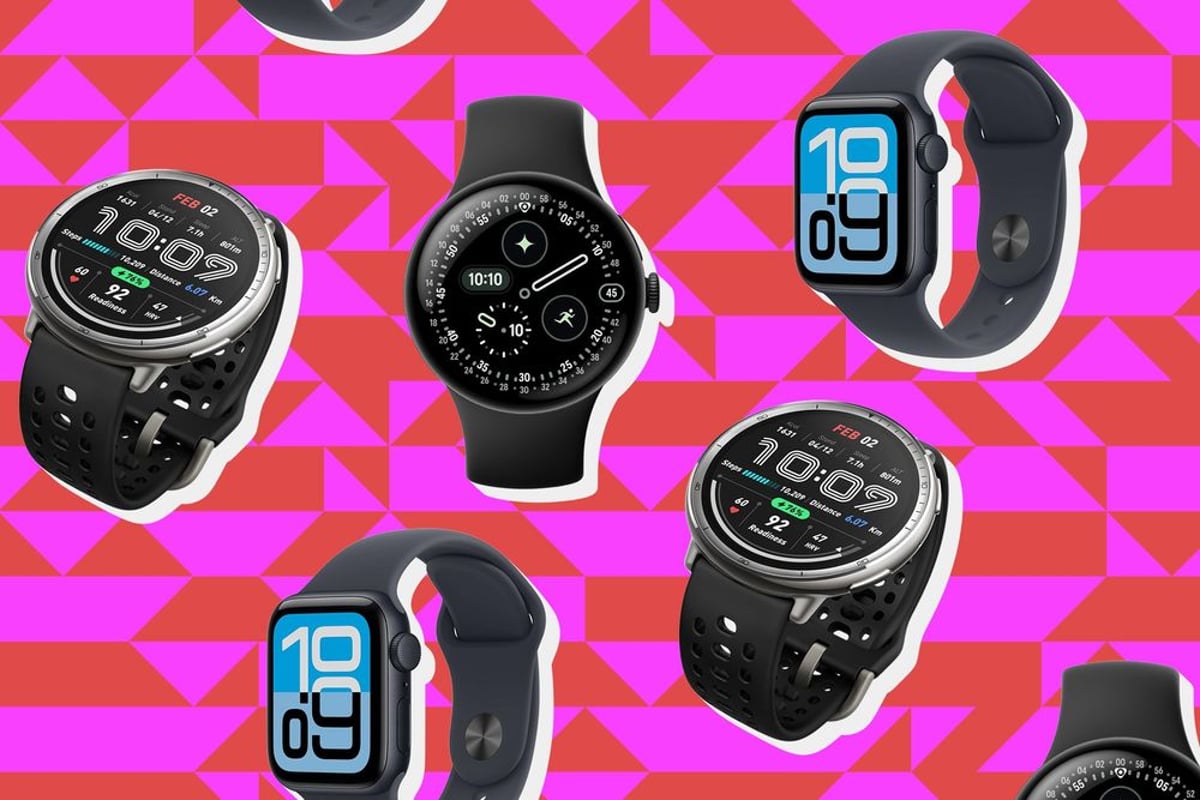
The Verge just dropped their comprehensive 2025 fitness tracker buying guide, spotlighting budget champion Amazfit Active 2 as their top overall pick. The guide covers 11 categories spanning $50 bands to $1,000+ premium watches, emphasizing that modern trackers now rival flagship smartwatches for health monitoring capabilities.
The Verge's annual fitness tracker roundup reveals a market where budget devices are punching way above their weight class, with the $99.99 Amazfit Active 2 snagging the coveted 'best overall' crown.
The Chinese brand's latest tracker delivers what senior reviewer Victoria Song calls "outsized value," packing GPS tracking across five satellite systems, AI-powered coaching through Zepp Coach, and a surprisingly premium design with stainless steel construction. At under $100, it undercuts established players while offering features that were premium-only just years ago.
Apple maintains its iPhone dominance with the Watch SE 3, which finally brings an always-on display to the entry-level lineup. The $199 device (down from $249) includes the same S10 processor found in flagship models, plus 5G connectivity on cellular versions. Song notes this makes it harder to recommend the pricier Series 11 unless you specifically need EKG functionality.
The Android premium battle gets more interesting with Samsung's Galaxy Watch Ultra taking the Samsung phone category despite what Song describes as copying "a bit too much from Apple." The $529.99 device (reduced from $649.99) features dual-frequency GPS and sleep apnea detection, but its AI health features proved "hit-or-miss" in testing.
Google's Pixel Watch 4 claims the broader Android crown with significant battery improvements - lasting 45 hours on first charge compared to 32 hours from its predecessor. The watch showcases Wear OS 6 with integrated Gemini AI, though voice commands remained inconsistent during testing.
The guide reveals how AI integration is becoming table stakes across price points. Even the budget Amazfit Band 7 at $49.99 includes Amazon Alexa support and VO2 max tracking - features that cost hundreds just a few years back.
For non-wrist alternatives, Oura's Ring 4 scores highest with expanded sizing options and improved algorithms. The $349 smart ring now spans sizes 4-15, addressing fit complaints from previous generations. Recent ceramic versions reduce scuffing concerns that plagued standard titanium models.
The premium outdoor category sees Garmin's Fenix 8 adding smartwatch features like call handling and voice assistants to its rugged multisport foundation. Starting at $749.99, it directly challenges Apple Watch Ultra and Galaxy Watch Ultra with superior battery life reaching 29 days on largest models.
Perhaps most telling is the budget fitness band category, where Song admits "it's truly hard to beat" the Amazfit Band 7's $49.99 price point. The device delivers OLED display, 18-day battery life, and comprehensive health tracking that would have cost $200+ in early smartwatch generations.
The guide emphasizes how subscription models are reshaping the landscape. While Garmin introduced Connect Plus at $6.99 monthly, core features remain free. Whoop's MG model targets elite athletes with subscription-required detailed analytics, contrasting with one-time purchase competitors.
Song's testing reveals accuracy gaps persist between price tiers, particularly for GPS tracking where the Galaxy Watch Ultra significantly outperformed standard models. But for casual users, she argues these differences don't justify premium pricing unless specific features like EKG monitoring are essential.
The Verge's comprehensive breakdown shows 2025 as the year budget fitness trackers finally deliver premium experiences without premium prices. With AI coaching, GPS tracking, and week-long battery life now available under $100, the fitness wearable market has democratized health monitoring in ways that seemed impossible just a few years ago. For most users, the decision now comes down to ecosystem preference rather than feature availability.