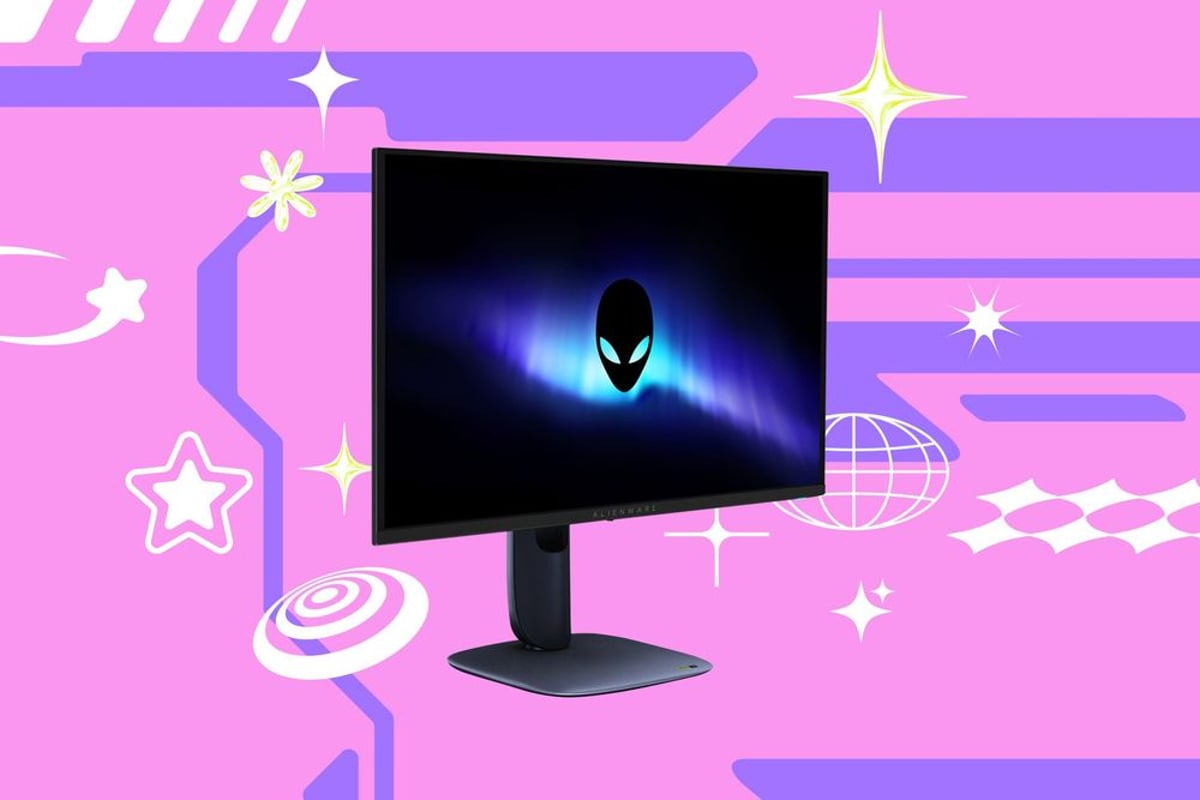
Tech writer Nathan Edwards spent months with Alienware's AW2725Q 240Hz OLED gaming monitor and can't go back to his old screen. The $900 display delivers perfect blacks and buttery-smooth gaming that make regular monitors feel antiquated, even if most of his work doesn't need the premium specs.
Dell's Alienware division just made monitor shopping a lot more expensive for anyone who tries their latest gaming display. The AW2725Q represents the new wave of affordable premium OLED gaming monitors that's hitting the market, and it's doing exactly what you'd expect - ruining perfectly good displays that came before it.
The 27-inch monitor packs Samsung's latest QD-OLED panel running at 240Hz and 4K resolution. At $900, it's positioned as the budget option in this new category, undercutting competitors like ASUS by several hundred dollars. But that pricing creates a dangerous value proposition for anyone who actually tries one.
Initially, the upgrade seemed unnecessary. Most desktop work doesn't need 240Hz refresh rates or perfect black levels. Google Docs, Slack, and browser tabs run just fine on conventional displays. Even a five-year-old MacBook Air maxes out at 60Hz output, making the premium panel feel like overkill for productivity tasks.
The OLED's party trick becomes apparent during gaming sessions. Variable refresh rate technology eliminates the screen tearing that plagues fixed 60Hz displays, creating smooth motion even when frame rates fluctuate. This matters more than raw refresh rate numbers - a stuttering 45fps becomes playable when the display adapts to match GPU output.
Real-world performance testing revealed the monitor's true capabilities. Running Cyberpunk 2077 with a Ryzen 7 9800X3D and RTX 4070 Super delivered 95fps at 4K resolution with medium ray tracing enabled. The combination of DLSS frame generation and the OLED's infinite contrast ratio transformed Night City into a neon-soaked playground where every streetlight pops against genuinely black shadows.
Comparing the experience to traditional IPS displays highlights the technology gap. Without true black levels, night scenes appear washed out. Neon signs lose their punch when surrounded by grayish backgrounds instead of perfect darkness. The visual difference becomes apparent immediately and impossible to ignore afterward.
But premium displays come with premium problems. The AW2725Q lacks the KVM switch found on higher-end competitors, making multi-computer setups inconvenient. Users switching between laptop and desktop need separate USB hubs or dongles rather than one-cable solutions. Dell's Alienware Command Center software adds unnecessary bloat with constant notifications and background processes.
Worse, a firmware bug occasionally prevents the display from waking up properly with Windows systems. This type of quirk shouldn't exist on $900 hardware, especially when budget monitors handle basic power management reliably.
The competitive landscape offers alternatives with better feature sets. ASUS offers the same Samsung panel with KVM switching for $1,200, while other manufacturers are preparing similar options. But that price premium highlights how Dell positioned this model - maximum visual impact at minimum cost.
For most users, the sensible choice remains sticking with existing hardware. A 60Hz IPS monitor with KVM switching and USB-C connectivity handles 90% of computing tasks perfectly well. The OLED upgrade only matters for the 10% of time spent gaming, making it a luxury purchase rather than practical necessity.
However, luxury has a way of becoming necessity once experienced. The visual difference between OLED and LCD technologies creates the same upgrade cycle that smartphone manufacturers have perfected - once you see better, everything else feels obsolete.
The AW2725Q succeeds at its primary mission - delivering premium OLED gaming at the lowest possible price point. While it lacks some convenience features found on pricier alternatives, the core visual experience justifies the $900 investment for serious gamers. Just don't expect to be satisfied with regular displays afterward. The upgrade creates a one-way trip into premium territory where everything else feels like a compromise.