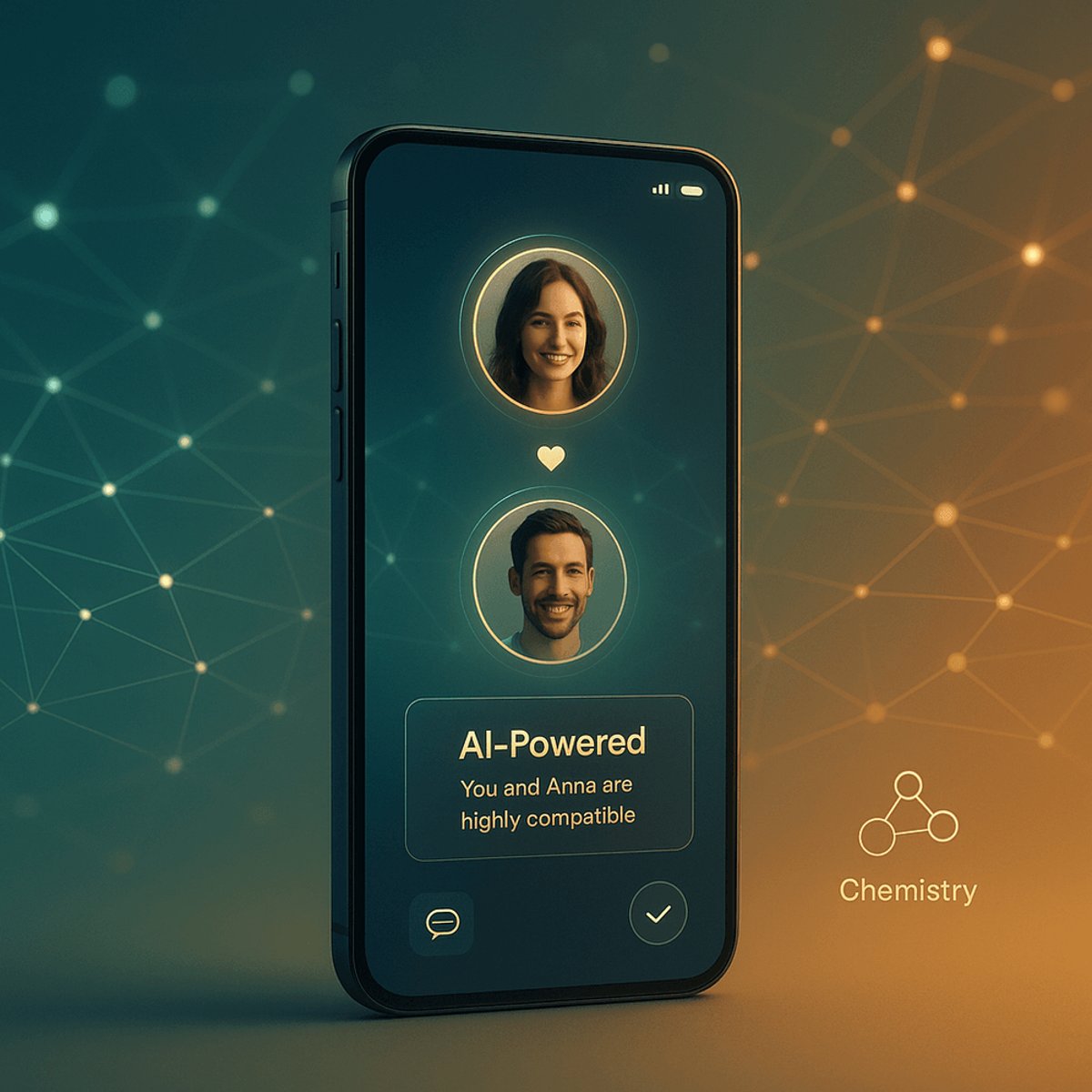
Tinder is betting on AI to rescue itself from a crisis of its own making. The Match Group-owned dating app just revealed its new Chemistry feature uses artificial intelligence to analyze your Camera Roll and quiz responses to serve up targeted matches - potentially ending the endless swipe cycle that's driving users away. With monthly active users down 9% and new sign-ups falling 5% year-over-year, the company's scrambling to fix what CEO Spencer Rascoff calls "swipe fatigue" before the entire dating app model collapses under its own repetitive weight.
Tinder just admitted what everyone already knew - the swipe is dying. The dating app that literally invented the left-swipe-right-swipe mechanic is now testing ways to kill it, replacing mindless profile scrolling with AI-powered matchmaking that promises to actually understand what you want.
The company's new Chemistry feature, currently being tested in Australia, lets users answer questions and grants the app permission to scan their Camera Roll to build a personality profile. Instead of swiping through dozens of profiles hoping for a match, users get "just a single drop or two" of highly targeted recommendations, Match Group CEO Spencer Rascoff explained during the company's Q4 earnings call this week.
"Chemistry offers users an AI way to interact with Tinder," Rascoff told analysts from Morgan Stanley who pressed him for updates on the feature first introduced last quarter. The CEO was careful to note the company plans to expand AI functionality beyond just Q&A and photo analysis, though he didn't specify what's coming next.
The timing isn't coincidental. Tinder's user metrics are in freefall, and the company knows it. Monthly active users dropped 9% year-over-year in Q4, while new registrations fell 5% - numbers that show slight improvement from prior quarters but still paint a picture of a platform hemorrhaging its base. The culprit, according to Match executives, is "swipe fatigue" - users burning out from endlessly scrolling through profiles with little to show for it.
Match Group delivered an earnings beat with $878 million in revenue and 83 cents per share EPS, topping Wall Street's expectations. But weak forward guidance sent the stock tumbling Tuesday before rebounding in premarket trading Wednesday - a volatility that reflects investor uncertainty about whether AI can actually fix what's broken.
The company's already been experimenting with AI-driven profile ordering that changes what women see first, along with other product tweaks aimed at making discovery feel less like a repetitive chore. Match claims these changes are working, pointing to incremental improvements in retention metrics. But the real test is whether Chemistry can fundamentally change how people experience the app.
Tinder's pivot away from the swipe represents a radical rethinking of its core product. The swipe mechanic created the illusion of infinite choice - scroll long enough and your perfect match will appear. But that illusion is what's killing engagement. Matches still need to be mutual, conversations still fizzle, and users increasingly feel like they're gambling with terrible odds.
The company's also targeting Gen Z pain points around authenticity and trust. Face Check, Tinder's facial recognition verification system now required for new U.S. users, has cut interactions with bad actors by more than 50%, according to Match. The company's redesigning its entire discovery system to feel less repetitive while betting that AI can deliver relevance at scale.
But technology alone won't save Tinder if users have fundamentally soured on the experience. That's why Match is committing $50 million to marketing campaigns featuring creators on TikTok and Instagram who'll claim "Tinder is cool again," Rascoff said. The company's essentially trying to rebrand itself while simultaneously rebuilding the product - a risky two-front war.
The broader dating app industry is watching closely. If Tinder can't fix subscriber declines with AI matchmaking, it raises questions about whether the entire swipe-based model is salvageable. Competitors are facing similar challenges as users report burnout and frustration with apps that prioritize engagement metrics over actual relationship outcomes.
Chemistry's Camera Roll analysis is particularly interesting from a privacy standpoint. Users must explicitly grant permission, but the feature represents a significant data collection expansion - Tinder will literally see your vacation photos, screenshots, memes, and everything else stored on your phone. The company's betting users will trade that privacy for better matches, a calculation that could backfire if the AI recommendations don't deliver.
For now, Chemistry remains limited to Australia as Match continues testing and refining the experience. Rascoff didn't provide a timeline for broader rollout, suggesting the company wants to see stronger signals before committing to a global launch. The cautious approach makes sense given what's at stake - if AI matchmaking flops, Tinder's out of obvious next moves.
The Q4 results also revealed that paying subscriber declines continue to pressure Match's business model. As users churn and new sign-ups slow, the company needs Chemistry and other AI features to not just improve match quality but also convert free users into paying customers who'll stick around. That's a tall order for technology still in early testing phases.
Tinder's Chemistry experiment is either the future of dating apps or a desperate attempt to fix a fundamentally broken model. The company's betting that AI can deliver what the swipe never could - meaningful matches without the burnout. But with users already fleeing and competitors circling, Match doesn't have much time to prove the technology works. If Chemistry succeeds in Australia and scales globally, it could revive not just Tinder but the entire dating app category. If it fails, we might be watching the beginning of the end for swipe-based dating as we know it. The $50 million marketing blitz suggests Match knows which outcome investors are expecting.